Tag: winning mindset

  • The Magical Secrets of Visualization: An Artistic Paradigm for Transforming Your Life and Career. 100 Ways to Motivate Yourself: Change Your Life Forever by Steve Chandler

    In a fast-paced and distraction-filled world, have you ever felt like your life is being controlled by circumstances? What if you are actually the “lead painter” of every day’s experiences? Through several revolutionary ideas from the book 100 Ways to Motivate Yourself: Change Your Life Forever, there is one thread that can become a catalyst for change: the power of visualization and your role as the artist of life. This article will invite you to unpack three fundamental ideas from the book—winning visualization, the treasure-mapping technique, and the life-as-canvas paradigm—and why these concepts can change the direction of your life. However, just as an artist is not enough to understand color theory, you will soon realize that the secret of applying it goes much deeper.


    Introduction: Grasping the Brush in Your Hands

    Imagine a world where you are not merely “living” your days, but actively creating them. This book does not offer instant recipes, but rather introduces a new paradigm: you, not the situation, are the primary creator of your life experiences. The three concepts we will discuss today are interconnected and form the foundation of personal as well as professional transformation.

    Visualization: Between Failure and Success

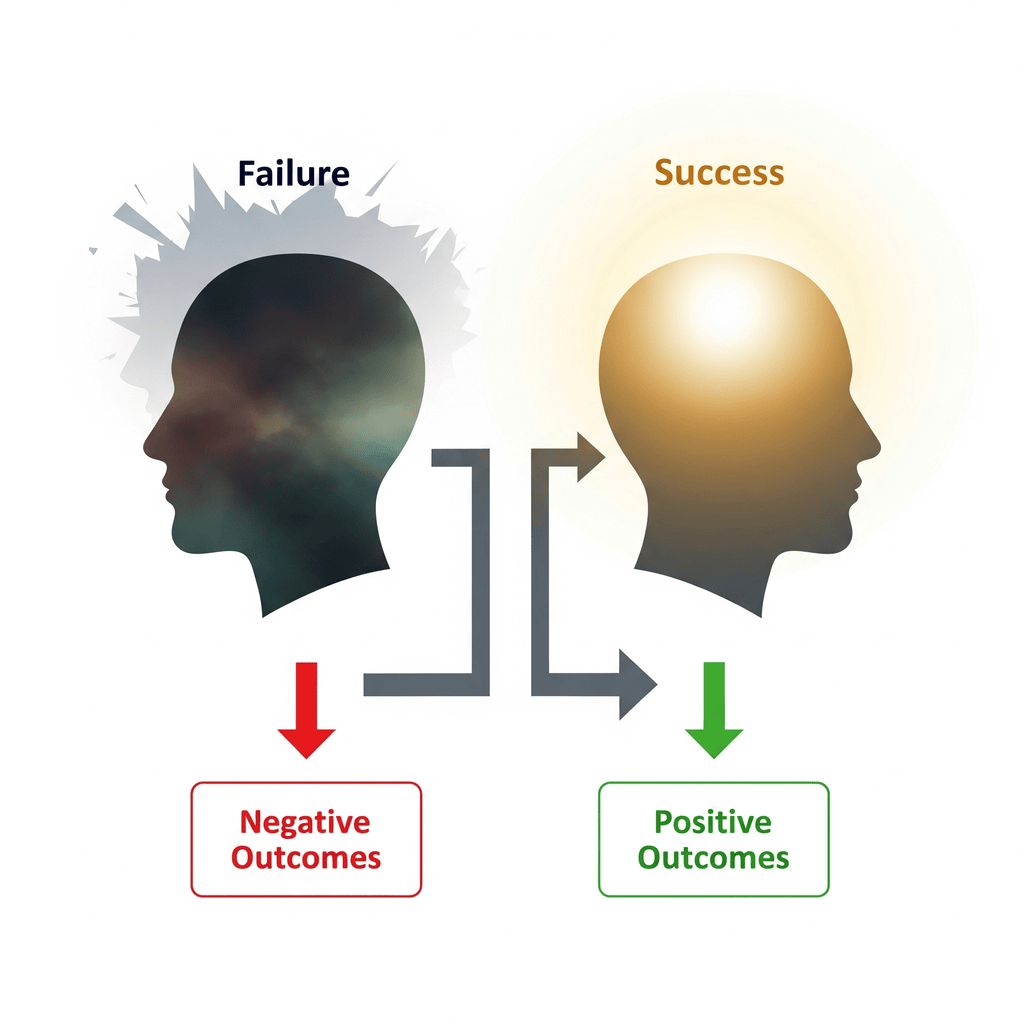
    Visualization is not merely imagining desires. As explained by Rob Gilbert, there is a fundamental difference between winners and losers in how they harness imagination. “Losers visualize the penalties of failure, and winners visualize the rewards of success.” This simple statement has great power: What you focus on mentally will dictate real outcomes.
    When someone focuses on the consequences of failure, they unconsciously program the brain to anticipate defeat, so their steps are haunted by doubt. Conversely, when you imagine a positive result, your attention, attitude, and energy begin to center on achieving the goal, no matter how challenging the path ahead. This is not just empty motivation, but a psychology technique that has been used by top athletes worldwide, successful CEOs, even creative artists.
    However, how can you ensure your visualization does not become mere daydreaming? A systematic framework and step-by-step mental training are offered in the book, which guides you in detail toward effective winning visualization.
    “The complete framework for applying winning visualization is discussed in 5 specific steps within the book…”
    Treasure-Mapping: Mapping Dreams to Reality
    One of the inspirational stories in this book is about a married couple who, for years, struggled to buy their dream home. Change happened when they practiced “treasure-mapping”—posting pictures of their dream home on the fridge and tracking savings through a visual thermometer. In just nine months, the dream became a reality.
    The treasure-mapping technique is not merely “daydreaming”; it is a visual tool that actively conditions your subconscious to move toward the goal. The visual symbols, which you consistently see every day, act as invisible yet powerful reminders, keeping motivation burning even when reality feels exhausting.
    Behind this story, there is a practical methodology so treasure-mapping is more than wall decoration. In the book, you will find how to choose the right visuals, strategic placement tips, and how to measure progress psychologically.
    “However, there are three common mistakes that often occur when trying this treasure-mapping technique, which are thoroughly dissected in our summary…”


    Life as a Canvas Paradigm: Becoming the Artist of Your Day

    Every day is a blank canvas. If you let the “paint” from outside (negative comments, bad news, gossip, environmental criticism) imprint colors and patterns on it, the final result becomes hard to control. A key line from the book reads: “Wake up and visualize your day as a blank canvas. Ask yourself, ‘Who’s the artist today? Blind circumstance, or me?’”
    How you fill life is determined by your awareness of the freedom to choose. If you’re passive, your life becomes a jumble of random colors and unwanted shapes. But when you realize you can choose colors and patterns, that is when the power of personal transformation starts to work.
    Adopting this paradigm means:

    • You selectively consume what you feed your mind each day,
    • You are more aware of the influence of your surrounding environment,
    • You have the power to say “no” to things that pollute your mind.

    The “life as a canvas” paradigm is not just inspirational talk—there is a series of daily exercises that can train you to be more aware, more creative, and more responsible.
    “Advanced techniques of this concept, including daily templates and practical examples, are part of the exclusive insights we prepare at MentorBuku…”


    Reframing Yourself: The True Artist Always Learning

    When you start applying the three concepts above, changes occur not only in the professional sphere but in every aspect of life—from health and relationships to self-discipline. You’ll find that small habits in visualization, arranging physical space through treasure-mapping, and the awareness of living each day as a “painter of life” are the stimuli that awaken your previously hidden potential.
    However, keep in mind:

    • Effective visualization requires practice and structure.
    • Treasure-mapping must be aligned with goals and real actions.
    • The life-as-canvas paradigm requires ongoing habit-building and self-reflection.

    Without a clear step-by-step map, these insights risk becoming fleeting inspiration. Just as an artist needs techniques and repetitive practice to create a masterpiece, you also need a concrete framework to ensure real change happens.
    Also read: The Mountain Is You by Brianna Wiest

    Also read: The Subtle Art Of Not Giving A F*ck by Mark Manson

    Also read: Guerrilla Marketing Field Guide by Jay Levinson, Jeannie Levinson


    Conclusion: It’s Time for You to Become the Maestro of Your Own Life

    The three concepts—visualizing positive outcomes, treasure-mapping, and living as a canvas—are the foundations for reframing your life. The world may not always be friendly, but you always have the power to pour the colors, shapes, and patterns you want into the years ahead. If you currently feel stuck, overwhelmed by things outside your control, or simply want to live more consciously and meaningfully, this book is a real invitation to transform. All technical details, in-depth practices, and real challenges have been mapped out for you—ready to be carried out step by step.


    You’ve just seen the foundation. These concepts are only the tip of the iceberg of what this book offers. How to apply them step by step, avoid common pitfalls, and integrate them into your strategy? All the answers are inside.

    Sign up and get free access at MentorBuku now!
  • The Fundamental Secrets of Building Wealth: A Strategic Paradigm from “Your Next Five Moves”. Your Next Five Moves: Master the Art of Business Strategy by Patrick Bet-David with Greg Dinkin

    Introduction: Unveiling the Layers of Strategy to Wealth

    Everyone dreams of building authentic wealth—one that can endure not just for a season, but form the foundation of the future. However, few understand that true success is not merely a matter of luck or hard work. It is the result of a series of meticulously planned strategic moves. This is the powerful message presented in the book “Your Next Five Moves: Master the Art of Business Strategy”.
    This article explores several fundamental concepts from the book—from discovering the path to wealth and knowing your own identity, to understanding the power of differentiation and a winner’s mindset. However, each of these concepts is just the surface. To master the ‘how’ and avoid common pitfalls, follow the explanation to the end.


    The Strategic Paradigm: Crafting the Path to Personal Wealth

    Lasting wealth is never accidental. According to Patrick Bet-David, the author of this book, “money is only a tool.” This means money is neutral—it will only take you as far as your vision and strategy carry it. However, it is not the money that determines the driver; you are the one controlling the direction Your Next Five Moves Master the Art of Business Strategy.pdf.

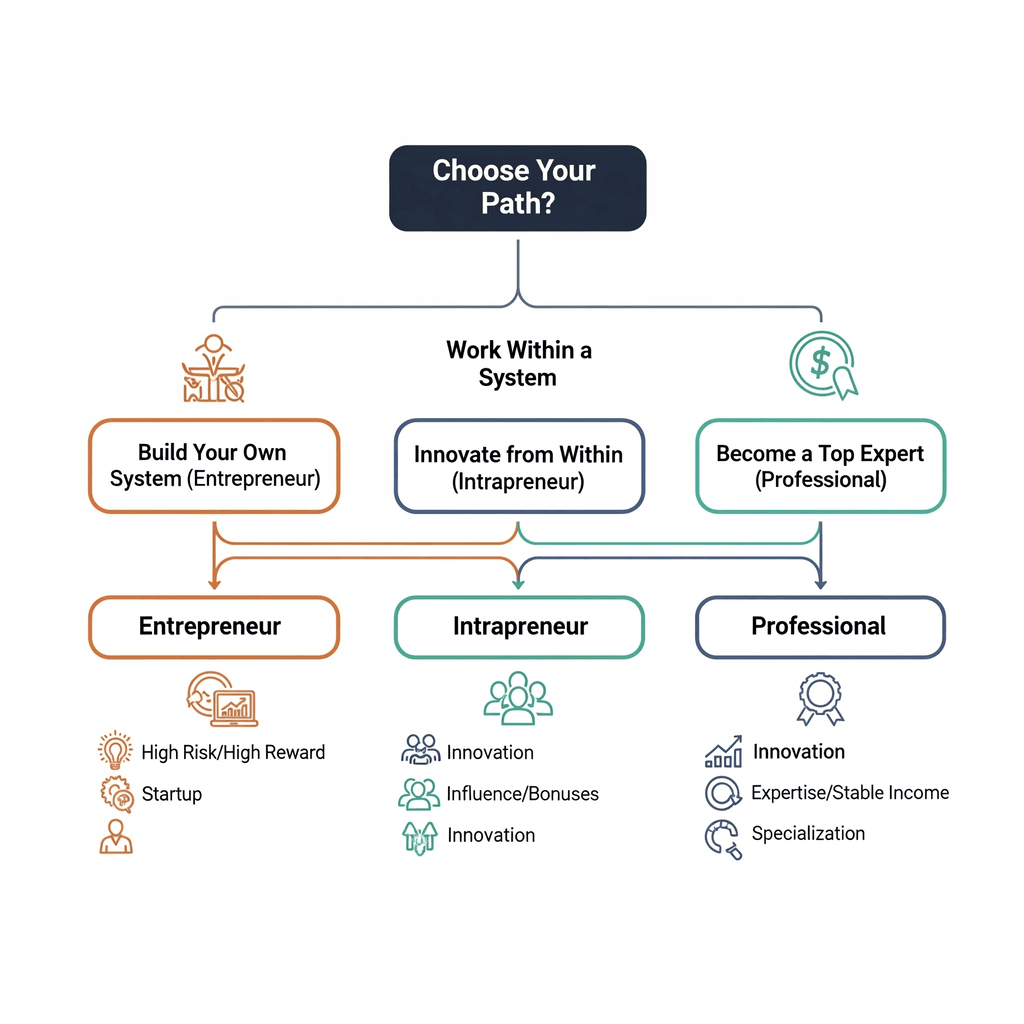
    The first point to understand is the importance of choosing a path to wealth based on your unique strengths. The book offers a “Personal Identity Audit” approach—a deep reflection to help each person understand what truly motivates them. Only by understanding who we are can we choose whether to become an entrepreneur, intrapreneur, or take on another role in building wealth—and each path has its own distinct strategy. Your Next Five Moves Master the Art of Business Strategy.pdf.
    But how exactly does one conduct an identity audit and translate it into the right path? The series of key questions and its in-depth process are outlined step-by-step in this book…


    Determining the Path: Entrepreneur vs. Intrapreneur

    Not everyone is cut out to be an entrepreneur, but every individual can find a value-creation path that aligns with their talents. The book emphasizes two main paths:

    1. Entrepreneur: The Risk-Taker and Game-Changer

    An entrepreneur breaks old boundaries and builds something new from scratch. They take on great risks, but also have the potential for the highest returns. However, the risks are not just in the form of capital—but also mental pressure and the acumen to spot opportunities. Your Next Five Moves Master the art of Business Strategy.pdf.

    2. Intrapreneur: The Innovation Leader Within an Organization

    On the other hand, an intrapreneur is a catalyst for change within a large company. They develop ideas, lead innovative projects, and build value, but within a framework that is relatively safer than that of an entrepreneur.

    Choosing this path cannot be done carelessly. You need to be aware of your strengths, weaknesses, and deepest motivations before making this big decision.
    A concrete framework for assessing your fit for the entrepreneur or intrapreneur role—including practical assessments and case studies—is presented in full in a special chapter of this book. The explanation of “blue ocean” and how to execute it is also dissected in detail in the exclusive summary on MentorBuku…


    The Power of Differentiation: Find Your Unique “Edge”

    In a world full of competition, only those who can stand out and be different will survive. Bet-David consistently emphasizes the importance of a “competitive edge”—something that sets you apart from the crowd and opens up a “blue ocean” or a new, untapped market. Your Next Five Moves Master the Art of Business Strategy.pdf.
    Differentiation is not just about creating a different product or service. It starts with knowing very clearly for whom you are offering value, what makes you relevant, and why people should choose you over others.
    Therefore, the step of finding this unique “edge” is often seen as simple, yet it is full of pitfalls. Many professionals fail to distinguish between a real competitive advantage and simply “following trends.”
    Market research techniques, the “Value Proposition” framework approach, as well as case studies on how large companies found their “blue oceans,” are all detailed in MentorBuku’s advanced guide. Three fatal mistakes in building differentiation are also thoroughly examined…


    The Mindset of a Great Player: Learning from the “Poker Master”

    There is an interesting story in this book about Eric Drache, one of the world’s greatest poker players. He was successful not only because of his playing skills, but also because he always chose opponents who made him grow—not just seeking easy wins. This analogy becomes an important lesson: in the business world, we are often required to make decisions by considering many steps ahead, like a chess grandmaster thinking about their “next five moves”. Your Next Five Moves Master the Art of Business Strategy.pdf.
    This kind of mindset distinguishes between ordinary businesspeople and those who can stay at the top of their game. You are required to:

    • Dare to make important decisions even when not all information is available
    • Always be prepared to face uncertainty
    • Choose challenges that sharpen your “mental muscle”

    However, how can one build this winner’s mindset? The book contains mental exercises, reflective reminders, and daily habits to hone strategic intuition. A template for developing “resilience” and real examples of decision mapping are available exclusively on MentorBuku…


    Strategy Integration: Creating a Personal Wealth Blueprint

    After understanding these major concepts, the main key is integration. You are faced with a critical question: how do you combine the personal identity audit, path determination (entrepreneur/intrapreneur), the search for a “competitive edge,” and a winner’s mindset into a single strategic blueprint?
    This series of integrative steps, which includes setting milestones, periodic reviews, and the technique of “reverse engineering” life goals, becomes an essential foundation for real transformation.
    A strategy integration framework, a self-evaluation checklist, and real blueprint examples are presented exclusively in the MentorBuku summary. You will also find cases of the biggest failures caused by a lack of “strategic integration,” and how to avoid them…


    Conclusion: Why You Shouldn’t Stop Here

    If you want to build wealth that is not only substantial but also resilient and true to your identity, the foundation you’ve learned in this article is just the tip of the iceberg. There are detailed secrets, practical techniques, and inspiring case studies that are intentionally not revealed here. You can get all of that if you are willing to dig deeper.

    Read also : Courage Is Calling by Ryan Holiday


    Read also : Do Epic Shit by Ankur Warikoo


    Read also : Energize Your Mind by Gaur Gopal Das

    You have just seen the foundation. These concepts are merely the tip of the iceberg of what this book offers. How do you apply them step by step, avoid common pitfalls, and integrate them into your strategy? All those answers are inside.
    Sign Up and Get Free Access on MentorBuku Now!

  • ANALYSIS & THEMATIC ANGLE DETERMINATION. The Magic of Thinking Big by David J. Schwartz.


    After reviewing the key parts of the book “The Magic of Thinking Big” by David J. Schwartz, there are three gems of ideas that are closely related and can be woven into a single common thread:

    1. The power of mental pictures in our minds—that we think not in words, but in images formed from words.
    2. The importance of believing in growth and improvement—a proactive attitude to seek opportunities for expansion, efficiency, and new ideas that bring progress.
    3. The destructive impact of a negative mindset—that negative thoughts can have real consequences on outcomes and lead to missed opportunities.

    Main Thematic Angle: “How a Positive Mindset Becomes a Catalyst for Success and Growth—Starting from How You See the World in Your Mind.”
    Step 2: MAGNETIC TITLE & FRAMEWORK DEVELOPMENT
    Title Options (40-60 characters):

    1. The Secret to a Positive Mindset: A Real Catalyst for Success!
    2. Revealed! The Big-Thinking Method You Often Ignore
    3. Authentic Paradigm: The Key to Visualizing Instant Success
    4. The Magical Mindset That Shapes Your Future Now
    5. Avoid This Fatal Mistake: The Thinking That Destroys Potential

    Best Title: The Secret to a Positive Mindset: A Real Catalyst for Success!
    Article Outline:

    • H1: The Secret to a Positive Mindset: A Real Catalyst for Success!
      • Introduction: Why Your Way of Thinking Is the Starting Point for Success
      • H2: Mind Pictures: The Foundation of How Your Mind Works
        • H3: Turning Words into Pictures of Success
      • H2: A Proactive Attitude: Echoing Growth and Innovation
        • H3: Case Study: Three Different Ways to Approach Challenges
      • H2: The Power and Peril of a Negative Mindset
        • H3: Opportunities Lost Due to the Wrong Mindset
      • H2: Conclusion: Changing the World Through Your Mindset
      • CTA: Steps to Gain Deeper Insight

    Step 3: ARTICLE DRAFT WRITING (1500-1600 words, SEO & CTA Integrated)


    The Secret to a Positive Mindset: A Real Catalyst for Success!

    Why Your Way of Thinking Is the Starting Point for Success

    Everyone desires greater achievements in life—be it a soaring career, harmonious relationships, or continuous self-development. However, there is one universal foundation that sets winners apart: mindset. But did you know that a mindset is not just a collection of motivational words passing through your mind? It is a collection of “pictures” that unconsciously shapes our attitudes, decisions, and daily actions.
    The book “The Magic of Thinking Big” teaches a fundamental concept—your mind is a giant movie theater. Every word, comment, and thought you consume is actually converted by the brain into a series of mental pictures. This is where major change begins. This is not merely a theory; it is a strategy of how the human brain works, affirmed by experts and supported by modern research.
    This article will invite you to see how the power of a positive mindset can become the greatest catalyst for real success. We will dissect three core concepts of “thinking big” that will open up a new perspective. However, remember: you will only see the foundation here. The complete effective implementation methods are available with a MentorBuku membership.

    Read also : Zero to One by Peter Thiel

    Mind Pictures: The Foundation of How Your Mind Works

    Have you ever realized that when you hear someone say, “I failed,” you automatically picture a gloomy atmosphere, disappointment, or a person with their head down? The brain doesn’t stop at words. Every word heard and read is immediately processed into a “mind picture,” or a visual image that greatly influences your emotions and attitude. — The Magic of Thinking Big by David J. Schwartz.
    This is why the language you use with yourself or others largely determines your next actions. For example: the word “challenge” creates an image of a demanding but inspiring uphill path, while the word “problem” conjures an image of a dead end or a trap.
    A small change in word choice can make the difference between feeling motivated or discouraged. Great leaders guide their teams with visionary words that ignite images of great future possibilities, rather than simply staying in their comfort zone or giving up.

    “When you speak or write, you are a film director showing a movie in other people’s minds. The picture you create determines how you and others will react.” — The Magic of Thinking Big by David J. Schwartz.
    However, to master this art, you must understand the specific formula for consistently building “mind pictures” with a positive aura—including choosing strategic diction and how to practice it in daily communication. This book dissects the structure and practical exercises for creating narratives that build images of success in your subconscious—a vital component that can only be found in the concise summary for MentorBuku members.

    Baca juga : 12 Rules for Life by Jordan B. Peterson

    A Proactive Attitude: Fostering Growth and Innovation

    Next, let’s look at a concrete example from the real world, as shared by Schwartz. There are three types of people in an organization: the self-satisfied, the pessimist, and the visionary. Only one category continues to grow—those who always seek opportunities to advance, find room for innovation, and dare to suggest improvements. These are the people who build a culture of growth, both for the business and for themselves.
    When asked to assess their workplace, a visionary employee says, “We’re already good, but we can be better.” They then share a wealth of innovative ideas: from finding ways to acquire new clients to devising fresh marketing campaigns and revamping the compensation system to better motivate the team.
    Companies that survive and thrive are those filled with people who have this kind of proactive attitude. They are not content with the comfort zone; there is always a “we can do better” spirit and an exploration of solutions. Even when achievements fall short of the target, their feedback remains constructive: “What can be improved next?”
    However, it’s not just about intention. There is a specific mindset, set of habits, and particular questions that strengthen this visionary character in daily life—from goal setting and evaluation to self-negotiation. You will find the complete framework for its implementation, including the daily question list of great thinkers, only in our exclusive summary.

    The Power and Peril of a Negative Mindset

    Not many people realize that a negative mindset doesn’t just worsen your mood; it can literally ruin your destiny and opportunities. Schwartz reveals a true story: a professional lost an important client simply because he maintained a pessimistic tone during a forty-minute discussion. In reality, the client was fundamentally a good person; it was the professional’s negative mindset that caused the failure. — The Magic of Thinking Big by David J. Schwartz.
    Every negative attitude, comment, and conversation sticks like a ‘stain’ in your mind. Over time, it will eat away at your self-confidence, relationships, and even your own business. This vicious cycle is hard to break if you don’t start with self-awareness and the right mental strategy.
    Sometimes, even one pessimistic experience is enough to bury years of potential success. Imagine how many opportunities pass you by just because you allow doubt and anxiety to take the wheel. This isn’t rhetoric—its impact is real in both professional and personal aspects.