Tag: visualization techniques

  • The Magical Secrets of Visualization: An Artistic Paradigm for Transforming Your Life and Career. 100 Ways to Motivate Yourself: Change Your Life Forever by Steve Chandler

    In a fast-paced and distraction-filled world, have you ever felt like your life is being controlled by circumstances? What if you are actually the “lead painter” of every day’s experiences? Through several revolutionary ideas from the book 100 Ways to Motivate Yourself: Change Your Life Forever, there is one thread that can become a catalyst for change: the power of visualization and your role as the artist of life. This article will invite you to unpack three fundamental ideas from the book—winning visualization, the treasure-mapping technique, and the life-as-canvas paradigm—and why these concepts can change the direction of your life. However, just as an artist is not enough to understand color theory, you will soon realize that the secret of applying it goes much deeper.


    Introduction: Grasping the Brush in Your Hands

    Imagine a world where you are not merely “living” your days, but actively creating them. This book does not offer instant recipes, but rather introduces a new paradigm: you, not the situation, are the primary creator of your life experiences. The three concepts we will discuss today are interconnected and form the foundation of personal as well as professional transformation.

    Visualization: Between Failure and Success

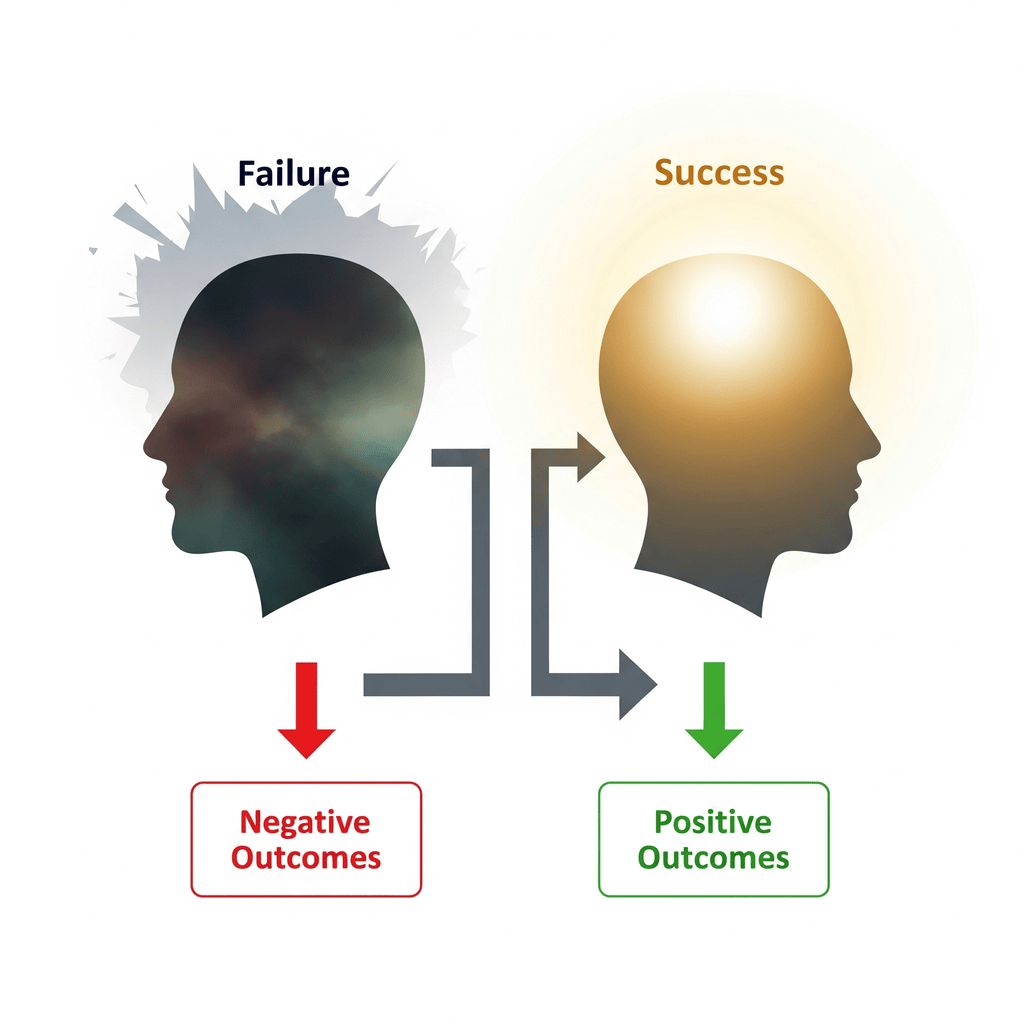
    Visualization is not merely imagining desires. As explained by Rob Gilbert, there is a fundamental difference between winners and losers in how they harness imagination. “Losers visualize the penalties of failure, and winners visualize the rewards of success.” This simple statement has great power: What you focus on mentally will dictate real outcomes.
    When someone focuses on the consequences of failure, they unconsciously program the brain to anticipate defeat, so their steps are haunted by doubt. Conversely, when you imagine a positive result, your attention, attitude, and energy begin to center on achieving the goal, no matter how challenging the path ahead. This is not just empty motivation, but a psychology technique that has been used by top athletes worldwide, successful CEOs, even creative artists.
    However, how can you ensure your visualization does not become mere daydreaming? A systematic framework and step-by-step mental training are offered in the book, which guides you in detail toward effective winning visualization.
    “The complete framework for applying winning visualization is discussed in 5 specific steps within the book…”
    Treasure-Mapping: Mapping Dreams to Reality
    One of the inspirational stories in this book is about a married couple who, for years, struggled to buy their dream home. Change happened when they practiced “treasure-mapping”—posting pictures of their dream home on the fridge and tracking savings through a visual thermometer. In just nine months, the dream became a reality.
    The treasure-mapping technique is not merely “daydreaming”; it is a visual tool that actively conditions your subconscious to move toward the goal. The visual symbols, which you consistently see every day, act as invisible yet powerful reminders, keeping motivation burning even when reality feels exhausting.
    Behind this story, there is a practical methodology so treasure-mapping is more than wall decoration. In the book, you will find how to choose the right visuals, strategic placement tips, and how to measure progress psychologically.
    “However, there are three common mistakes that often occur when trying this treasure-mapping technique, which are thoroughly dissected in our summary…”


    Life as a Canvas Paradigm: Becoming the Artist of Your Day

    Every day is a blank canvas. If you let the “paint” from outside (negative comments, bad news, gossip, environmental criticism) imprint colors and patterns on it, the final result becomes hard to control. A key line from the book reads: “Wake up and visualize your day as a blank canvas. Ask yourself, ‘Who’s the artist today? Blind circumstance, or me?’”
    How you fill life is determined by your awareness of the freedom to choose. If you’re passive, your life becomes a jumble of random colors and unwanted shapes. But when you realize you can choose colors and patterns, that is when the power of personal transformation starts to work.
    Adopting this paradigm means:

    • You selectively consume what you feed your mind each day,
    • You are more aware of the influence of your surrounding environment,
    • You have the power to say “no” to things that pollute your mind.

    The “life as a canvas” paradigm is not just inspirational talk—there is a series of daily exercises that can train you to be more aware, more creative, and more responsible.
    “Advanced techniques of this concept, including daily templates and practical examples, are part of the exclusive insights we prepare at MentorBuku…”


    Reframing Yourself: The True Artist Always Learning

    When you start applying the three concepts above, changes occur not only in the professional sphere but in every aspect of life—from health and relationships to self-discipline. You’ll find that small habits in visualization, arranging physical space through treasure-mapping, and the awareness of living each day as a “painter of life” are the stimuli that awaken your previously hidden potential.
    However, keep in mind:

    • Effective visualization requires practice and structure.
    • Treasure-mapping must be aligned with goals and real actions.
    • The life-as-canvas paradigm requires ongoing habit-building and self-reflection.

    Without a clear step-by-step map, these insights risk becoming fleeting inspiration. Just as an artist needs techniques and repetitive practice to create a masterpiece, you also need a concrete framework to ensure real change happens.
    Also read: The Mountain Is You by Brianna Wiest

    Also read: The Subtle Art Of Not Giving A F*ck by Mark Manson

    Also read: Guerrilla Marketing Field Guide by Jay Levinson, Jeannie Levinson


    Conclusion: It’s Time for You to Become the Maestro of Your Own Life

    The three concepts—visualizing positive outcomes, treasure-mapping, and living as a canvas—are the foundations for reframing your life. The world may not always be friendly, but you always have the power to pour the colors, shapes, and patterns you want into the years ahead. If you currently feel stuck, overwhelmed by things outside your control, or simply want to live more consciously and meaningfully, this book is a real invitation to transform. All technical details, in-depth practices, and real challenges have been mapped out for you—ready to be carried out step by step.


    You’ve just seen the foundation. These concepts are only the tip of the iceberg of what this book offers. How to apply them step by step, avoid common pitfalls, and integrate them into your strategy? All the answers are inside.

    Sign up and get free access at MentorBuku now!

  • The Fundamental Secret of Visualization: A Powerful Catalyst for Transforming Your Life. The Miracle Morning: The Not-So-Obvious Secret Guaranteed to Transform Your Life Before 8 AM by Hal Elrod

    Visualization often sounds like a mystical concept—a practice believed to be useful only for athletes or those who believe in the “law of attraction.” However, in reality, visualization is a revolutionary key that can reshape your habits, ignite your enthusiasm, and truly change the course of your life. In this article, we will explore three fundamental catalysts of the art of visualization derived from “The Miracle Morning,” uncovering why they are so important and, of course, leaving you eager to learn about structured application strategies.

    Why Is Visualization a Game Changer?

    Every person carries the burden of the past: failures, doubts, or even trauma that hinders the path to the future. This is where visualization comes in, not as an escape, but as a “mental time machine” that can spark motivation and steer your life toward a more promising future. Instead of letting bad memories dictate your actions, you now have a tool to fill your mind with an exciting and limitless vision of the future.

    Interestingly, research shows that those who fill their minds with positive images of the future tend to be more resilient, more productive, and better able to maintain motivation when facing challenges. This is not just empty theory; it is the foundation of performance psychology that has helped millions of people change their routines and achieve unexpected accomplishments.

    But how exactly does visualization work as a catalyst for transformation? Let’s break down its three main, interwoven components.


    1. Directed Visualization: Reprogramming the Mind for Success

    Many people start visualizing by simply imagining “wanting to be successful.” However, the real power comes from directed visualization—where you consciously and intentionally design a “mental movie” of how you want to live your ideal day. For example, the author of “The Miracle Morning” makes it a habit each morning to sit quietly, close his eyes, and systematically visualize himself going through his day with enthusiasm and smoothness. From small routines to major achievements, everything is visualized as if it has already happened.

    The strength of this approach lies in its detail. By imagining sensations, emotions, even potential obstacles, you “trick” your brain into believing that success is truly attainable, not just wishful thinking. Every thought, every “scene” you repeat daily becomes the foundation for confidence and a consistent source of motivation.

    But how do you create effective directed visualization? There are three specific steps outlined in the book, including ways to manage the mental resistance that often arises at the start of the practice—and all of them are available in our strategic source.


    2. Vision Board: The Physical “Magnet” for Your Dreams

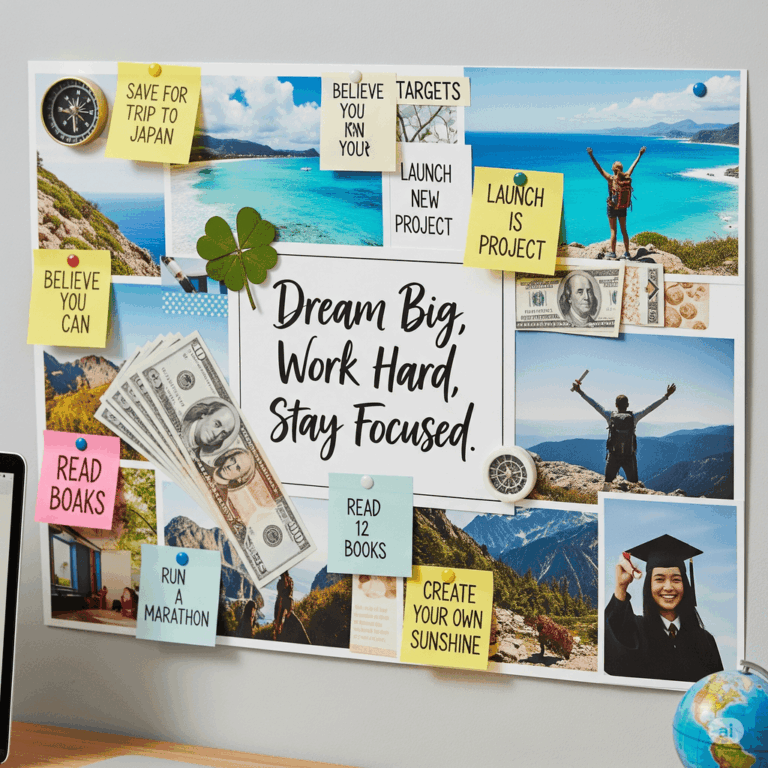
    Imagine your desk covered with inspiring images—dream destinations, role models, financial achievements, or even favorite quotes. That’s the Vision Board, a simple visual tool with extraordinary power. In truth, a Vision Board is a constellation of visuals that helps strengthen your mental images so that your brain can more easily connect your targets to reality.

    This concept was popularized by the book and movie “The Secret,” but what is often overlooked is the process of choosing the right images, arranging them strategically, and maintaining a routine of “interacting” with your Vision Board so that its impact goes beyond mere decoration. Many people make random Vision Boards and then feel disappointed when their dreams don’t come any closer. In fact, there is a specific way to activate this “magnet” so that it truly strengthens your focus and daily energy.

    A complete framework for building an impactful Vision Board, including how to set it up to fit your unique goals, is thoroughly explained in MentorBuku’s exclusive visualization toolkit.

    3. Emotion as Leverage: The Key to Creating Mental “Attraction”

    One often-overlooked secret in visualization is the power of emotion. Merely imagining success is not enough. You need to bring to life the emotions that accompany it—joy, gratitude, even a touch of fear. The stronger the emotions you feel during visualization, the more “real” the experience becomes to your brain. This is why many top coaches emphasize the importance of “feeling” victory even before it actually happens.

    Why are emotions so crucial? Because deep emotions make you see your goal not just as something “worth trying,” but as an inevitability. When you start your morning by “touching” the feeling of satisfaction after achieving success, your motivation to act switches into “turbo mode.”

    Specific steps to evoke emotion during visualization, along with tricks to overcome mental blocks that hinder genuine feelings, are described in a special chapter that is not only theoretical but also practical in our key book.


    4. “Habit Stacking”: Integrating Visualization with Daily Routines

    One reason most people fail to maintain the habit of visualization is the lack of integration into their routines. Visualizing right after waking up is much more effective than scheduling it for “whenever there’s time.” That’s where the concept of “Habit Stacking”—attaching a new habit (visualization) to an existing one (such as drinking a glass of water)—becomes a game changer.

    Not only does this make visualization easier to implement, but habit stacking also strengthens consistency and helps the brain form automatic habit pathways. Over time, visualization will no longer feel like a “chore” but will become an inseparable part of your morning energy.

    A series of powerful habit stacking techniques, along with practical examples for various professions, are offered as part of the bonus strategies available on the MentorBuku platform.


    Conclusion: Visualization Is Not a Dogma, but a Discipline

    Visualization is a catalyst for transforming your life, but only when practiced with discipline and mindfulness. With directed visualization, a meaningful Vision Board, ignited emotions, and habit stacking strategies, you have already opened the door to change. However, the journey doesn’t end here.

    Read also: The Rational Male by Rollo Tomassi

    Read also: The 7 Habits of Highly Effective Families: Creating a Nurturing Family in a Turbulent World by Stephen R. Covey


    Closing: Are You Ready to Become the Architect of Your Future?

    You have just seen the foundation. These concepts are only the tip of the iceberg of what this book offers. How do you apply them step by step, avoid common pitfalls, and integrate them into your strategies? All those answers await inside.

    Sign Up and Get Free Access at MentorBuku Now!