Tag: success mindset

  • The Fundamental Secret of Visualization: A Powerful Catalyst for Transforming Your Life. The Miracle Morning: The Not-So-Obvious Secret Guaranteed to Transform Your Life Before 8 AM by Hal Elrod

    Visualization often sounds like a mystical concept—a practice believed to be useful only for athletes or those who believe in the “law of attraction.” However, in reality, visualization is a revolutionary key that can reshape your habits, ignite your enthusiasm, and truly change the course of your life. In this article, we will explore three fundamental catalysts of the art of visualization derived from “The Miracle Morning,” uncovering why they are so important and, of course, leaving you eager to learn about structured application strategies.

    Why Is Visualization a Game Changer?

    Every person carries the burden of the past: failures, doubts, or even trauma that hinders the path to the future. This is where visualization comes in, not as an escape, but as a “mental time machine” that can spark motivation and steer your life toward a more promising future. Instead of letting bad memories dictate your actions, you now have a tool to fill your mind with an exciting and limitless vision of the future.

    Interestingly, research shows that those who fill their minds with positive images of the future tend to be more resilient, more productive, and better able to maintain motivation when facing challenges. This is not just empty theory; it is the foundation of performance psychology that has helped millions of people change their routines and achieve unexpected accomplishments.

    But how exactly does visualization work as a catalyst for transformation? Let’s break down its three main, interwoven components.


    1. Directed Visualization: Reprogramming the Mind for Success

    Many people start visualizing by simply imagining “wanting to be successful.” However, the real power comes from directed visualization—where you consciously and intentionally design a “mental movie” of how you want to live your ideal day. For example, the author of “The Miracle Morning” makes it a habit each morning to sit quietly, close his eyes, and systematically visualize himself going through his day with enthusiasm and smoothness. From small routines to major achievements, everything is visualized as if it has already happened.

    The strength of this approach lies in its detail. By imagining sensations, emotions, even potential obstacles, you “trick” your brain into believing that success is truly attainable, not just wishful thinking. Every thought, every “scene” you repeat daily becomes the foundation for confidence and a consistent source of motivation.

    But how do you create effective directed visualization? There are three specific steps outlined in the book, including ways to manage the mental resistance that often arises at the start of the practice—and all of them are available in our strategic source.


    2. Vision Board: The Physical “Magnet” for Your Dreams

    Imagine your desk covered with inspiring images—dream destinations, role models, financial achievements, or even favorite quotes. That’s the Vision Board, a simple visual tool with extraordinary power. In truth, a Vision Board is a constellation of visuals that helps strengthen your mental images so that your brain can more easily connect your targets to reality.

    This concept was popularized by the book and movie “The Secret,” but what is often overlooked is the process of choosing the right images, arranging them strategically, and maintaining a routine of “interacting” with your Vision Board so that its impact goes beyond mere decoration. Many people make random Vision Boards and then feel disappointed when their dreams don’t come any closer. In fact, there is a specific way to activate this “magnet” so that it truly strengthens your focus and daily energy.

    A complete framework for building an impactful Vision Board, including how to set it up to fit your unique goals, is thoroughly explained in MentorBuku’s exclusive visualization toolkit.

    3. Emotion as Leverage: The Key to Creating Mental “Attraction”

    One often-overlooked secret in visualization is the power of emotion. Merely imagining success is not enough. You need to bring to life the emotions that accompany it—joy, gratitude, even a touch of fear. The stronger the emotions you feel during visualization, the more “real” the experience becomes to your brain. This is why many top coaches emphasize the importance of “feeling” victory even before it actually happens.

    Why are emotions so crucial? Because deep emotions make you see your goal not just as something “worth trying,” but as an inevitability. When you start your morning by “touching” the feeling of satisfaction after achieving success, your motivation to act switches into “turbo mode.”

    Specific steps to evoke emotion during visualization, along with tricks to overcome mental blocks that hinder genuine feelings, are described in a special chapter that is not only theoretical but also practical in our key book.


    4. “Habit Stacking”: Integrating Visualization with Daily Routines

    One reason most people fail to maintain the habit of visualization is the lack of integration into their routines. Visualizing right after waking up is much more effective than scheduling it for “whenever there’s time.” That’s where the concept of “Habit Stacking”—attaching a new habit (visualization) to an existing one (such as drinking a glass of water)—becomes a game changer.

    Not only does this make visualization easier to implement, but habit stacking also strengthens consistency and helps the brain form automatic habit pathways. Over time, visualization will no longer feel like a “chore” but will become an inseparable part of your morning energy.

    A series of powerful habit stacking techniques, along with practical examples for various professions, are offered as part of the bonus strategies available on the MentorBuku platform.


    Conclusion: Visualization Is Not a Dogma, but a Discipline

    Visualization is a catalyst for transforming your life, but only when practiced with discipline and mindfulness. With directed visualization, a meaningful Vision Board, ignited emotions, and habit stacking strategies, you have already opened the door to change. However, the journey doesn’t end here.

    Read also: The Rational Male by Rollo Tomassi

    Read also: The 7 Habits of Highly Effective Families: Creating a Nurturing Family in a Turbulent World by Stephen R. Covey


    Closing: Are You Ready to Become the Architect of Your Future?

    You have just seen the foundation. These concepts are only the tip of the iceberg of what this book offers. How do you apply them step by step, avoid common pitfalls, and integrate them into your strategies? All those answers await inside.

    Sign Up and Get Free Access at MentorBuku Now!
  • The Fundamental Secrets of the 4-Hour Workweek: Paradigms, Catalysts, and Fatal Mistakes Almost Everyone Makes

    Introduction: Why the World of Work Must Be Completely Overhauled

    Imagine if you could flip the work paradigm: more free time, a steady flow of income, and freedom from the trap of daily routines. The book “The 4-Hour Workweek” doesn’t just offer a dream; it strips away conventional ways that have imprisoned workers, entrepreneurs, and even visionaries. But why do most people still get stuck in the old model? Because they haven’t truly understood the main catalysts, how the paradox of time and value work together, and—most importantly—the fundamental mistakes almost everyone makes when first attempting this revolutionary strategy.

    This article uncovers three key gems: the “minimal work, maximum results” paradigm, the freedom-inducing architecture of automated businesses, and fatal traps you must beware of. However, we are only peeling back a few layers—not providing step-by-step technical guides. To transform your life, you need to understand the “why” before diving into “how.”


    Minimal Work, Maximum Results Paradigm: The Liberating Paradox

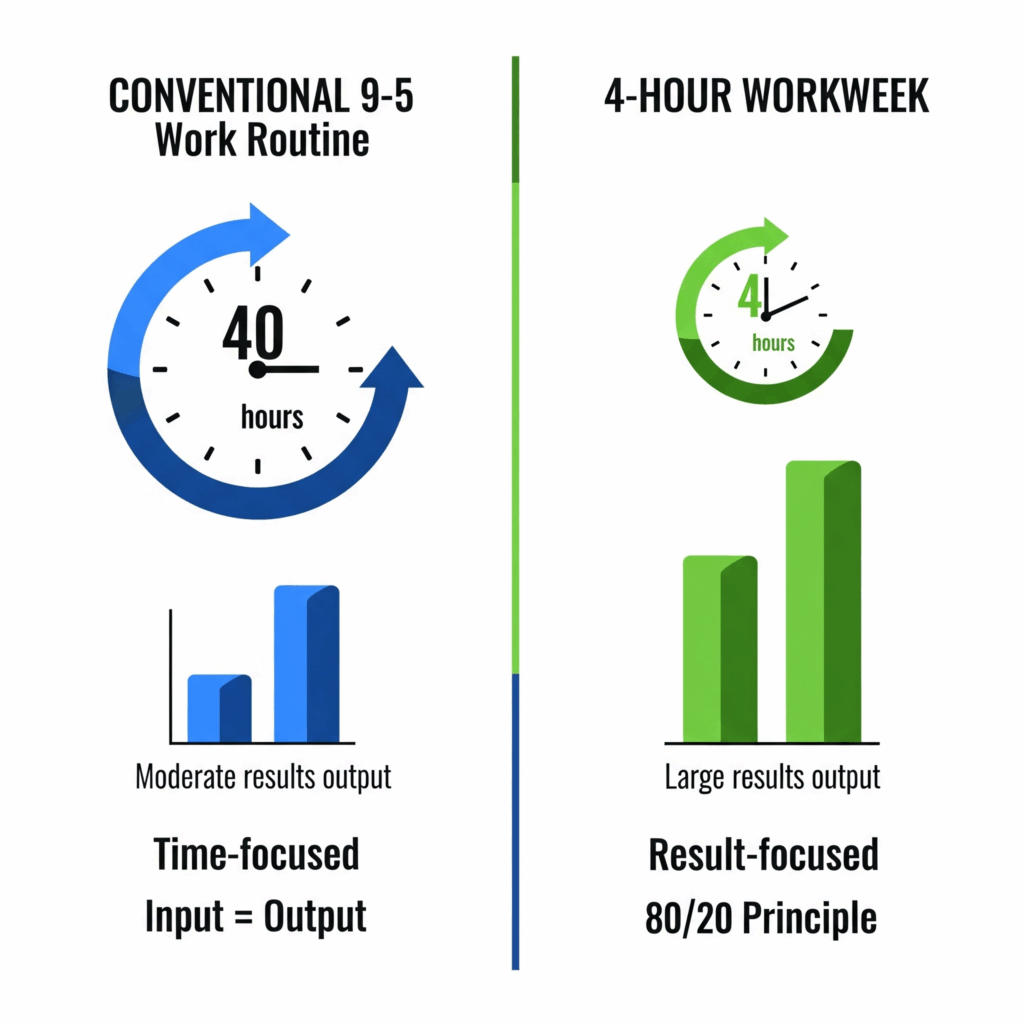
    One of the greatest revolutions from this book is the destruction of the “hard work = big results” mentality. The author dismantles the old myth, replacing it with one key question: “If I could only work 4 hours a week, what would I do differently?”

    This paradigm doesn’t mean you become lazy or neglect your responsibilities. On the contrary, you’re required to be radical in selecting and cutting activities: focus only on the highest-value work. With the 80/20 principle, you are encouraged to identify the 20% of activities that generate 80% of the results. This is the main catalyst that breaks the binds of work hours.

    Moreover, this new paradigm challenges your perception of what you truly want from life: time, mobility, or money? Most workers and business people become absorbed in routines without ever re-evaluating their life goals.

    However, after realizing the importance of cutting work hours and choosing high-value activities, a tempting question arises: “How exactly do you map out your 20% activities? The technique for filtering priority activities used by the author is taught only in the original book…”

    Automated Business Architecture: Turning Ideas into Money While You Sleep

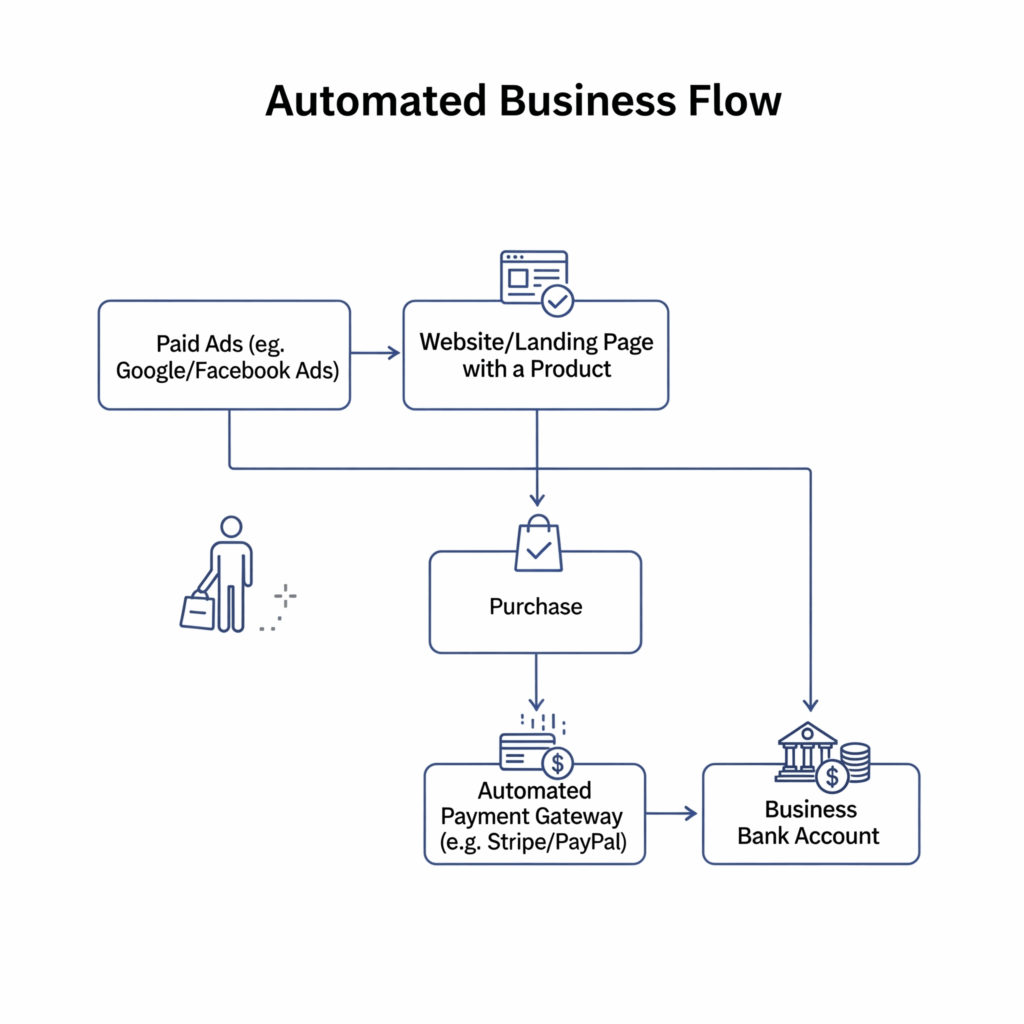
    One of the most compelling sections of this book discusses the architecture of automated business systems. Instead of becoming a “forever worker” in your own company, you’re encouraged to build a business model that requires minimal intervention. There’s a simple diagram that illustrates the flow of money: from advertising (online/offline), to a landing page, to automatic payment processing, and finally—money flows into your account without you being physically or mentally present.

    This concept is the backbone of the “minimal work, maximum results” lifestyle. With automation integration, you can truly become “invisible” behind the scenes—even as your business keeps running and the money keeps coming in.

    This is where the revolution lies: you don’t need to be a tech expert to piece together this architecture. For example, many start with a simple product idea, then run ads and rely on automated payment systems so that orders keep coming in 24/7. However, an important question arises: “The technical steps, tools, and detailed costs required are only explained step-by-step in the architecture diagram and dedicated chapters of this book…”

    Taking Smart Risks: The Zen Story Behind Star Wars

    Freeing yourself from the old system isn’t just about business strategy, but also mental courage. Readers are introduced to real-life stories—one of them being Hans Keeling, who, after taking a huge risk (literally: jumping off a cliff and paragliding in Rio de Janeiro), found a new meaning to life amidst uncertainty.

    Stories like these show that “The 4-Hour Workweek” is more than just a business blueprint. It’s an invitation to courageously face your fears, step outside your comfort zone, and open up new opportunities that previously only existed in dreams. The author often quotes legendary characters like Yoda: “Do, or do not. There is no try.” If you only procrastinate or hesitate, change will never come.

    However, the strategies for resetting personal and mental risk taught in this book are never simply described outside of certain chapters. There are psychological checklists and in-depth questions that can only be found in the original guide.


    Fatal Traps: Common Mistakes Almost Every Beginner Makes

    Tangible failures of this concept usually stem from half-hearted understanding. Many people mistakenly believe that everything can be automated without knowing their priorities, or try to cut work hours without filtering for high-value activities. As a result, they actually become more stressed or lose control over their business and life.

    Another common mistake is the obsession with “work freedom” before having a stable automated income model. In fact, the author warns: streamline your system, truly test the market, and maximize your minimum product or service before completely letting go of daily control.

    Unfortunately, details about the three main mistakes and how to avoid them are discussed through real-life cases in the book. Often, real experiences from seminar participants and failed experiments become the foundation for fail-proof strategies.

    Read also: Young Consumer Behaviour: A Research Companion by Ayantunji Gbadamosi

    Read also: Introducing Economics: A Graphic Guide by David Orrell, Borin van Loon

    Read also: Apartheid and the Making of a Black Psychologist: A Memoir by N. Chabani Manganyi


    Case Studies, Experiments, and Behind-the-Scenes Secrets: What Makes “The 4-Hour Workweek” Different?

    At the heart of this book are dozens of real-life examples—from seminar photo contests, simple experiments to crowdsource marketing content, to stories from families, doctors, and digital entrepreneurs breaking free from traditional work systems. Each case study fuels the reader’s inspiration to dare, fail, and then find their own breakthrough.

    Even reports about how the author “killed the BlackBerry,” broke free from notification chains, and finally “became invisible” in his own business, act as key sparks for shifting mindsets.

    But the most important question always arises: “How do I adapt all these case studies for myself? Templates, worksheets, and communication scripts are covered in depth only in the main source.”


    Conclusion: Why This Book Is More Than Just a Business Guide

    “The 4-Hour Workweek” is an idea catalyst, not just a collection of tricks. It challenges the status quo, teaches you to boldly reject routine, and redesigns life and work based on your deepest desires: freedom and meaning. However, the real secrets are hidden beneath layers of concepts that must be practiced in a structured way—and can only be fully accessed at MentorBuku.


    You’ve just seen the foundation. These concepts are only the tip of the iceberg of what this book has to offer. How do you implement them step by step, avoid common traps, and integrate them into your strategy? All those answers are inside.

    Sign Up and Get Free Access at MentorBuku Now!
  • The Powerful Secret of Kaizen: A New Paradigm for Authentic Success. Stoicism for Inner Peace by Einzelgänger

    Knowledge Gaps in the Pursuit of Success

    Everyone wants to achieve success. But the question is: why do only a few truly achieve it authentically and consistently?
    Most people work hard. They follow “motivational” advice, try popular methods, and even get up before dawn for a new routine. Ironically, the reality is often far from expectations. Many fall short along the way. They feel deceived by the initial enthusiasm that doesn’t last long.
    Behind this repeated failure lies a fundamental lesson: success is not about “working harder,” but “working smarter”—and, more importantly, about shifting the underlying thinking paradigm.

    This article will take you on a journey to explore new landscapes: how the smallest changes, when done correctly, can redirect your life in ways you never anticipated. Every small step becomes a part of continuous transformation—that’s the power of “Kaizen.”


    A New Thinking Paradigm About Success and Failure

    Success has long been associated with big results and instant achievements.
    We tend to focus on spectacular stories: athletes winning gold medals, entrepreneurs becoming billionaires overnight, or debut authors whose books instantly become bestsellers in the global market. Unfortunately, this narrative blinds us to the continuum of failure and the long processes that actually form the foundation of true success.

    Why Old Mindsets Limit Your Major Breakthroughs

    Conventional mindsets always prompt us to ask, “How can a big success happen as quickly as possible?”
    However, the real question should be: “How does the process lead to repeated success without burning out along the way?”
    The book we are discussing invites you to reevaluate all your old beliefs about success. It highlights a fundamental mistake: overvaluing “big wins” while underestimating the power of accumulating “incremental gains.”
    Ultimately, we often find ourselves trapped in a trial & error cycle. We feel like failures not because we worked less hard, but because of the wrong mindset—focusing on spectacular results while ignoring the transformative power of the “repetitive process.” This is the critical point:
    Shifting from a results-oriented paradigm to a process-oriented paradigm is the leap that distinguishes authentic success from mere trend-following.
    However, uncovering the deeper layers of how to identify and break the “failure mindset”—along with practical examples—is the secret that this book elaborates on in detail in a separate chapter.
    “A complete framework for applying the paradigm shift from failure to repeated success is outlined in five phases in this book…”
    Also read: Angels of Aceh: The compelling story of Operation Tsunami Assist by Sophie York


    Unveiling the Kaizen Pattern: Small Changes, Maximum Impact

    Can consistent small changes lead to extraordinary results, rivaling the big breakthroughs that are often glorified?
    The concept of “Kaizen” completely reverses our understanding of how change, achievement, and personal excellence occur.
    Originating from Japanese philosophy, Kaizen is the principle of continuous improvement—making small, measurable, and repeatable enhancements every day. But what is its most important aspect? The unpredictable domino effect that is hard to foresee at the beginning.

    The 1% Rule Phenomenon and Compound Mentality

    Imagine the impact of just a 1% improvement every day. Over the course of a year, that small accumulation can mean a change of 37 times from the original position.
    The phenomenon of the compound effect is not just mathematics: it is a game changer in achievement psychology.
    Kaizen warriors don’t have to master super disciplines, let alone rely on ironclad motivation. They simply need to consistently “stretch” themselves little by little into new zones until profound changes occur naturally.
    On the other hand, massive improvements (big bang transformations) often end up in a cycle of failure–try again–despair. Meanwhile, those who persist with Kaizen quietly build foundations that eventually create a “sudden” success explosion.
    This concept dismantles the failure of the “all or nothing” method and provides a new lens to evaluate daily efforts.
    “Advanced techniques of Kaizen, including how to identify the right 1% steps and strategies to maintain them under daily pressure, turn into practical guidance for you at MentorBuku…”

    Anti-Bad Habit Mindset—Breaking Free from Old Self

    How does someone get trapped in the same cycle of bad habits for years, even when they know it hinders personal success?
    The answer lies in an auto-pilot mindset that resists structural changes.
    Our subconscious belief system constantly whispers comfort of the old while dramatizing the risks of change. When Kaizen is adopted, you are not just adding new habits; you are dismantling old habit cycles, layer by layer.

    The Secret to Breaking the Fail-Repeat Cycle

    This book distinguishes between addictive change (based solely on momentary motivation) and systemic change that truly frees you from the fail-repeat patterns.
    The key secret? “Identity-based habits,” which is a strategy for building habits from the roots of a new identity rather than just a checklist of routines.
    In a specific chapter, the author shows that creating lasting change requires three pillars:

    1. Recognition of old habits (awareness).
    2. Gradual severing of the old “reward chain.”
    3. Construction of a new identity based on small success experiences.

    Resilience becomes a byproduct: the more frequently you succeed at canceling old routines, the stronger the new mentality becomes. However, the three most common traps in this mindset transition—along with strategies to break through mental blocks and self-sabotage—are discussed in detail in the secrets of this book.
    “Psychological steps and templates for dismantling bad habits, including new identity exercises, can be found as practical insights in MentorBuku…”
    Also read: The Power of Your Subconscious Mind by Joseph Murphy


    Environment Redesign—The Catalyst for Transformation

    How significant is the impact of the environment on someone’s journey to success?
    More than many realize. The environment—whether physical, social, or digital—silently fosters (or hinders) the process of change.
    Successful people do not solely rely on discipline but consciously design their environment to support their vision.
    For example, the choice of friends, visual stimuli, availability of positive triggers, or even the setup of daily workflows.
    This book reveals that even a single detail in the environment (such as where to place your to-do list, or who you often converse with) can accelerate or derail long-term goals without your awareness.

    Key Factors That Secretly Shape Outcomes

    A simple analogy: an artist may have talent, but without light and access to quality materials, they will never produce a masterpiece.
    Similarly, anyone risks repeating failures if they don’t change key environmental elements—often, this is more determining than the internal motivation touted elsewhere.
    This book breaks down smart ways to structure micro and macro environments, along with a “success environment audit” so your journey of change is no longer trial and error. From a checklist for redesigning the environment to real-time evaluations, everything is available as a special part of the MentorBuku program.
    “The toolkit for redesigning the environment, complete with case examples and real scenarios, becomes exclusive insights that you can access in our advanced summaries…”
    Also read: Keto Comfort Foods: Family Favorite Recipes Made Low-Carb and Healthy by Maria Emmerich

    Also read: Essential Yoga: An Illustrated Guide to Over 100 Yoga Poses and Meditations by Olivia H. Miller


    Conclusion – Strategic Gaps & Action Triggers

    After exploring these four key concepts—the authentic success paradigm, the power of Kaizen, the anti-bad habit mindset, and the importance of environment—do you feel your understanding gap is narrowing, or rather deepening? This is where “the knowledge gap” lies:
    Knowing the “what” and “why” is just the beginning. However, applying precise steps, avoiding traps in the process, and optimizing all these pillars simultaneously—that is the achievement that can only be attained with structured guidance.

    Insight is an asset that cannot be postponed. Every day without a deeper understanding is a missed opportunity. Don’t let your competitors gain this advantage before you do. Sign up and get free access to MentorBuku now!

  • The Secret of Authentic Negotiation: A New Mindset Paradigm in Never Split the Difference by Chris Voss with Tahl Raz

    Introduction: Why Do We Fail at Negotiation?

    Many people think negotiation is just about bargaining over prices or winning arguments. However, most of us fail. Why is that?
    Because all this time, we have often focused too much on “numbers” and “logic,” when in reality the real action takes place on a much deeper level: psychology and emotion. To truly understand and master negotiation, you must dare to look into the dark side of the human mind and apply strategies that are often overlooked.
    The book “Never Split the Difference” by Chris Voss—a former FBI hostage negotiator for high-stakes cases—offers a revolutionary new paradigm. It is not just theory, but the product of decades of life-and-death situations, direct from the front lines of the world’s toughest negotiations.

    Read also : Brand Naming: The Complete Guide to Creating a Name for Your Company, Product, or Service by Rob Meyerson

    Authentic Paradigm: Between Empathy, Reality, and Real Results

    Successful negotiation is born from the courage to face raw truth—including negative emotions. You’re not just talking to win, but subtly reading and guiding the meaning of the conversation. Chris Voss calls this “empathic negotiation.”

    Labeling – Turning Fear Into Strength

    One of Voss’s central techniques is “labeling.” Labeling is not just guessing or assuming what the other person is feeling, but actively “naming” their emotions and concerns. For example: “It seems you have doubts about this offer…” or “It looks like this situation is making you worried.”
    What’s its power? Neuroscience has proven that when someone is asked to name their emotions—such as fear—the brain’s activity shifts from the “fear” center (amygdala) to the logical area. As a result, panic intensity drastically decreases, and the other party is much more ready for a rational conversation.
    Additionally, labeling helps unravel the quality of communication in high-tension moments: “Exposing negative thoughts to daylight… makes them seem less frightening,” Voss writes. You can control the situation with just a single, simple sentence—if you know how.
    The complete framework for effective labeling—including specific phrases and practical exercises—is detailed in five special steps in this book…

    Master the Mindset: Negotiators Are Emotional Detectives

    A great negotiator trains themselves to become an “emotional detective.” Their task: to catch, understand, and handle emotional cues, whether implied or explicit.
    Rather than being busy “crafting the perfect response,” you should sharpen your sensitivity to changes in tone of voice, body language, and your counterpart’s expressions. This is the key to unlocking solutions that have long been hidden beneath layers of prejudice.
    However, there are three common pitfalls that often lead negotiators to complete failure when attempting to act as emotional detectives—all the strategies for overcoming them are thoroughly explained in the mentorbuku summary…

    Read also : Ghosts by Daylight: A Modern-Day War Correspondent’s Memoir of Love, Loss, and Redemption by Janine di Giovanni

    Field Story: Terrorists, the Media, and the Dark Side of Negotiation

    This book doesn’t stop at the conceptual level. You’re taken into the most brutal arena: elite negotiations with dangerous individuals. One example is when Chris Voss had to face Sabaya, the radical Abu Sayyaf figure known for recording acts of violence and sending them to the media.
    Sabaya: a terrorist-sociopath, a killer with a dark history and a string of brutal acts in the Philippines. He loved the media—and knew exactly how to manipulate public perception.
    In this real-life experience, ordinary strategies would surely fail. FBI negotiators were forced to go beyond reason: pushing themselves to understand the dark side of their opponents in order to save lives without “splitting the difference” or making dangerous compromises.

    Conquering the Opponent’s Ego Through a Realistic Approach

    The key to victory in this negotiation was not intimidating words or empty promises. It was the ability to subdue the opponent’s ego with a realistic approach and direct exposure to the emotional reality the perpetrator was experiencing.
    Every move, every sentence, had to be crafted to open up a space for dialogue with an opponent who was paranoid, manipulative, and full of hidden agendas.
    Yet, advanced communication techniques capable of “hypnotizing” the opponent’s narrative into submitting to reality can only be learned if you master the mix of strategies and authentic FBI sequencing as described in the book…

    Read also : Performance Marketing with Google Analytics: Strategies and Techniques for Maximizing Online ROI by Caleb Whitmore,Justin Cutroni,Sebastian Tonkin

    Why Does This FBI Concept Change the Game?

    Many negotiation books advise: “Find the middle ground,” or “Compromise is key.” But the reality on the field is very different. Chris Voss’s concept goes against the mainstream. His techniques expose the biggest myth: compromise is not a guaranteed solution.
    The FBI strategy focuses on achieving optimal solutions through deep psychology, not merely narrowing differences. When negotiating with lives at stake, compromise can end in disaster.
    Therefore, this approach offers a paradigm shift for anyone who wants to win negotiations—whether in business, family, or everyday life.
    However, without a fundamental understanding of the “worst consequences” from misapplying this FBI strategy, you are actually at risk. The three most terrifying patterns of failure when mistakenly adopting the principles from this book are structured and revealed in the MentorBuku reference. Don’t try it recklessly, without a solid foundation…

    Read also : Flying Free: My Victory Over Fear to Become the First Latina Pilot on the US Aerobatic Team by Cecilia Aragon

    Conclusion & The Path to the Next Level

    Every world-class negotiator knows: winning isn’t about speed, let alone volume. It’s about understanding human nature: emotions, fears, ego, and deepest needs.
    The FBI paradigm opens the “second gateway” in negotiation: a world where sharp empathy, labeling, ego play, and personal storytelling are the main weapons. What you have in your hands now is only the foundation—the what and the why.
    In the end, you’ll realize: the most important aspect of advanced negotiation techniques is not just knowing them, but applying them systematically, avoiding pitfalls, and building self-reflection.


    You’ve just seen the foundation. These concepts are only the tip of the iceberg of what this book has to offer. How do you apply them step by step, avoid common pitfalls, and integrate them into your strategy? All the answers are inside.

    Sign up and Get Free Access at MentorBuku Now!

  • The “Ego Is the Enemy” Strategy: The Secret Paradigm of Self-Mastery for Authentic Greatness. Ego Is the Enemy by Ryan Holiday

    Introduction: Behind Success, There Lies a Hidden Foe

    History is full of stories about the failures of geniuses, leaders, and brilliant artists. Why do these individuals, despite being brimming with talent and brilliant ideas, often end up trapped in cycles of failure or mediocrity? The answer often whispers quietly but bites deeply: ego.
    The book “Ego Is the Enemy” delves into the deepest roots of this hidden enemy. Through sharp narratives and real-life examples, this book offers a series of insights into ego—not just in the context of psychology, but as an invisible “hijacker” that can strike anyone at any time.
    This article presents some gems of concepts from a book that has been, and always will be, relevant to anyone seeking to reach authentic and sustainable heights. This is an initial roadmap. However, the path to real change awaits in deeper sections.

    1. Ideas and Work: Why Do Ideas Remain Just Ideas?

    Many of us, like Edgar Degas the seasoned painter, feel full of ideas—sometimes even exploding with inspiration. However, inspiration without execution is powerless to bring real change. A famous conversation between Degas and the poet Mallarmé sums it up: “I can’t write the way I want to, even though my head is full of ideas,” Degas lamented. Mallarmé’s reply was gentle but piercing: “Poems aren’t made with ideas, Degas. They’re made with words.”
    Just like poetry, success in life is only achieved through work, not merely intention. Peter Drucker, the management maestro, asserted, “The best plan is just good intentions unless it degenerates into work.” The biggest obstacle is not a lack of inspiration, but the ego that whispers, “Great ideas are enough; the details can wait.”
    Without the ability to turn ideas into actions, great achievements are nothing but empty dreams. A framework for consistently translating ideas into concrete results, complete with techniques for daily discipline, is thoroughly explored in this book…


    2. The “Canvas Strategy”: The Unconscious Direction Setter

    Most people, driven by ego, want to be at center stage—to control everything, to be known by everyone, to receive instant recognition. Yet, a quiet strategy actually offers a different path: becoming the “canvas setter” who shapes the direction without needing to be in the spotlight.
    The Canvas Strategy teaches us to clear the way for others and contribute selflessly at the outset of our journey. Strangely, by doing so, you are the one shaping the future. Just as a canvas frames a painting, you decide its tone.
    This strategy knows no age, rank, or even length of experience. From before starting a career to leading an organization, anyone can begin. What sets people apart is the ability to restrain the ego—retrain yourself—and consistently focus on contribution rather than praise.
    The complete techniques for systematically practicing the Canvas Strategy, including how to build authentic reputation without appearing to “suck up” or self-sacrifice, are dissected in several dedicated chapters in this book…


    3. Resisting Illusion and Accepting Reality

    It is easier to build illusions of glory than to accept the harsh reality of failure or shortcomings. Ego often plunges us into the narrative of “I already know,” or “I can definitely do it,” even when the facts say otherwise.
    However, as illustrated in the story of John DeLorean, being lulled by baseless ambition for too long and ignoring the warning signs of failure actually led him to total ruin. In truth, falling is not the end. This book affirms that the only way to appreciate personal progress is by standing at the edge of the very pit of failure we once dug, then learning from it and improving our character.
    Challenging the ego to willingly accept facts, admit failure, and rise stronger is a fundamental lesson dissected thoroughly. Yet, the three most common ego traps that hinder your achievements—along with techniques to dismantle them one by one—are only comprehensively outlined within MentorBuku’s detailed guide…


    4. The Willingness to “Draw the Line”: Preserving Character

    Marcus Aurelius once said, “He can only destroy your life if he destroys your character.” In today’s world, dominated by fierce competition, the temptation to trade principles for superficial victory becomes ever more enticing. Ego persuades us to cross the line “just a little,” promising, “you can always go back later.”
    In reality, true strength lies in the courage to draw boundaries. Restraining oneself, saying “enough,” and choosing consistency of character over fleeting desires. This ability, more than just discipline, is the art of enduring life’s toughest trials.
    The big questions: How do you set healthy boundaries? How do you cultivate mental resilience so your character remains intact when pressure peaks? A practical framework for applying the “draw the line” concept in full, including modern case studies and character-building tools, are presented in detail among MentorBuku’s insights…


    5. Transformation through Humility: Becoming an Unshakable Individual

    One of the greatest paradoxes is: the more humble someone is, the harder it is for ego to bring them down. This book highlights the power of humility—active humility, not mere resignation. With humility, you open endless opportunities for learning, accept criticism, and turn failure into a leap of progress.
    The book reveals how the world’s most successful figures almost always share one common thread: a commitment to suppressing ego, learning at every step, and never tiring of self-improvement. However, the mental techniques of a “humility routine” and ways to build daily self-awareness habits—which truly set apart genuine winners—are only available in the exclusive MentorBuku recommendation modules…


    Conclusion: Becoming the Master, Not the Slave of Ego

    Why is ego so elusive, alluring, yet dangerous? Because it clings in the form of hopes, good intentions, even overconfidence. Yet, by dissecting the lessons of key figures and adopting the tactical strategies in this book, you have the chance to become the one in control of your life—not just a victim of your own ego’s impulses.
    Are you ready to follow the roadmap to conquer ego and rewrite your success narrative? The answer starts here.

    Read also : Parenting from the Inside Out by Daniel J Siegel


    Read also : Why Are All the Black Kids Sitting Together in the Cafeteria? by Beverly Daniel Tatum


    Read also : Conversations on Love by Lunn Natasha


    You have just seen the foundation. These concepts are only the tip of the iceberg of what this book has to offer. How do you apply them step by step, avoid common pitfalls, and integrate them into your strategy? All those answers are inside.
    Sign up and Get Free Access on MentorBuku Now!

  • The Fundamental Battle: The Powerful Way to Conquer the Enemy Within and Find Life’s Purpose. Win Your Inner Battles: Defeat The Enemy Within and Live With Purpose by Darius Foroux

    Introduction: Why the Greatest Struggle Actually Happens Within Ourselves

    Have you ever felt as if something is always holding you back from success? Not just external obstacles, but a small voice inside your head that constantly doubts, procrastinates, and even frightens you from moving forward. This voice is the ‘enemy within’—a mental challenge that is real but often invisible to others.
    The book “Win Your Inner Battles: Defeat The Enemy Within and Live With Purpose” dissects the internal warfare experienced by almost everyone. More than just motivation, this book offers strategic insights on how self-discipline, perseverance, and an understanding of true purpose can become your ultimate weapons to win this internal battle.
    In this article, you will discover three key concepts that form the foundation for victory against the enemy within. Each concept is not just about the “what” and “why,” but is also paired with knowledge hooks that will make you eager to know “how” to apply them in detail.


    H2: 1. Recognizing the Enemy Within: How ‘Resistance’ Destroys Your Potential

    One of the most compelling insights from this book is the concept called “resistance”—an internal push-and-pull force that becomes the main obstacle to all creative work and achievement. Steven Pressfield calls resistance the universal enemy of writers, creators, entrepreneurs, and anyone who wants to make a significant change in their life. Resistance manifests in the form of procrastination, self-doubt, fear of failure, and even excessive perfectionism.
    Why is resistance so dangerous? Because it operates silently, trapping you in a comfort zone and uncertainty. The bigger your dreams and steps, the stronger resistance attacks. If left unchecked, resistance will paralyze initiative and cause you to miss the best opportunities in life.

    However, a framework for identifying various types of resistance and the specific strategies to conquer them is thoroughly dissected in the book—including how to map out your own key weaknesses, which most people are often unaware of. The advanced strategies and mental exercises are part of a special toolkit that you can find in the MentorBuku summary.

    Read also : $100M Offers by Alex Hormozi

    H2: 2. Taking Control: The Power of Small Actions and Self-Discipline

    The second revolutionary concept is the importance of small, consistent actions as the primary way to conquer the enemy within. This book emphasizes that victory in the ‘internal battle’ is not about one grand moment, but rather a series of simple decisions made consciously every day.
    Why is this important? Because people often get trapped in the paradigm of “waiting for the perfect moment.” In reality, true progress is built on the courage to take the first step—no matter how small—and on proactively building competence from one experience to the next.
    Self-discipline becomes the catalyst that separates those who merely dream from those who truly win. You are encouraged to build “confidence through competence,” starting with simple things and eventually generating the courage to conquer your deepest fears.

    The specific framework for how to initiate change, the method for building disciplined habits that do not easily collapse, as well as real-life transformation case studies, are detailed step-by-step in the book. There is also a strategic guide for taming distractions in the digital age, which is something never discussed in conventional motivation.

    Read also : THE RUDEST BOOK EVER by Shwetabh Gangwar

    H2: 3. Finding and Living a Purpose: From Reaction to Meaningful Action

    The enemy within often obscures one fundamental thing: a purpose in life. In many cases, people live their days simply to fulfill expectations, compare themselves to others, and respond to environmental pressures, rather than acting based on a personal mission.
    This book reveals the importance of “purpose”—an authentic purpose that comes from within. Those who live with purpose are not only more resilient in facing trials, but are also more inclined to share and give without expecting anything in return. This is the foundation of true life satisfaction.
    Why? Because without a clear purpose, every achievement feels empty. Life becomes a series of passive responses rather than the embodiment of meaningful action. When you begin to identify ‘why’ you are fighting, the strength to defeat the enemy within multiplies.

    The in-depth process for discovering true purpose and how to prevent the trap of comparing yourself to others is fully explored in the MentorBuku toolbox, complete with reflective exercises and real-life examples from transformational achievers.

    Read also : Why Has Nobody Told Me This Before? by Julie Smith

    H2: 4. Conquering the Noise: How to Reject Expectations and Focus on Yourself

    One of the biggest battles in the modern era is the ability to reject ‘the noise’—whether it’s social demands, pressure to be like others, or the temptation of distractions that destroy focus. The book “Win Your Inner Battles” emphasizes the importance of being selective about what you accept and who you spend your time with.
    Why must you dare to say no? Because your time and energy are limited. When you say yes to external requests too often, you are forced to sacrifice your personal agenda and integrity.
    The discipline to eliminate noise is not just about mental toughness; it also requires a mature relational strategy. You will learn how to “say no” without guilt, manage others’ expectations, and ultimately build a circle that strengthens your mental resilience.
    A practical guide to prioritizing time, redefining relationships, and assertive communication templates are all available in a masterclass accessible through MentorBuku.


    H2: Conclusion: Time to Be the Winner on the Inner Battlefield

    The most real war that determines your future is not external competition, but the daily battle within yourself. Through the concept of resistance, the importance of small and disciplined actions, finding authentic purpose, and sharpening focus, the book “Win Your Inner Battles” provides a strong foundation for you to be ready to fight and win.
    However, the applicable strategies, concrete steps, case study examples, and supporting exercises that separate those who win from those who merely know—all of these can only be found if you dig deeper.


    You’ve just seen the foundation. These concepts are merely the tip of the iceberg of what this book offers. How do you apply them step-by-step, avoid common pitfalls, and integrate them into your strategy? All those answers lie within.

    Sign Up and Get Free Access on MentorBuku Now!

  • Obstacle Is the Way: The Stoic Secret to Conquering All of Life’s Challenges. The Obstacle Is the Way by Ryan Holiday

    Introduction: When Life Forces You to Ask, “Why Is All This Happening?”

    Everyone, without exception, faces life’s challenges. In business, career, family, or the search for personal meaning—frustration, failure, and setbacks seem like perpetual enemies.

    So what if the best way isn’t to run away, but rather to change our perception of the obstacle? The book “The Obstacle Is the Way” by Ryan Holiday presents a radical answer: what stands in your way is the way itself.
    This article will dissect the three most fundamental Stoic paradigms from the book—concepts that can shift the way you perceive and respond to challenges. You will discover why a change in perspective is not just a theory, but a catalyst for transforming “problems” into authentic opportunities. However, its practical application techniques are deliberately reserved for those who are truly thirsty for change.

    Read also : I Will Teach You To Be Rich by Ramit Sethi

    I. Practicing Objectivity: The Art of Seeing Facts, Not Drama
    Let’s begin with the most essential Stoic discipline: resisting emotional impulses and separating facts from emotional judgment.
    According to the philosopher Epictetus, when you say “This happened and this is bad,” you are actually mixing two different things: the objective fact (“This happened”) and the subjective interpretation (“This is bad”). As a result, you get trapped in a drama of your own mind’s making.
    Ryan Holiday illustrates how Miyamoto Musashi, the legendary samurai, practiced this. Musashi distinguished between the “observing eye” (seeing things as they are) and the “interpreting eye” (seeing with bias). The observing eye is able to find opportunities behind bitter events, whereas the interpreting eye easily makes everything seem more frightening than reality.
    What is the concrete benefit of this objectivity? You begin to face problems as neutral, analyzable events, not as disasters that grip your emotions. This is the foundation of courage and mental toughness.
    However, the specific framework for practicing objectivity every day — including emotional detachment techniques and “cognitive reframing” — is explained through practical examples in the book and our in-depth summary at MentorBuku…

    Read also : Frames of Mind by Howard Gardner

    II. The Discipline of Action: Taking Steps, Not Waiting for Perfection

    After reshaping your perspective, the next step is to act without delay. Stoics don’t rely solely on motivation; they build a consistent work discipline.
    Ryan Holiday emphasizes that an orientation toward action is a primary human duty. Just like a true artist who gives their all to every project—prestigious or not—we too must deliver our best performance on whatever task we face, not wait for praise or ‘perfect’ conditions first.
    The core of this concept is to:

    • Eliminate procrastination caused by perfectionism,
    • Treat every task, no matter how difficult, as deserving of maximum effort,
    • Transform hard work into a form of authentic self-expression.

    The discipline of action also distinguishes between “reactive work,” which is based on fleeting emotions, versus “proactive work,” which is driven by principles and long-term goals.
    How can you discipline yourself so that action becomes a habit, not the result of a momentary burst of motivation? This book unpacks five powerful strategies for building a doer’s mentality, not a spectator’s. However, the specific time management techniques, daily rituals, and reminder systems are a privilege for MentorBuku members…


    III. Finding the Opportunity Behind Every Obstacle

    The third paradigm that forms the Stoic foundation for handling obstacles is reverse thinking: viewing an obstacle not just as a problem, but as a “catalyst” for growth—often the very source of an advantage.
    Ancient Stoics taught to look for the “fertile ground” in every adverse event by asking a fundamental question: What is the hidden value in this setback? Instead of self-pity, they focused on unearthing opportunities, for instance by pursuing innovation, strengthening character, or discovering new, previously hidden purposes.
    Ryan Holiday gives the example that every great entrepreneur, athlete, and leader has always conquered life with the logic: Because of this, not in spite of this. What is a hindrance in the eyes of the average person becomes a means of transformation for them.
    The philosophy of “the obstacle is the way” has turned failed startups into giants, weak teams into champions, and wounded individuals into mentors for many.
    However, the three common mistakes that often cause this concept to fail in real-world application—from over-optimism to fatalism—are only unpacked practically and in-depth in our summary…


    IV. Integration: From Perception and Action to Transformation

    The three pillars above—objectivity, the discipline of action, and finding opportunity in adversity—form the foundation of the Stoic strategy for conquering life’s challenges. However, the greatest benefits can only be felt if you are able to integrate them practically into your daily routine. This process doesn’t happen magically overnight, but through practice, reflection, and long-term commitment.
    Are you ready to change the way you think and act? The key is to start with one pattern: first, observe calmly; then, act with full awareness; and always, look for the opportunity where others only see disaster.


    Conclusion: Will You Let Challenges Become an Excuse or a Springboard?

    When problems arise, anyone can complain. However, only those who practice The Obstacle Is the Way realize: every obstacle is not just a test, but also an invitation to level up in the game of life. The real secret of the Stoics is the ability to see the game behind the scenes, to process disappointment into energy, and to turn a “stumbling block” into a “stepping stone”.

    You have just seen the foundation. These concepts are merely the tip of the iceberg of what this book offers. How to apply them step-by-step, avoid common pitfalls, and integrate them into your strategy? All those answers are inside.

    Sign Up and Get Free Access at MentorBuku Now!

  • ANALYSIS & THEMATIC ANGLE DETERMINATION. The Magic of Thinking Big by David J. Schwartz.


    After reviewing the key parts of the book “The Magic of Thinking Big” by David J. Schwartz, there are three gems of ideas that are closely related and can be woven into a single common thread:

    1. The power of mental pictures in our minds—that we think not in words, but in images formed from words.
    2. The importance of believing in growth and improvement—a proactive attitude to seek opportunities for expansion, efficiency, and new ideas that bring progress.
    3. The destructive impact of a negative mindset—that negative thoughts can have real consequences on outcomes and lead to missed opportunities.

    Main Thematic Angle: “How a Positive Mindset Becomes a Catalyst for Success and Growth—Starting from How You See the World in Your Mind.”
    Step 2: MAGNETIC TITLE & FRAMEWORK DEVELOPMENT
    Title Options (40-60 characters):

    1. The Secret to a Positive Mindset: A Real Catalyst for Success!
    2. Revealed! The Big-Thinking Method You Often Ignore
    3. Authentic Paradigm: The Key to Visualizing Instant Success
    4. The Magical Mindset That Shapes Your Future Now
    5. Avoid This Fatal Mistake: The Thinking That Destroys Potential

    Best Title: The Secret to a Positive Mindset: A Real Catalyst for Success!
    Article Outline:

    • H1: The Secret to a Positive Mindset: A Real Catalyst for Success!
      • Introduction: Why Your Way of Thinking Is the Starting Point for Success
      • H2: Mind Pictures: The Foundation of How Your Mind Works
        • H3: Turning Words into Pictures of Success
      • H2: A Proactive Attitude: Echoing Growth and Innovation
        • H3: Case Study: Three Different Ways to Approach Challenges
      • H2: The Power and Peril of a Negative Mindset
        • H3: Opportunities Lost Due to the Wrong Mindset
      • H2: Conclusion: Changing the World Through Your Mindset
      • CTA: Steps to Gain Deeper Insight

    Step 3: ARTICLE DRAFT WRITING (1500-1600 words, SEO & CTA Integrated)


    The Secret to a Positive Mindset: A Real Catalyst for Success!

    Why Your Way of Thinking Is the Starting Point for Success

    Everyone desires greater achievements in life—be it a soaring career, harmonious relationships, or continuous self-development. However, there is one universal foundation that sets winners apart: mindset. But did you know that a mindset is not just a collection of motivational words passing through your mind? It is a collection of “pictures” that unconsciously shapes our attitudes, decisions, and daily actions.
    The book “The Magic of Thinking Big” teaches a fundamental concept—your mind is a giant movie theater. Every word, comment, and thought you consume is actually converted by the brain into a series of mental pictures. This is where major change begins. This is not merely a theory; it is a strategy of how the human brain works, affirmed by experts and supported by modern research.
    This article will invite you to see how the power of a positive mindset can become the greatest catalyst for real success. We will dissect three core concepts of “thinking big” that will open up a new perspective. However, remember: you will only see the foundation here. The complete effective implementation methods are available with a MentorBuku membership.

    Read also : Zero to One by Peter Thiel

    Mind Pictures: The Foundation of How Your Mind Works

    Have you ever realized that when you hear someone say, “I failed,” you automatically picture a gloomy atmosphere, disappointment, or a person with their head down? The brain doesn’t stop at words. Every word heard and read is immediately processed into a “mind picture,” or a visual image that greatly influences your emotions and attitude. — The Magic of Thinking Big by David J. Schwartz.
    This is why the language you use with yourself or others largely determines your next actions. For example: the word “challenge” creates an image of a demanding but inspiring uphill path, while the word “problem” conjures an image of a dead end or a trap.
    A small change in word choice can make the difference between feeling motivated or discouraged. Great leaders guide their teams with visionary words that ignite images of great future possibilities, rather than simply staying in their comfort zone or giving up.

    “When you speak or write, you are a film director showing a movie in other people’s minds. The picture you create determines how you and others will react.” — The Magic of Thinking Big by David J. Schwartz.
    However, to master this art, you must understand the specific formula for consistently building “mind pictures” with a positive aura—including choosing strategic diction and how to practice it in daily communication. This book dissects the structure and practical exercises for creating narratives that build images of success in your subconscious—a vital component that can only be found in the concise summary for MentorBuku members.

    Baca juga : 12 Rules for Life by Jordan B. Peterson

    A Proactive Attitude: Fostering Growth and Innovation

    Next, let’s look at a concrete example from the real world, as shared by Schwartz. There are three types of people in an organization: the self-satisfied, the pessimist, and the visionary. Only one category continues to grow—those who always seek opportunities to advance, find room for innovation, and dare to suggest improvements. These are the people who build a culture of growth, both for the business and for themselves.
    When asked to assess their workplace, a visionary employee says, “We’re already good, but we can be better.” They then share a wealth of innovative ideas: from finding ways to acquire new clients to devising fresh marketing campaigns and revamping the compensation system to better motivate the team.
    Companies that survive and thrive are those filled with people who have this kind of proactive attitude. They are not content with the comfort zone; there is always a “we can do better” spirit and an exploration of solutions. Even when achievements fall short of the target, their feedback remains constructive: “What can be improved next?”
    However, it’s not just about intention. There is a specific mindset, set of habits, and particular questions that strengthen this visionary character in daily life—from goal setting and evaluation to self-negotiation. You will find the complete framework for its implementation, including the daily question list of great thinkers, only in our exclusive summary.

    The Power and Peril of a Negative Mindset

    Not many people realize that a negative mindset doesn’t just worsen your mood; it can literally ruin your destiny and opportunities. Schwartz reveals a true story: a professional lost an important client simply because he maintained a pessimistic tone during a forty-minute discussion. In reality, the client was fundamentally a good person; it was the professional’s negative mindset that caused the failure. — The Magic of Thinking Big by David J. Schwartz.
    Every negative attitude, comment, and conversation sticks like a ‘stain’ in your mind. Over time, it will eat away at your self-confidence, relationships, and even your own business. This vicious cycle is hard to break if you don’t start with self-awareness and the right mental strategy.
    Sometimes, even one pessimistic experience is enough to bury years of potential success. Imagine how many opportunities pass you by just because you allow doubt and anxiety to take the wheel. This isn’t rhetoric—its impact is real in both professional and personal aspects.