We often hear the saying, “When the student is ready, the teacher will appear.” This simple sentence speaks volumes about the importance of readiness in acquiring knowledge and wisdom. Through understanding and self-awareness, we can explore the limitless potential within ourselves. This article delves into how self-awareness can be a catalyst for greater success in our lives.
The Importance of Self-Awareness
Self-awareness is not just about knowing our strengths and weaknesses. It is an ongoing process in which we reflect on our experiences, emotions, and reactions to various situations. By understanding who we are and what we want, we can better direct our lives. Self-awareness leads us to a deeper understanding of our life goals and mission.
Why is Self-Awareness So Important?
Helps in Facing Challenges: When confronted with difficulties, self-aware individuals tend to be better at analyzing situations and determining appropriate steps. They do not just react; they prefer to respond with wisdom.
Enhances Relationships: By becoming more aware of our emotions and reactions, we can communicate more effectively. This creates deeper and more authentic relationships with others.
Continuous Personal Development: Self-awareness encourages us to keep learning and growing. It triggers a healthy curiosity that will lead us toward greater success.
But building self-awareness is not an instant process. There are various practical steps and techniques that can be applied, which are discussed further in the book we recommend.
One valuable lesson told in an anecdote about a sculptor is the importance of having personal standards. When a student sees a beautiful statue that has some minor damage, he is amazed by its beauty. However, the sculptor destroys the statue because he is not satisfied with his self-imposed standards—something that may not be visible to others but is important to him.
Why You Should Have Personal Standards?
Encourages Quality and Integrity: When you set high standards for yourself, you strive to deliver the best results in every action.
Maintains Consistency: By having clear standards, you can be more consistent in your life goals and decisions.
Inspires Others: When people see you committed to your standards, they may be inspired to pursue their own goals in the same way.
Skills and techniques on how to set and maintain personal standards will be discussed in more detail in our recommended book…
One of life’s biggest challenges is uncertainty. In critical moments, finding clarity through self-awareness can help you stay on track until you achieve your goals. When difficulties strike, it’s important to understand that every experience is an opportunity to learn.
Why Is Facing Uncertainty Important?
Developing Resilience: The ability to endure and stay focused amidst challenges is a crucial life skill. It will prepare you to face the future more effectively.
Creating Independence: Self-awareness helps us become more independent in making decisions and facing risks.
Gaining Valuable Insights: Experiences, even the toughest ones, often bring valuable lessons that can only be learned by understanding our situations well.
However, some effective strategies for facing this uncertainty are detailed in our book…
Self-awareness is an incredibly valuable tool in achieving true success. By understanding ourselves, reaching personal standards, and facing uncertainty, we pave the way to our true potential. Creating this awareness is not easy, but the journey will surely yield remarkable results.
You have just seen the foundation. These concepts are just the tip of the iceberg of what this book offers. How to apply them step by step, avoid common pitfalls, and integrate them into your strategy? All the answers can be found within.
Every day, we face two fundamental forces that shape reality: Order and Chaos. Order is structure, predictability, and safety. It is your work schedule, traffic laws, and the soothing morning routine. On the other hand, there is Chaos. It is uncertainty, potential, and sometimes, terror. It is the unexpected layoff, a disease diagnosis, or a global crisis shaking the world. Too much order makes life rigid and boring; too much chaos makes life impossible to live.
In his phenomenal book, 12 Rules for Life: An Antidote to Chaos, clinical psychologist Jordan B. Peterson does not offer easy solutions or shallow positive affirmations. Instead, he presents a strong argument that the path to a meaningful life is not by avoiding suffering or chaos, but by facing it voluntarily and bravely. Peterson argues that true meaning is found at the border between order and chaos.
This article will dissect four of his twelve fundamental rules. This is not just a summary, but an invitation to understand a framework of thinking that can change the way you view responsibility, truth, and your own life purpose.
Rule #1: Stand Up Straight with Your Shoulders Back – The Hidden Power of a Lobster
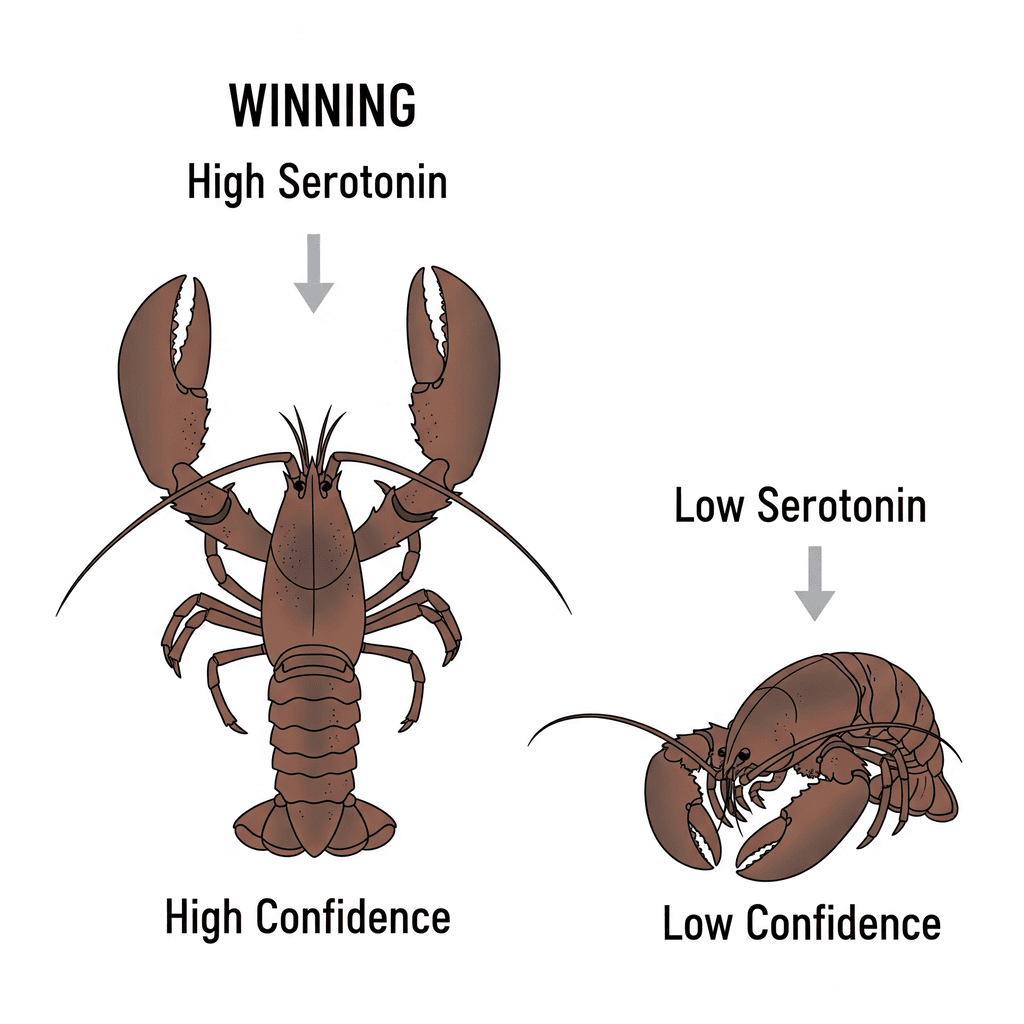
Why does Peterson start with a rule that sounds like advice from a grandfather? Because physical posture is a direct reflection of our psychological condition. To explain this, he uses a surprising analogy: the lobster. Lobsters, creatures with a nervous system over 350 million years old, have a clear social hierarchy. When two lobsters fight for territory, the winner stands tall, while the loser hunches and retreats.
This phenomenon is closely related to brain chemistry. The winning lobster receives a surge of serotonin, making it more confident and ready to face the next challenge. Conversely, the losing lobster experiences a drop in serotonin, making it more anxious and prone to avoid conflict. Humans, with all their complexity, have ancient neural circuits that are very similar. When we slouch, look down, and speak hesitantly, we unconsciously send signals of defeat to ourselves and the world.
As a result, our brains respond by limiting serotonin, making us more vulnerable to stress and negative emotions. By consciously deciding to “stand up straight with your shoulders back,” we do more than just improve our posture. We trigger a positive feedback loop. A confident posture sends signals to the brain to feel more competent, which in turn encourages bolder actions. This is the first step to voluntarily facing the chaos of life, not as a victim, but as a brave participant.
However, adopting this posture is not just about the physical. The complete framework for applying this mental posture amid failure and uncertainty is discussed in specific steps in the book, including how to build it from scratch.
Rule #2: Treat Yourself Like Someone You Are Responsible for Helping – The Paradox of Caring
Notice a strange paradox in human behavior. If a doctor prescribes medicine for your pet dog, you are likely to give it diligently and on time. However, statistics show that a third of patients never even fill prescriptions for themselves. Why are we so much more caring and responsible toward others (or even pets) than toward ourselves?
Peterson argues that this stems from our awareness of our own shortcomings and failures. We know every mistake, every small lie, and every shortcut we have ever taken. This awareness can create a deep sense of disgust or unworthiness, making us unconsciously feel undeserving of care and kindness. We judge ourselves so harshly that we often sabotage our own well-being.
This rule invites us to break free from that trap. Treat yourself as if you are someone valuable, someone you are responsible for helping. This means taking responsibility for your health, career, and personal development with the same seriousness as when you help someone you love. It’s not about selfishness, but about recognizing that you are the primary instrument you have for interacting with the world. A damaged instrument cannot function properly, let alone help others.
However, there are three common psychological mistakes that often trap us in this cycle of self-sabotage, which are thoroughly dissected in our summary at MentorBuku, including how to identify and overcome them. [Internal Link to: Article on the importance of positive self-talk]
Rule #3: Pursue What Is Meaningful, Not What Is Expedient – The Foundation of a True Life
In a world full of distractions and instant gratification, it’s very easy to choose the “expedient” path. This path is about avoiding conflict, postponing responsibility, and seeking short-term pleasure. Although it may seem easy at first, this path will ultimately lead us to emptiness and despair. Peterson offers a much more powerful alternative: pursue what is meaningful.
Meaning, according to him, is not the same as happiness. Happiness often comes and goes, is temporary, and cannot be relied upon as a compass for life. Meaning, on the other hand, is something deeper. It is the feeling that your life has a higher purpose, even in the midst of suffering. Meaning is the best antidote to chaos and existential suffering. Meaning is not found by avoiding burdens, but by voluntarily shouldering the right burden.
This is a fundamental paradigm shift. Instead of asking, “What can make me happy right now?”, ask, “What responsibility can I take on to make things better?” When you voluntarily face problems, fix what is broken around you, and strive for a noble goal, you will find that the suffering in life becomes bearable, even meaningful [1]. This is the essence of becoming the hero in your own life story.
Advanced techniques for identifying your personal ‘meaning’, including guidelines for distinguishing it from shallow goals and practical examples, are part of the exclusive insights we have prepared at MentorBuku.
Rule #4: Tell the Truth, or at Least, Don’t Lie – Truth as a Compass
Lies, no matter how small, damage the most vital instrument we have for navigating the world: our perception. Every time we tell a lie, we deliberately distort reality. If done repeatedly, we build a fictional world on a fragile foundation. When a real crisis comes—and it inevitably will—that fictional structure will collapse, leaving us powerless.
Peterson distinguishes between “telling the truth” and “not lying.” Telling the absolute truth may be difficult, because we do not always know the whole truth. However, we almost always know when we are lying. Therefore, the minimum commitment is to stop saying things we know are false. Stop saying and doing things that make our inner selves weak and ashamed.
This simple act of not lying has an extraordinary effect. It cleanses our minds and speech from falsehood. It forces us to rely on what we truly believe, which in turn strengthens our character. In this framework, truth is not an abstract moral concept, but a practical tool for survival. It is a compass that allows us to walk through the fog of chaos without getting lost. By speaking honestly, we align our actions with reality, which is the only way to truly become strong.
Peterson examines the impact of ‘white lies’ versus ‘black lies’ and provides specific strategies for building integrity through radical honesty, which we have summarized in depth on our platform. [Internal Link to: Article on assertive communication techniques]
From Insight to Transformation: This Is Just the Beginning
The four rules we have explored—standing up straight, caring for yourself, pursuing meaning, and telling the truth—are not just a checklist. They are parts of an interconnected system for facing reality in its entirety. They are an invitation to stop being a victim of circumstances and start becoming the architect of a meaningful life, a life strong enough to withstand the inevitable storms of chaos.
The book 12 Rules for Life offers eight more rules, each equally powerful, with in-depth explanations of the psychology, mythology, and philosophy behind them. Understanding these concepts is a crucial first step. However, the real power comes from consistent application.
You’ve just seen the foundation. These concepts are only the tip of the iceberg of what this book offers. How do you apply them step by step, avoid common pitfalls, and integrate them into your strategy? All those answers are inside.