Tag: life inspiration

  • The Magical Secrets of Visualization: An Artistic Paradigm for Transforming Your Life and Career. 100 Ways to Motivate Yourself: Change Your Life Forever by Steve Chandler

    In a fast-paced and distraction-filled world, have you ever felt like your life is being controlled by circumstances? What if you are actually the “lead painter” of every day’s experiences? Through several revolutionary ideas from the book 100 Ways to Motivate Yourself: Change Your Life Forever, there is one thread that can become a catalyst for change: the power of visualization and your role as the artist of life. This article will invite you to unpack three fundamental ideas from the book—winning visualization, the treasure-mapping technique, and the life-as-canvas paradigm—and why these concepts can change the direction of your life. However, just as an artist is not enough to understand color theory, you will soon realize that the secret of applying it goes much deeper.


    Introduction: Grasping the Brush in Your Hands

    Imagine a world where you are not merely “living” your days, but actively creating them. This book does not offer instant recipes, but rather introduces a new paradigm: you, not the situation, are the primary creator of your life experiences. The three concepts we will discuss today are interconnected and form the foundation of personal as well as professional transformation.

    Visualization: Between Failure and Success

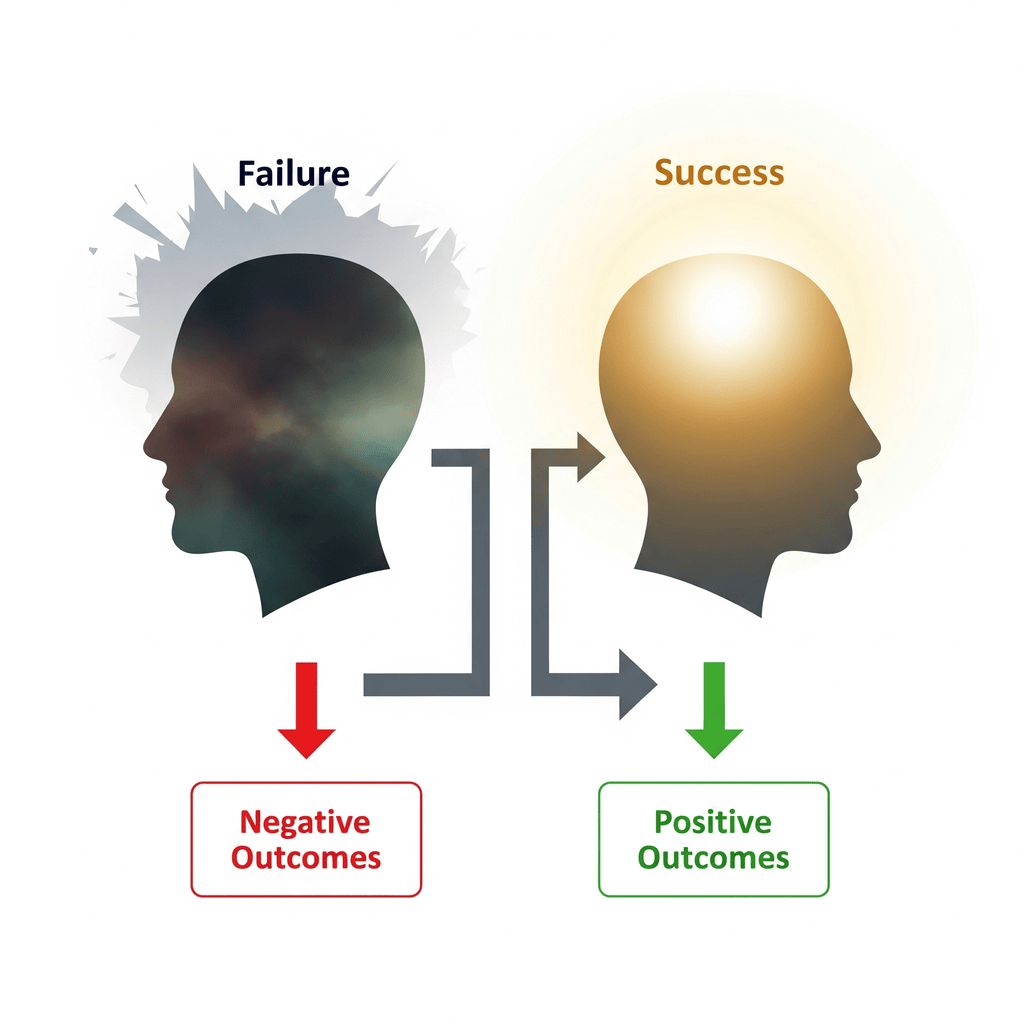
    Visualization is not merely imagining desires. As explained by Rob Gilbert, there is a fundamental difference between winners and losers in how they harness imagination. “Losers visualize the penalties of failure, and winners visualize the rewards of success.” This simple statement has great power: What you focus on mentally will dictate real outcomes.
    When someone focuses on the consequences of failure, they unconsciously program the brain to anticipate defeat, so their steps are haunted by doubt. Conversely, when you imagine a positive result, your attention, attitude, and energy begin to center on achieving the goal, no matter how challenging the path ahead. This is not just empty motivation, but a psychology technique that has been used by top athletes worldwide, successful CEOs, even creative artists.
    However, how can you ensure your visualization does not become mere daydreaming? A systematic framework and step-by-step mental training are offered in the book, which guides you in detail toward effective winning visualization.
    “The complete framework for applying winning visualization is discussed in 5 specific steps within the book…”
    Treasure-Mapping: Mapping Dreams to Reality
    One of the inspirational stories in this book is about a married couple who, for years, struggled to buy their dream home. Change happened when they practiced “treasure-mapping”—posting pictures of their dream home on the fridge and tracking savings through a visual thermometer. In just nine months, the dream became a reality.
    The treasure-mapping technique is not merely “daydreaming”; it is a visual tool that actively conditions your subconscious to move toward the goal. The visual symbols, which you consistently see every day, act as invisible yet powerful reminders, keeping motivation burning even when reality feels exhausting.
    Behind this story, there is a practical methodology so treasure-mapping is more than wall decoration. In the book, you will find how to choose the right visuals, strategic placement tips, and how to measure progress psychologically.
    “However, there are three common mistakes that often occur when trying this treasure-mapping technique, which are thoroughly dissected in our summary…”


    Life as a Canvas Paradigm: Becoming the Artist of Your Day

    Every day is a blank canvas. If you let the “paint” from outside (negative comments, bad news, gossip, environmental criticism) imprint colors and patterns on it, the final result becomes hard to control. A key line from the book reads: “Wake up and visualize your day as a blank canvas. Ask yourself, ‘Who’s the artist today? Blind circumstance, or me?’”
    How you fill life is determined by your awareness of the freedom to choose. If you’re passive, your life becomes a jumble of random colors and unwanted shapes. But when you realize you can choose colors and patterns, that is when the power of personal transformation starts to work.
    Adopting this paradigm means:

    • You selectively consume what you feed your mind each day,
    • You are more aware of the influence of your surrounding environment,
    • You have the power to say “no” to things that pollute your mind.

    The “life as a canvas” paradigm is not just inspirational talk—there is a series of daily exercises that can train you to be more aware, more creative, and more responsible.
    “Advanced techniques of this concept, including daily templates and practical examples, are part of the exclusive insights we prepare at MentorBuku…”


    Reframing Yourself: The True Artist Always Learning

    When you start applying the three concepts above, changes occur not only in the professional sphere but in every aspect of life—from health and relationships to self-discipline. You’ll find that small habits in visualization, arranging physical space through treasure-mapping, and the awareness of living each day as a “painter of life” are the stimuli that awaken your previously hidden potential.
    However, keep in mind:

    • Effective visualization requires practice and structure.
    • Treasure-mapping must be aligned with goals and real actions.
    • The life-as-canvas paradigm requires ongoing habit-building and self-reflection.

    Without a clear step-by-step map, these insights risk becoming fleeting inspiration. Just as an artist needs techniques and repetitive practice to create a masterpiece, you also need a concrete framework to ensure real change happens.
    Also read: The Mountain Is You by Brianna Wiest

    Also read: The Subtle Art Of Not Giving A F*ck by Mark Manson

    Also read: Guerrilla Marketing Field Guide by Jay Levinson, Jeannie Levinson


    Conclusion: It’s Time for You to Become the Maestro of Your Own Life

    The three concepts—visualizing positive outcomes, treasure-mapping, and living as a canvas—are the foundations for reframing your life. The world may not always be friendly, but you always have the power to pour the colors, shapes, and patterns you want into the years ahead. If you currently feel stuck, overwhelmed by things outside your control, or simply want to live more consciously and meaningfully, this book is a real invitation to transform. All technical details, in-depth practices, and real challenges have been mapped out for you—ready to be carried out step by step.


    You’ve just seen the foundation. These concepts are only the tip of the iceberg of what this book offers. How to apply them step by step, avoid common pitfalls, and integrate them into your strategy? All the answers are inside.

    Sign up and get free access at MentorBuku now!

  • The Fundamental Secret to an Authentic “Glow Up”: Breaking Through Outdated Paradigms Toward True Transformation. The Mountain is You by Brianna Wiest

    Introduction: Why a “Glow Up” Is Actually Deeper Than You Think

    Everyone craves change. Many of us are obsessed with the “glow up”: a transformation to look more attractive, appear more successful, and simply—gain the world’s validation. However, behind the glitter of this trend, there is one fundamental question: Can external change truly bring inner fulfillment, or does it actually deepen the emptiness within?
    This article will uncover the secrets behind authentic transformation, connecting psychological foundations, the trap of false narratives, and revolutionary steps toward a meaningful life. Uniquely, this is the grand “what” and “why” that will open the path, but the “how” is only available through a deeper exploration. Let’s dig deeper and prepare for a paradigm shift!

    Read also : The Happiest Man on Earth by Eddie Jaku

    Debunking the Myth: Superficial “Glow Up” vs. True Transformation

    Often, “glow up” is understood only as a change in appearance. People race to enhance their images on social media, edit photos, cover up flaws, spend a fortune on their looks, and weave narratives that appear happy, while their hearts may remain empty.
    However, according to one of the key insights from the book The Mountain is You, truly meaningful change—an authentic glow up—is not about becoming bigger, smaller, or more beautiful in the eyes of others. True transformation happens when someone dares to “remove all the false layers,” acknowledge their real issues, heal their inner wounds, and prioritize their own heart instead of simply meeting others’ expectations.
    This concept dismantles the culture of “image-building” that prevails today. Anyone can create a better appearance. But if someone becomes so obsessed with proving themselves to others, it often signals an untouched emptiness within.
    The framework for distinguishing between authentic and cosmetic transformation, as well as how to detect whether the changes we pursue truly fulfill our deepest needs, is thoroughly discussed in the book—including warning signs that should not be ignored.
    In-depth techniques and steps to dismantle false narratives in your life and build a genuine “glow up” have been specially crafted in MentorBuku’s exclusive summary…

    Read also : The 5AM Club by Robin Sharma

    Why Old Wounds Hold You Back from Total Transformation

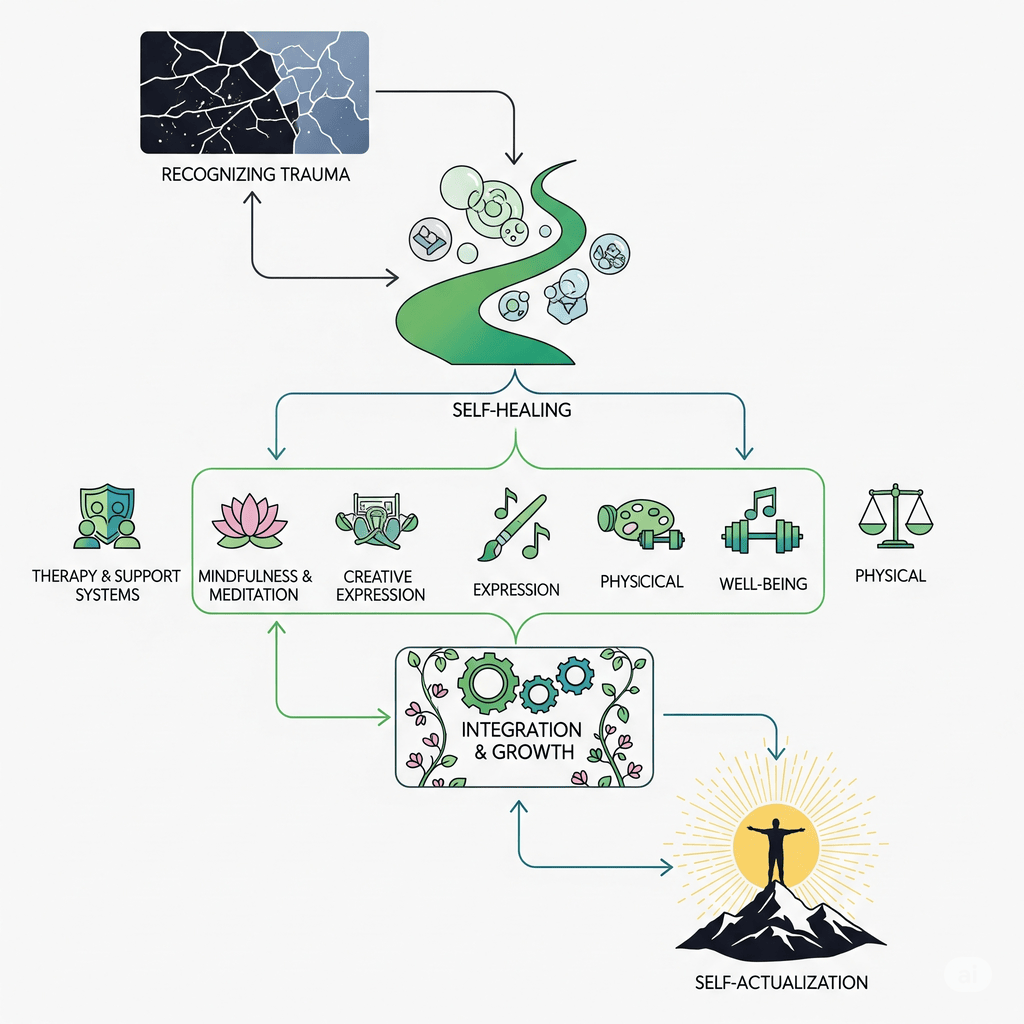
    Every desire for change is often overshadowed by one thing that rarely gets acknowledged—past trauma and psychological wounds. This book dissects the profound impact of trauma on three key brain structures: the amygdala, hippocampus, and prefrontal cortex.
    Because of trauma, the brain stops processing memories fully, emotions become difficult to regulate, and our ability to plan for the future and self-development is hindered. This is the main reason why so many attempts to “start over” end in failure, or feel nearly impossible even with strong determination.
    Understanding this foundation is the revolutionary key: we realize that to “climb the mountain” of life, we must dare to look back, confront old wounds, and process unresolved emotions. Without the courage to manage the remnants of trauma, change becomes nothing more than meaningless outer decoration.
    But what patterns of self-sabotage arise from this trauma? How can we distinguish spontaneous emotions from old patterns that hold you back? All the identification techniques and ways to navigate these challenges are specifically outlined in the in-depth chapters of this book.
    A complete framework for recognizing the traces of trauma and strategies for overcoming it can only be found in MentorBuku’s exclusive guide…


    Accessing Your Future Self: Revolutionary Practice to Break Through Old Limits

    Interestingly, the author introduces a unique introspective technique: meeting your “future self” in a structured meditation. The process is more than visualization; it’s a profound experience to break free from fears that are always rooted in past experiences.
    In the early stages, you are invited to sit quietly, meditate, and then imagine conversing with the most ideal, enlightened version of your “self.” Interestingly, at first, “fear” often disguises itself in the initial visualization. However, the author emphasizes that if you dare to push past this and open up, you can receive extraordinary messages from your future self—a roadmap to authentic transformation.
    This practice may seem simple, but it is incredibly deep. By overcoming fear and greeting your future, you free yourself from the traps of old thinking. You begin to carve out a new path that truly originates from your greatest potential, not from trauma or the expectations of those around you.
    What important messages commonly emerge from the “future self?” How can you make this session truly effective and not just empty imagination? All its secrets—including journaling formats, advanced visualization techniques, and the steps of integration—are fully explained in MentorBuku’s in-depth discussion.
    A detailed template and step-by-step guide for the ‘meeting your future self’ session can be found exclusively through MentorBuku’s internal resources…


    Putting Your Own Heart First—A New Paradigm for Authentic Happiness

    The most fundamental point of all these discussions is the courage to prioritize your own heart. In a world increasingly burdened by social pressures, we often care more about “how others judge us” than “what truly feels right in our hearts.”
    Why is this so important? Because as long as the direction of our lives is dictated by external expectations, all change will only repeat old patterns: chasing validation while still feeling empty. True transformation requires a radical decision: to prioritize conscience, follow your heart, and stop measuring yourself by external standards.
    But how do you take the first step to put your heart first amid real world demands? How can you establish healthy boundaries without feeling guilty or worrying about being labeled selfish? Practical answers and vital keys to inner freedom have been compiled in detail in MentorBuku’s mentoring program.
    Practical guides and daily routines for building the courage to prioritize your heart are available exclusively in official MentorBuku sources…


    Conclusion—The Path to True Transformation Is Right in Front of You

    By gaining a deep understanding of authentic “glow up,” you’re now able to distinguish between change that brings meaning and mere illusion. Recognizing the impact of trauma on the brain and on life, as well as daring to have conversations with your “future self,” results in a small revolution with profound effects. All of this leads to one thing: the decision to begin the journey inward, listen to your own heart, and go far beyond mere appearances.
    However, if you want practical strategies, daily templates, and step-by-step action frameworks—all of that is only available in MentorBuku’s exclusive collection of guides, summaries, and e-books. Don’t let true transformation remain just a discourse; it’s time to open the gateway to your transformation now.

    Also read: The One Thing by Gary W. Keller, Jay Papasan

    You’ve just seen the foundation. These concepts are only the tip of the iceberg of what this book has to offer. How do you implement them step by step, avoid common pitfalls, and integrate them into your strategy? All those answers are inside.
    Sign up and Get Free Access on MentorBuku Now!

  • The Fundamental Battle: The Powerful Way to Conquer the Enemy Within and Find Life’s Purpose. Win Your Inner Battles: Defeat The Enemy Within and Live With Purpose by Darius Foroux

    Introduction: Why the Greatest Struggle Actually Happens Within Ourselves

    Have you ever felt as if something is always holding you back from success? Not just external obstacles, but a small voice inside your head that constantly doubts, procrastinates, and even frightens you from moving forward. This voice is the ‘enemy within’—a mental challenge that is real but often invisible to others.
    The book “Win Your Inner Battles: Defeat The Enemy Within and Live With Purpose” dissects the internal warfare experienced by almost everyone. More than just motivation, this book offers strategic insights on how self-discipline, perseverance, and an understanding of true purpose can become your ultimate weapons to win this internal battle.
    In this article, you will discover three key concepts that form the foundation for victory against the enemy within. Each concept is not just about the “what” and “why,” but is also paired with knowledge hooks that will make you eager to know “how” to apply them in detail.


    H2: 1. Recognizing the Enemy Within: How ‘Resistance’ Destroys Your Potential

    One of the most compelling insights from this book is the concept called “resistance”—an internal push-and-pull force that becomes the main obstacle to all creative work and achievement. Steven Pressfield calls resistance the universal enemy of writers, creators, entrepreneurs, and anyone who wants to make a significant change in their life. Resistance manifests in the form of procrastination, self-doubt, fear of failure, and even excessive perfectionism.
    Why is resistance so dangerous? Because it operates silently, trapping you in a comfort zone and uncertainty. The bigger your dreams and steps, the stronger resistance attacks. If left unchecked, resistance will paralyze initiative and cause you to miss the best opportunities in life.

    However, a framework for identifying various types of resistance and the specific strategies to conquer them is thoroughly dissected in the book—including how to map out your own key weaknesses, which most people are often unaware of. The advanced strategies and mental exercises are part of a special toolkit that you can find in the MentorBuku summary.

    Read also : $100M Offers by Alex Hormozi

    H2: 2. Taking Control: The Power of Small Actions and Self-Discipline

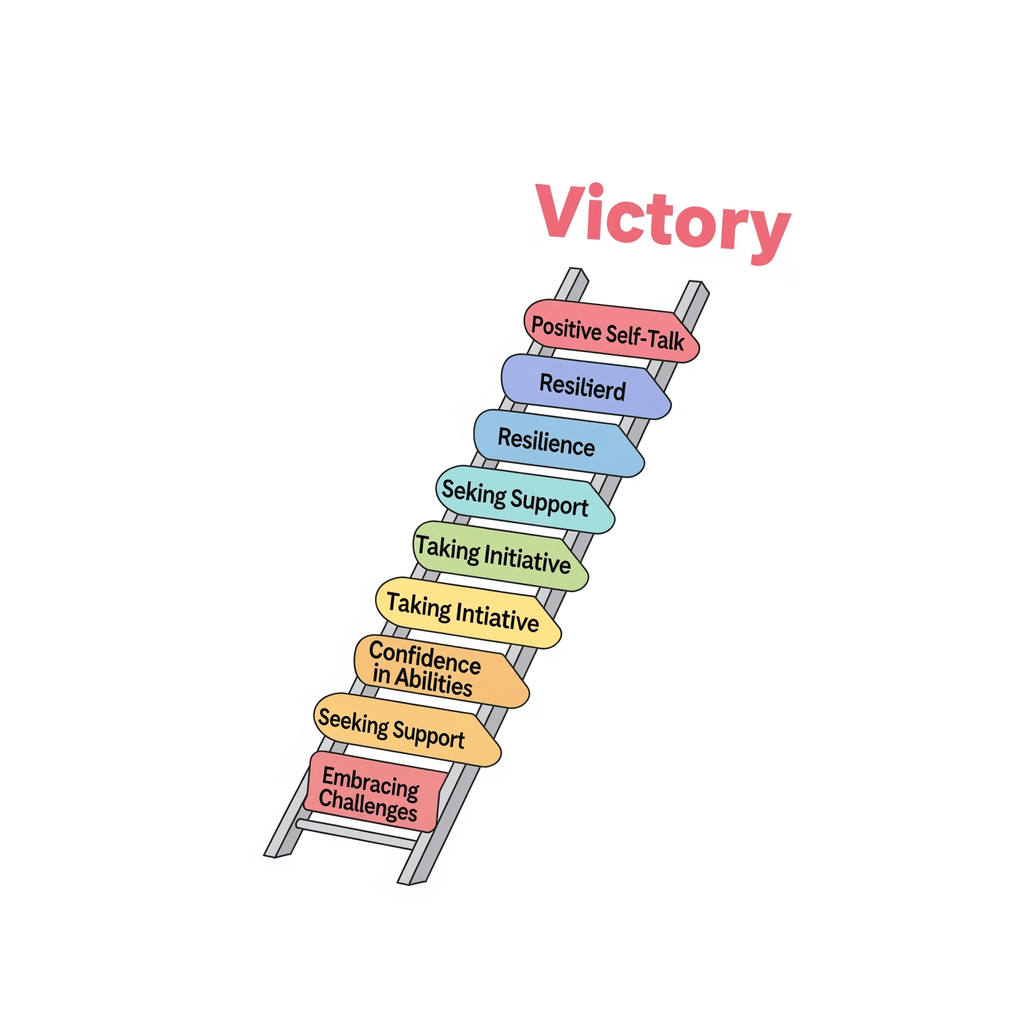
    The second revolutionary concept is the importance of small, consistent actions as the primary way to conquer the enemy within. This book emphasizes that victory in the ‘internal battle’ is not about one grand moment, but rather a series of simple decisions made consciously every day.
    Why is this important? Because people often get trapped in the paradigm of “waiting for the perfect moment.” In reality, true progress is built on the courage to take the first step—no matter how small—and on proactively building competence from one experience to the next.
    Self-discipline becomes the catalyst that separates those who merely dream from those who truly win. You are encouraged to build “confidence through competence,” starting with simple things and eventually generating the courage to conquer your deepest fears.

    The specific framework for how to initiate change, the method for building disciplined habits that do not easily collapse, as well as real-life transformation case studies, are detailed step-by-step in the book. There is also a strategic guide for taming distractions in the digital age, which is something never discussed in conventional motivation.

    Read also : THE RUDEST BOOK EVER by Shwetabh Gangwar

    H2: 3. Finding and Living a Purpose: From Reaction to Meaningful Action

    The enemy within often obscures one fundamental thing: a purpose in life. In many cases, people live their days simply to fulfill expectations, compare themselves to others, and respond to environmental pressures, rather than acting based on a personal mission.
    This book reveals the importance of “purpose”—an authentic purpose that comes from within. Those who live with purpose are not only more resilient in facing trials, but are also more inclined to share and give without expecting anything in return. This is the foundation of true life satisfaction.
    Why? Because without a clear purpose, every achievement feels empty. Life becomes a series of passive responses rather than the embodiment of meaningful action. When you begin to identify ‘why’ you are fighting, the strength to defeat the enemy within multiplies.

    The in-depth process for discovering true purpose and how to prevent the trap of comparing yourself to others is fully explored in the MentorBuku toolbox, complete with reflective exercises and real-life examples from transformational achievers.

    Read also : Why Has Nobody Told Me This Before? by Julie Smith

    H2: 4. Conquering the Noise: How to Reject Expectations and Focus on Yourself

    One of the biggest battles in the modern era is the ability to reject ‘the noise’—whether it’s social demands, pressure to be like others, or the temptation of distractions that destroy focus. The book “Win Your Inner Battles” emphasizes the importance of being selective about what you accept and who you spend your time with.
    Why must you dare to say no? Because your time and energy are limited. When you say yes to external requests too often, you are forced to sacrifice your personal agenda and integrity.
    The discipline to eliminate noise is not just about mental toughness; it also requires a mature relational strategy. You will learn how to “say no” without guilt, manage others’ expectations, and ultimately build a circle that strengthens your mental resilience.
    A practical guide to prioritizing time, redefining relationships, and assertive communication templates are all available in a masterclass accessible through MentorBuku.


    H2: Conclusion: Time to Be the Winner on the Inner Battlefield

    The most real war that determines your future is not external competition, but the daily battle within yourself. Through the concept of resistance, the importance of small and disciplined actions, finding authentic purpose, and sharpening focus, the book “Win Your Inner Battles” provides a strong foundation for you to be ready to fight and win.
    However, the applicable strategies, concrete steps, case study examples, and supporting exercises that separate those who win from those who merely know—all of these can only be found if you dig deeper.


    You’ve just seen the foundation. These concepts are merely the tip of the iceberg of what this book offers. How do you apply them step-by-step, avoid common pitfalls, and integrate them into your strategy? All those answers lie within.

    Sign Up and Get Free Access on MentorBuku Now!

  • Obstacle Is the Way: The Stoic Secret to Conquering All of Life’s Challenges. The Obstacle Is the Way by Ryan Holiday

    Introduction: When Life Forces You to Ask, “Why Is All This Happening?”

    Everyone, without exception, faces life’s challenges. In business, career, family, or the search for personal meaning—frustration, failure, and setbacks seem like perpetual enemies.

    So what if the best way isn’t to run away, but rather to change our perception of the obstacle? The book “The Obstacle Is the Way” by Ryan Holiday presents a radical answer: what stands in your way is the way itself.
    This article will dissect the three most fundamental Stoic paradigms from the book—concepts that can shift the way you perceive and respond to challenges. You will discover why a change in perspective is not just a theory, but a catalyst for transforming “problems” into authentic opportunities. However, its practical application techniques are deliberately reserved for those who are truly thirsty for change.

    Read also : I Will Teach You To Be Rich by Ramit Sethi

    I. Practicing Objectivity: The Art of Seeing Facts, Not Drama
    Let’s begin with the most essential Stoic discipline: resisting emotional impulses and separating facts from emotional judgment.
    According to the philosopher Epictetus, when you say “This happened and this is bad,” you are actually mixing two different things: the objective fact (“This happened”) and the subjective interpretation (“This is bad”). As a result, you get trapped in a drama of your own mind’s making.
    Ryan Holiday illustrates how Miyamoto Musashi, the legendary samurai, practiced this. Musashi distinguished between the “observing eye” (seeing things as they are) and the “interpreting eye” (seeing with bias). The observing eye is able to find opportunities behind bitter events, whereas the interpreting eye easily makes everything seem more frightening than reality.
    What is the concrete benefit of this objectivity? You begin to face problems as neutral, analyzable events, not as disasters that grip your emotions. This is the foundation of courage and mental toughness.
    However, the specific framework for practicing objectivity every day — including emotional detachment techniques and “cognitive reframing” — is explained through practical examples in the book and our in-depth summary at MentorBuku…

    Read also : Frames of Mind by Howard Gardner

    II. The Discipline of Action: Taking Steps, Not Waiting for Perfection

    After reshaping your perspective, the next step is to act without delay. Stoics don’t rely solely on motivation; they build a consistent work discipline.
    Ryan Holiday emphasizes that an orientation toward action is a primary human duty. Just like a true artist who gives their all to every project—prestigious or not—we too must deliver our best performance on whatever task we face, not wait for praise or ‘perfect’ conditions first.
    The core of this concept is to:

    • Eliminate procrastination caused by perfectionism,
    • Treat every task, no matter how difficult, as deserving of maximum effort,
    • Transform hard work into a form of authentic self-expression.

    The discipline of action also distinguishes between “reactive work,” which is based on fleeting emotions, versus “proactive work,” which is driven by principles and long-term goals.
    How can you discipline yourself so that action becomes a habit, not the result of a momentary burst of motivation? This book unpacks five powerful strategies for building a doer’s mentality, not a spectator’s. However, the specific time management techniques, daily rituals, and reminder systems are a privilege for MentorBuku members…


    III. Finding the Opportunity Behind Every Obstacle

    The third paradigm that forms the Stoic foundation for handling obstacles is reverse thinking: viewing an obstacle not just as a problem, but as a “catalyst” for growth—often the very source of an advantage.
    Ancient Stoics taught to look for the “fertile ground” in every adverse event by asking a fundamental question: What is the hidden value in this setback? Instead of self-pity, they focused on unearthing opportunities, for instance by pursuing innovation, strengthening character, or discovering new, previously hidden purposes.
    Ryan Holiday gives the example that every great entrepreneur, athlete, and leader has always conquered life with the logic: Because of this, not in spite of this. What is a hindrance in the eyes of the average person becomes a means of transformation for them.
    The philosophy of “the obstacle is the way” has turned failed startups into giants, weak teams into champions, and wounded individuals into mentors for many.
    However, the three common mistakes that often cause this concept to fail in real-world application—from over-optimism to fatalism—are only unpacked practically and in-depth in our summary…


    IV. Integration: From Perception and Action to Transformation

    The three pillars above—objectivity, the discipline of action, and finding opportunity in adversity—form the foundation of the Stoic strategy for conquering life’s challenges. However, the greatest benefits can only be felt if you are able to integrate them practically into your daily routine. This process doesn’t happen magically overnight, but through practice, reflection, and long-term commitment.
    Are you ready to change the way you think and act? The key is to start with one pattern: first, observe calmly; then, act with full awareness; and always, look for the opportunity where others only see disaster.


    Conclusion: Will You Let Challenges Become an Excuse or a Springboard?

    When problems arise, anyone can complain. However, only those who practice The Obstacle Is the Way realize: every obstacle is not just a test, but also an invitation to level up in the game of life. The real secret of the Stoics is the ability to see the game behind the scenes, to process disappointment into energy, and to turn a “stumbling block” into a “stepping stone”.

    You have just seen the foundation. These concepts are merely the tip of the iceberg of what this book offers. How to apply them step-by-step, avoid common pitfalls, and integrate them into your strategy? All those answers are inside.

    Sign Up and Get Free Access at MentorBuku Now!

  • ANALYSIS & THEMATIC ANGLE DETERMINATION. The Magic of Thinking Big by David J. Schwartz.


    After reviewing the key parts of the book “The Magic of Thinking Big” by David J. Schwartz, there are three gems of ideas that are closely related and can be woven into a single common thread:

    1. The power of mental pictures in our minds—that we think not in words, but in images formed from words.
    2. The importance of believing in growth and improvement—a proactive attitude to seek opportunities for expansion, efficiency, and new ideas that bring progress.
    3. The destructive impact of a negative mindset—that negative thoughts can have real consequences on outcomes and lead to missed opportunities.

    Main Thematic Angle: “How a Positive Mindset Becomes a Catalyst for Success and Growth—Starting from How You See the World in Your Mind.”
    Step 2: MAGNETIC TITLE & FRAMEWORK DEVELOPMENT
    Title Options (40-60 characters):

    1. The Secret to a Positive Mindset: A Real Catalyst for Success!
    2. Revealed! The Big-Thinking Method You Often Ignore
    3. Authentic Paradigm: The Key to Visualizing Instant Success
    4. The Magical Mindset That Shapes Your Future Now
    5. Avoid This Fatal Mistake: The Thinking That Destroys Potential

    Best Title: The Secret to a Positive Mindset: A Real Catalyst for Success!
    Article Outline:

    • H1: The Secret to a Positive Mindset: A Real Catalyst for Success!
      • Introduction: Why Your Way of Thinking Is the Starting Point for Success
      • H2: Mind Pictures: The Foundation of How Your Mind Works
        • H3: Turning Words into Pictures of Success
      • H2: A Proactive Attitude: Echoing Growth and Innovation
        • H3: Case Study: Three Different Ways to Approach Challenges
      • H2: The Power and Peril of a Negative Mindset
        • H3: Opportunities Lost Due to the Wrong Mindset
      • H2: Conclusion: Changing the World Through Your Mindset
      • CTA: Steps to Gain Deeper Insight

    Step 3: ARTICLE DRAFT WRITING (1500-1600 words, SEO & CTA Integrated)


    The Secret to a Positive Mindset: A Real Catalyst for Success!

    Why Your Way of Thinking Is the Starting Point for Success

    Everyone desires greater achievements in life—be it a soaring career, harmonious relationships, or continuous self-development. However, there is one universal foundation that sets winners apart: mindset. But did you know that a mindset is not just a collection of motivational words passing through your mind? It is a collection of “pictures” that unconsciously shapes our attitudes, decisions, and daily actions.
    The book “The Magic of Thinking Big” teaches a fundamental concept—your mind is a giant movie theater. Every word, comment, and thought you consume is actually converted by the brain into a series of mental pictures. This is where major change begins. This is not merely a theory; it is a strategy of how the human brain works, affirmed by experts and supported by modern research.
    This article will invite you to see how the power of a positive mindset can become the greatest catalyst for real success. We will dissect three core concepts of “thinking big” that will open up a new perspective. However, remember: you will only see the foundation here. The complete effective implementation methods are available with a MentorBuku membership.

    Read also : Zero to One by Peter Thiel

    Mind Pictures: The Foundation of How Your Mind Works

    Have you ever realized that when you hear someone say, “I failed,” you automatically picture a gloomy atmosphere, disappointment, or a person with their head down? The brain doesn’t stop at words. Every word heard and read is immediately processed into a “mind picture,” or a visual image that greatly influences your emotions and attitude. — The Magic of Thinking Big by David J. Schwartz.
    This is why the language you use with yourself or others largely determines your next actions. For example: the word “challenge” creates an image of a demanding but inspiring uphill path, while the word “problem” conjures an image of a dead end or a trap.
    A small change in word choice can make the difference between feeling motivated or discouraged. Great leaders guide their teams with visionary words that ignite images of great future possibilities, rather than simply staying in their comfort zone or giving up.

    “When you speak or write, you are a film director showing a movie in other people’s minds. The picture you create determines how you and others will react.” — The Magic of Thinking Big by David J. Schwartz.
    However, to master this art, you must understand the specific formula for consistently building “mind pictures” with a positive aura—including choosing strategic diction and how to practice it in daily communication. This book dissects the structure and practical exercises for creating narratives that build images of success in your subconscious—a vital component that can only be found in the concise summary for MentorBuku members.

    Baca juga : 12 Rules for Life by Jordan B. Peterson

    A Proactive Attitude: Fostering Growth and Innovation

    Next, let’s look at a concrete example from the real world, as shared by Schwartz. There are three types of people in an organization: the self-satisfied, the pessimist, and the visionary. Only one category continues to grow—those who always seek opportunities to advance, find room for innovation, and dare to suggest improvements. These are the people who build a culture of growth, both for the business and for themselves.
    When asked to assess their workplace, a visionary employee says, “We’re already good, but we can be better.” They then share a wealth of innovative ideas: from finding ways to acquire new clients to devising fresh marketing campaigns and revamping the compensation system to better motivate the team.
    Companies that survive and thrive are those filled with people who have this kind of proactive attitude. They are not content with the comfort zone; there is always a “we can do better” spirit and an exploration of solutions. Even when achievements fall short of the target, their feedback remains constructive: “What can be improved next?”
    However, it’s not just about intention. There is a specific mindset, set of habits, and particular questions that strengthen this visionary character in daily life—from goal setting and evaluation to self-negotiation. You will find the complete framework for its implementation, including the daily question list of great thinkers, only in our exclusive summary.

    The Power and Peril of a Negative Mindset

    Not many people realize that a negative mindset doesn’t just worsen your mood; it can literally ruin your destiny and opportunities. Schwartz reveals a true story: a professional lost an important client simply because he maintained a pessimistic tone during a forty-minute discussion. In reality, the client was fundamentally a good person; it was the professional’s negative mindset that caused the failure. — The Magic of Thinking Big by David J. Schwartz.
    Every negative attitude, comment, and conversation sticks like a ‘stain’ in your mind. Over time, it will eat away at your self-confidence, relationships, and even your own business. This vicious cycle is hard to break if you don’t start with self-awareness and the right mental strategy.
    Sometimes, even one pessimistic experience is enough to bury years of potential success. Imagine how many opportunities pass you by just because you allow doubt and anxiety to take the wheel. This isn’t rhetoric—its impact is real in both professional and personal aspects.