Tag: leadership

  • The Proven Secret to Habit Transformation: A Catalyst for a Paradigm Shift in Life. The Power of Habit by Charles Duhigg

    Introduction: Why Habits Determine Your Destiny

    Nearly every aspect of modern life is influenced by habits. From small things like how you start your day to major decisions in organizations and businesses. Often labeled as automatic behaviors, habits are actually the “secret code” that shapes destinies, from personal lives to professional institutions.
    However, behind these routines lies a surprising truth: you can dismantle, reshape, and even create new habits with the right strategy. The Power of Habit—a phenomenal book that has changed the mindsets of millions—unravels the intricacies of habits. But, are you ready to step out of your comfort zone and transform your life?
    In this article, you will understand the scientific foundation of habit formation and change, discover the “why” that has been hindering your progress, and get a teaser of strategies to change your life—but the complete method is accessible at MentorBuku.


    Routine, Reward, Cue: The Foundation of True Habits

    Understanding the Loop: Identifying the Routine

    At its core, every habit consists of three main elements: a routine, a reward, and a cue. This three-step pattern is what makes an action repeat over and over without conscious thought.
    The routine is the behavior we perform automatically—for example, always brewing coffee in the morning. However, behind that routine, there is a trigger (cue) that “ignites” you to do it. It could be a specific time, a mood, or even words heard at random. The reward, on the other hand, is the brain’s prize after performing the routine; it can be a feeling of comfort, calm, or even just a pleasurable sensation.
    A deep understanding of this cycle is crucial. Without knowing what routine is in motion, you will find it difficult to change the behavior.
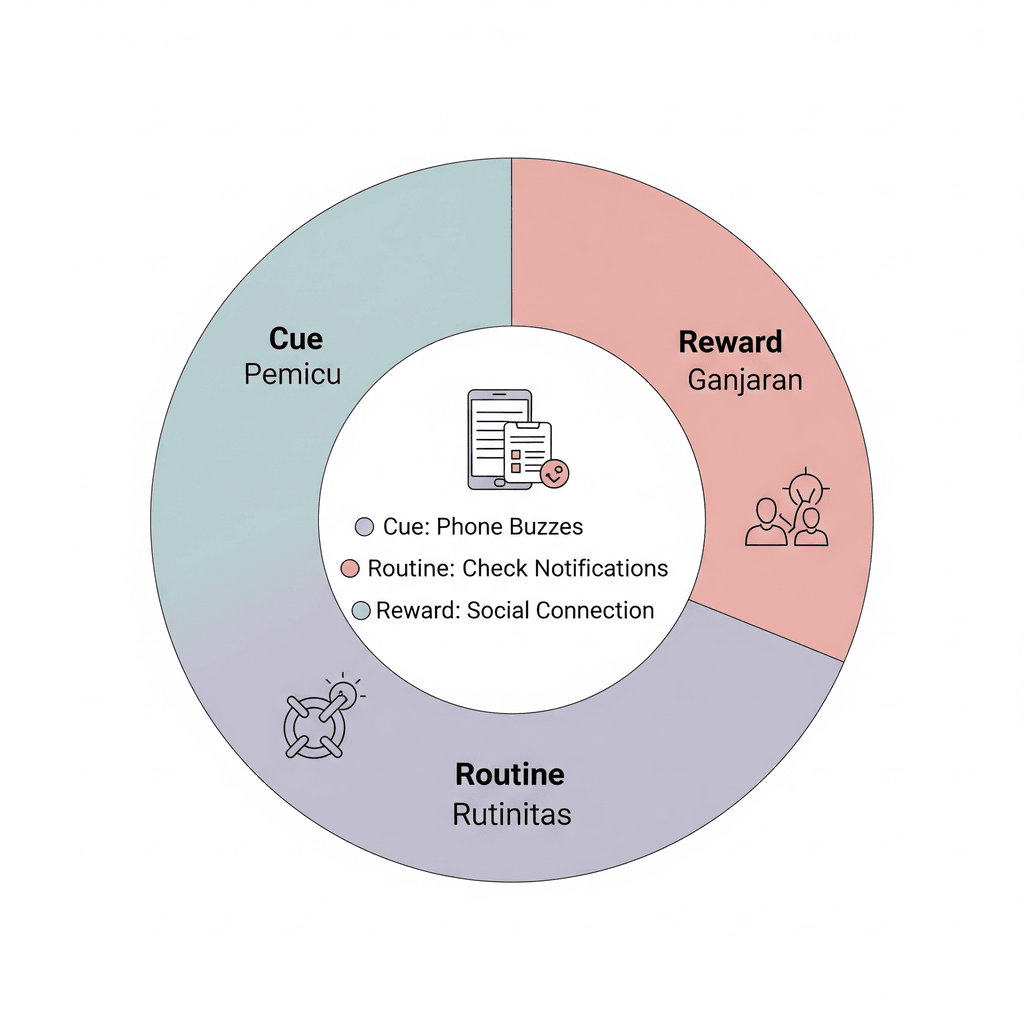
    However, this is the secret: Honestly identifying your routines is the primary foundation for change.
    “A complete framework for detecting and mapping the routines that form habits is available in a special chapter of this book, including sample worksheets and practical tools that you can learn more about at MentorBuku…”

    Experimenting with Rewards: Locking in Positive Behavior

    Even bad habits persist because of a specific reward. This is why, for example, people continue to smoke despite knowing the risks—there is a temporary sensation (reward) they receive. The Power of Habit recommends reward experimentation; a strategic approach to test various forms of rewards to discover the true motivation behind your routine.
    In other words, the process of change begins not just by suppressing the bad routine, but by replacing it with a new, more constructive reward.
    “The step-by-step technique for conducting reward experiments, as well as how to avoid the ‘false reward’ trap, is explored in detail in the exclusive MentorBuku summary…”

    Read also : What Women Want: The Global Market Turns Female Friendly by Paco Underhill


    Isolating the Cue & The Role of Awareness

    The cue, or trigger, is the first thing that must be identified before you can effectively control a habit. A cue can be a time, an emotional state, a location, a specific person, or even a particular thought. Without understanding the cue, attempts to change a routine are likely to fail because you do not know when that “automatic button” is activated.
    Awareness of the cue grants you immense power: the ability to interrupt the automatic cycle that has held you captive. The Power of Habit teaches the technique of cue isolation through observation, logging, and repeated experimentation—until you can finally see the hidden patterns behind the habit.
    But of course, behind this simple knowledge lie complex layers of observational strategies and methods for identifying the cue, which cannot be fully unpacked here.
    “Advanced cue observation techniques, including a daily application journal and tips for distinguishing between external and internal cues, are part of MentorBuku’s premium insights, specially written by productivity practitioners…”


    The Role of a Plan in Shaping Change

    Without an action plan, habit change is just talk. Many people fail because they know “what” to change, but they don’t know “how” to design the roadmap. The Power of Habit presents a highly applicable framework for change: identify the routine, experiment with rewards, isolate the cue, and then create a plan.
    A plan is not just an intention; it maps out concrete steps that are ready to be implemented. For example, if your cue is stress, the routine is smoking, and the reward is relaxation, your plan could be to replace the smoking routine with a breathing technique for the same reward.
    The key is to take full control of every phase of the change. Without the discipline to design a plan, you will fall back into the old patterns.
    “The five pillars of a fail-proof habit change plan, along with templates and real case studies, are only available in full in the MentorBuku summary…”

    Read also : Ikigai by Héctor García,Francesc Miralles

    Lesson for Leaders: Implementation in Organizations

    Habit change isn’t just for individuals. In the business world, large organizations like Starbucks, Procter & Gamble, and even leading technology companies build the foundation of their success by managing collective habits in the workplace.
    Even strategic decisions—such as “changing the color of a main product” in the middle of the production process—cannot escape the influence of the organization’s established habit patterns. Challenging a team’s habits, facing resistance, and building a new culture require a deep understanding of the routine, reward, and cue cycle at the group level.
    Great leaders are able to detect team routines, map out shared rewards, and design positive cues that make organizational change easier to accept.
    “The three fatal mistakes that often occur when organizations try to change habits, and the strategies to overcome them, are dissected in detail with authentic case studies in MentorBuku…”

    Read also : The Art of Thinking Clearly by Rolf Dobell

    Conclusion: The Power of Transformation & Hidden Opportunities

    Habits are not destiny. They are a “script” that you can rewrite at any time with the relevant knowledge. By understanding the routine–cue–reward cycle, and having a structured plan, you open the door to major changes—both on a personal and professional level.
    However, the true journey of changing a habit only begins when you not only understand the basics, but also know the exact strategy to apply it.
    What are the common mistakes? What are some real-world application examples in the professional world?
    The answers are just a click away.


    CTA & Call to Action

    You have just seen the foundation. These concepts are just the tip of the iceberg of what this book has to offer. How to apply them step by step, avoid common pitfalls, and integrate them into your strategy? All those answers are inside.

    Sign up and Get Free Access at MentorBuku Now!
  • Rahasia Terbukti Transformasi Kebiasaan: Katalisator Paradigma Hidup. The Power of Habit by Charles Duhigg

    Introduksi: Mengapa Kebiasaan Menentukan Nasib Anda

    Hampir setiap aspek kehidupan modern dipengaruhi oleh kebiasaan. Mulai dari hal kecil seperti bagaimana Anda memulai hari, hingga keputusan besar dalam organisasi maupun bisnis. Sering dicap sebagai perilaku otomatis, kebiasaan sebenarnya adalah “kode rahasia” yang membentuk nasib pribadi hingga lembaga profesional.

    Namun, di balik rutinitas itu, tersembunyi satu kebenaran mengejutkan: Anda bisa membongkar, membentuk ulang, bahkan menciptakan kebiasaan baru dengan strategi yang tepat. The Power of Habit—buku fenomenal yang telah mengubah pola pikir jutaan orang—membongkar seluk-beluk kebiasaan. Tetapi, apakah Anda cukup siap untuk keluar dari zona nyaman dan mentransformasikan hidup Anda?

    Pada artikel ini, Anda akan memahami fondasi ilmiah pembentukan dan perubahan habit, menemukan “mengapa” yang selama ini menghalangi perubahan, serta mendapatkan teaser strategi untuk mengubah hidup Anda—tapi cara lengkapnya dapat Anda akses di MentorBuku.


    Rutin, Reward, Cue: Fondasi Kebiasaan Sejati

    Memahami Pola: Mengidentifikasi Rutinitas

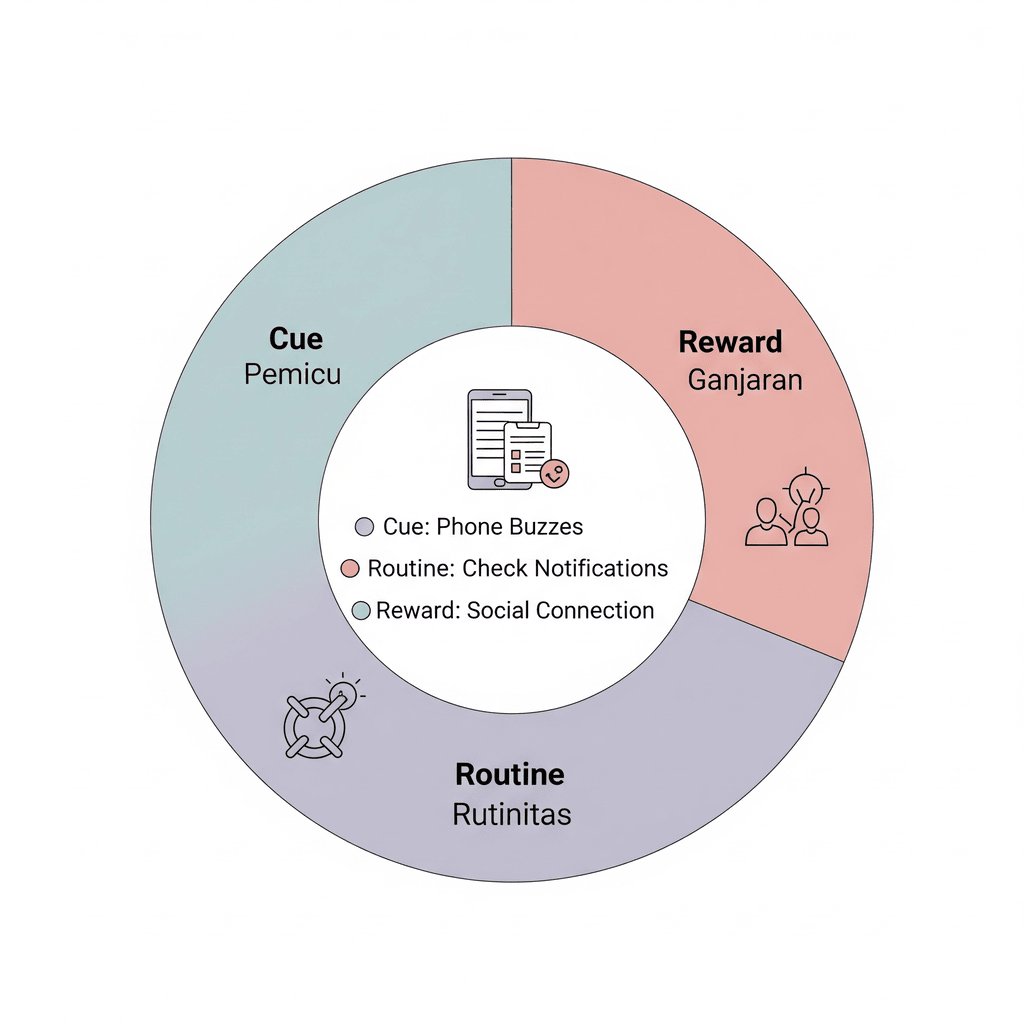
    Pada intinya, setiap kebiasaan terdiri dari tiga elemen utama: rutin, reward, dan cue. Pola tiga langkah inilah yang membuat satu tindakan berulang-ulang tanpa dipikirkan secara sadar.

    Rutin adalah perilaku yang kita lakukan secara otomatis—misalnya, selalu menyeduh kopi di pagi hari. Namun, di balik rutinitas itu, ada pemicu (cue) yang “menyulut” Anda untuk melakukannya. Bisa berupa jam tertentu, suasana hati, bahkan kata-kata yang didengar secara acak. Reward, di sisi lain, adalah penghargaan otak setelah melakukan rutinitas; bisa berupa rasa nyaman, tenang, atau bahkan sekadar sensasi nikmat.

    Pemahaman mendalam tentang siklus ini sangat penting. Tanpa mengetahui rutin apa yang terus berjalan, Anda akan kesulitan mengubah perilaku.

    Namun, inilah rahasianya: Mengidentifikasi secara jujur rutinitas Anda adalah fondasi utama untuk perubahan.
    “Kerangka kerja lengkap untuk mendeteksi dan memetakan rutinitas yang membentuk habit ada di bab khusus dari buku ini, termasuk contoh worksheet dan tools aplikatifnya yang bisa Anda pelajari lebih jauh di MentorBuku…”

    Eksperimen Reward: Mengunci Perilaku Positif

    Bahkan kebiasaan buruk bertahan karena reward tertentu. Inilah alasan mengapa, misalnya, orang tetap merokok meski tahu risikonya—ada sensasi sementara (reward) yang mereka dapatkan. The Power of Habit merekomendasikan eksperimen reward; sebuah pendekatan strategis untuk menguji berbagai bentuk penghargaan agar menemukan motivasi sejati di balik rutinitas Anda.

    Dengan kata lain, proses perubahan dimulai bukan hanya dari menekan rutinitas buruk, melainkan menggantinya dengan reward baru yang lebih konstruktif.
    “Teknik langkah demi langkah untuk melakukan eksperimen reward, serta bagaimana menghindari jebakan ‘reward palsu’, dieksplorasi detail di dalam rangkuman eksklusif MentorBuku…”

    Baca juga : What Women Want: The Global Market Turns Female Friendly by Paco Underhill


    Isolasi Cue & Peran Kesadaran

    Cue, atau pemicu, adalah hal pertama yang harus dipecahkan sebelum Anda bisa mengendalikan kebiasaan dengan efektif. Cue bisa berupa waktu, keadaan emosi, lokasi, orang tertentu, bahkan pikiran spesifik. Tanpa memahami cue, upaya mengubah rutinitas cenderung gagal karena tidak mengetahui kapan “tombol otomatis” itu aktif.

    Kesadaran terhadap cue akan membawa Anda pada kekuatan besar: kemampuan menginterupsi siklus otomatis yang selama ini membelenggu. The Power of Habit mengajarkan teknik isolasi cue dengan observasi, pencatatan, dan eksperimen berulang—hingga akhirnya Anda bisa melihat pola tersembunyi di balik kebiasaan.

    Namun tentu saja, di balik pengetahuan sederhana ini, ada lapisan kompleks strategi observasi dan metode penentuan cue yang tidak bisa dibongkar sepenuhnya di sini.
    “Teknik lanjutan observasi cue, termasuk jurnal aplikasi harian dan tips membedakan antara cue eksternal dan internal, adalah bagian dari wawasan premium MentorBuku yang ditulis khusus oleh para praktisi produktivitas…”


    Peran Rencana dalam Membentuk Perubahan

    Tanpa rencana aksi, perubahan habit hanyalah wacana. Banyak orang gagal karena mereka tahu “apa” yang harus diubah, tapi tidak tahu “bagaimana” merancang peta jalannya. The Power of Habit menghadirkan kerangka perubahan yang sangat aplikatif: identifikasi rutinitas, eksperimen reward, isolasi cue, lalu susun rencana.

    Rencana bukan sekadar niat; ia memetakan langkah konkret yang siap dilaksanakan. Contohnya, jika cue Anda adalah stress, rutinitas merokok, dan reward-nya adalah relaksasi, rencana Anda bisa berupa mengganti rutinitas merokok dengan teknik pernapasan dan reward yang sama.

    Kuncinya adalah memegang kendali penuh atas setiap fase perubahan. Tanpa disiplin merancang rencana, Anda akan terjebak kembali ke pola lama.

    “Lima pilar membuat rencana perubahan habit yang anti-gagal, beserta template dan kasus nyata, hanya tersedia lengkap dalam rangkuman MentorBuku…”

    Baca juga : Ikigai by Héctor García,Francesc Miralles


    Lesson for Leaders: Implementasi pada Organisasi

    Perubahan habit bukan milik individu saja. Di dunia bisnis, organisasi besar seperti Starbucks, Procter & Gamble, bahkan perusahaan teknologi terkemuka membangun fondasi kejayaan dengan mengelola habit kolektif di tempat kerja.

    Bahkan keputusan strategis—seperti “mengubah warna produk utama” di tengah proses produksi—tidak bisa luput dari pengaruh pola kebiasaan organisasi yang sudah terbentuk. Menantang kebiasaan tim, menghadapi resistansi, serta membangun budaya baru memerlukan pemahaman mendalam tentang siklus rutin, reward, dan cue pada level grup.

    Pemimpin hebat mampu mendeteksi rutinitas tim, memetakan reward bersama, serta mendesain cue positif yang membuat perubahan organisasi lebih mudah diterima.
    “Tiga kesalahan fatal yang sering terjadi saat organisasi mencoba mengubah habit, dan strategi mengatasinya, dibedah secara mendetail dengan studi kasus otentik di MentorBuku…”

    Baca juga : The Art of Thinking Clearly by Rolf Dobelli


    Penutup: Kekuatan Transformasi & Peluang yang Tersembunyi

    Kebiasaan bukan takdir. Mereka adalah “script” yang bisa Anda tulis ulang kapan saja dengan ilmu yang relevan. Dengan memahami siklus routine–cue–reward, serta memiliki rencana terstruktur, Anda membuka pintu menuju perubahan besar—baik di level pribadi maupun profesional.

    Namun, perjalanan sejati mengubah habit baru dimulai saat Anda tidak hanya paham dasarnya, tetapi juga tahu persis strategi untuk menerapkannya.
    Apa saja kesalahan umum? Bagaimana contoh aplikasi nyata di dunia profesional?
    Jawabannya hanya satu klik lagi.


    CTA & Ajak Tindakan

    Anda baru saja melihat fondasinya. Konsep-konsep ini hanyalah puncak gunung es dari apa yang ditawarkan buku ini. Bagaimana cara menerapkannya langkah demi langkah, menghindari jebakan umum, dan mengintegrasikannya ke dalam strategi Anda? Semua jawaban itu ada di dalam.

    Daftar dan Dapatkan Akses Gratis di MentorBuku Sekarang!


  • ANALYSIS & THEMATIC ANGLE DETERMINATION. The Magic of Thinking Big by David J. Schwartz.


    After reviewing the key parts of the book “The Magic of Thinking Big” by David J. Schwartz, there are three gems of ideas that are closely related and can be woven into a single common thread:

    1. The power of mental pictures in our minds—that we think not in words, but in images formed from words.
    2. The importance of believing in growth and improvement—a proactive attitude to seek opportunities for expansion, efficiency, and new ideas that bring progress.
    3. The destructive impact of a negative mindset—that negative thoughts can have real consequences on outcomes and lead to missed opportunities.

    Main Thematic Angle: “How a Positive Mindset Becomes a Catalyst for Success and Growth—Starting from How You See the World in Your Mind.”
    Step 2: MAGNETIC TITLE & FRAMEWORK DEVELOPMENT
    Title Options (40-60 characters):

    1. The Secret to a Positive Mindset: A Real Catalyst for Success!
    2. Revealed! The Big-Thinking Method You Often Ignore
    3. Authentic Paradigm: The Key to Visualizing Instant Success
    4. The Magical Mindset That Shapes Your Future Now
    5. Avoid This Fatal Mistake: The Thinking That Destroys Potential

    Best Title: The Secret to a Positive Mindset: A Real Catalyst for Success!
    Article Outline:

    • H1: The Secret to a Positive Mindset: A Real Catalyst for Success!
      • Introduction: Why Your Way of Thinking Is the Starting Point for Success
      • H2: Mind Pictures: The Foundation of How Your Mind Works
        • H3: Turning Words into Pictures of Success
      • H2: A Proactive Attitude: Echoing Growth and Innovation
        • H3: Case Study: Three Different Ways to Approach Challenges
      • H2: The Power and Peril of a Negative Mindset
        • H3: Opportunities Lost Due to the Wrong Mindset
      • H2: Conclusion: Changing the World Through Your Mindset
      • CTA: Steps to Gain Deeper Insight

    Step 3: ARTICLE DRAFT WRITING (1500-1600 words, SEO & CTA Integrated)


    The Secret to a Positive Mindset: A Real Catalyst for Success!

    Why Your Way of Thinking Is the Starting Point for Success

    Everyone desires greater achievements in life—be it a soaring career, harmonious relationships, or continuous self-development. However, there is one universal foundation that sets winners apart: mindset. But did you know that a mindset is not just a collection of motivational words passing through your mind? It is a collection of “pictures” that unconsciously shapes our attitudes, decisions, and daily actions.
    The book “The Magic of Thinking Big” teaches a fundamental concept—your mind is a giant movie theater. Every word, comment, and thought you consume is actually converted by the brain into a series of mental pictures. This is where major change begins. This is not merely a theory; it is a strategy of how the human brain works, affirmed by experts and supported by modern research.
    This article will invite you to see how the power of a positive mindset can become the greatest catalyst for real success. We will dissect three core concepts of “thinking big” that will open up a new perspective. However, remember: you will only see the foundation here. The complete effective implementation methods are available with a MentorBuku membership.

    Read also : Zero to One by Peter Thiel

    Mind Pictures: The Foundation of How Your Mind Works

    Have you ever realized that when you hear someone say, “I failed,” you automatically picture a gloomy atmosphere, disappointment, or a person with their head down? The brain doesn’t stop at words. Every word heard and read is immediately processed into a “mind picture,” or a visual image that greatly influences your emotions and attitude. — The Magic of Thinking Big by David J. Schwartz.
    This is why the language you use with yourself or others largely determines your next actions. For example: the word “challenge” creates an image of a demanding but inspiring uphill path, while the word “problem” conjures an image of a dead end or a trap.
    A small change in word choice can make the difference between feeling motivated or discouraged. Great leaders guide their teams with visionary words that ignite images of great future possibilities, rather than simply staying in their comfort zone or giving up.

    “When you speak or write, you are a film director showing a movie in other people’s minds. The picture you create determines how you and others will react.” — The Magic of Thinking Big by David J. Schwartz.
    However, to master this art, you must understand the specific formula for consistently building “mind pictures” with a positive aura—including choosing strategic diction and how to practice it in daily communication. This book dissects the structure and practical exercises for creating narratives that build images of success in your subconscious—a vital component that can only be found in the concise summary for MentorBuku members.

    Baca juga : 12 Rules for Life by Jordan B. Peterson

    A Proactive Attitude: Fostering Growth and Innovation

    Next, let’s look at a concrete example from the real world, as shared by Schwartz. There are three types of people in an organization: the self-satisfied, the pessimist, and the visionary. Only one category continues to grow—those who always seek opportunities to advance, find room for innovation, and dare to suggest improvements. These are the people who build a culture of growth, both for the business and for themselves.
    When asked to assess their workplace, a visionary employee says, “We’re already good, but we can be better.” They then share a wealth of innovative ideas: from finding ways to acquire new clients to devising fresh marketing campaigns and revamping the compensation system to better motivate the team.
    Companies that survive and thrive are those filled with people who have this kind of proactive attitude. They are not content with the comfort zone; there is always a “we can do better” spirit and an exploration of solutions. Even when achievements fall short of the target, their feedback remains constructive: “What can be improved next?”
    However, it’s not just about intention. There is a specific mindset, set of habits, and particular questions that strengthen this visionary character in daily life—from goal setting and evaluation to self-negotiation. You will find the complete framework for its implementation, including the daily question list of great thinkers, only in our exclusive summary.

    The Power and Peril of a Negative Mindset

    Not many people realize that a negative mindset doesn’t just worsen your mood; it can literally ruin your destiny and opportunities. Schwartz reveals a true story: a professional lost an important client simply because he maintained a pessimistic tone during a forty-minute discussion. In reality, the client was fundamentally a good person; it was the professional’s negative mindset that caused the failure. — The Magic of Thinking Big by David J. Schwartz.
    Every negative attitude, comment, and conversation sticks like a ‘stain’ in your mind. Over time, it will eat away at your self-confidence, relationships, and even your own business. This vicious cycle is hard to break if you don’t start with self-awareness and the right mental strategy.
    Sometimes, even one pessimistic experience is enough to bury years of potential success. Imagine how many opportunities pass you by just because you allow doubt and anxiety to take the wheel. This isn’t rhetoric—its impact is real in both professional and personal aspects.

  • The Secrets to Building a Great Team and Agile System from Ray Dalio’s “Principles: Life and Work”

    Written by
    mentorbuku
    in
    Leadership & Management, Self Development, Business Book Summaries, Business Strategy

    Why “The Right People” Are the Foundation of Everything

    Imagine an orchestra: even with the best sheet music in the world, without the right musicians, harmony will never be achieved. Ray Dalio—in his magnum opus, “Principles: Life and Work”—lays out a revolutionary perspective: every achievement and organizational growth starts with the ability to “get the right people.” However, Dalio doesn’t just talk about recruitment or work culture; he unveils the deepest foundation of an effective work system that channels energy, innovation, and resilience.

    This article is a “gateway” to grasping WHAT—and WHY—these principles are game changers. But if you want to master the practical methods and concrete steps, you’ll want to dive deeper. Check out and feel the sensation of this “strategic teaser” primed to propel you towards deeper insights from the book.


    “Get the People Right”: The Art of Selecting and Positioning People in the Organization

    Dalio emphasizes that the foundation of a world-class organization is not technology, capital, or brilliant strategy, but “the right people in the right roles.” “To get the people right…” is not just an HR buzzword, but both a survival strategy and a growth engine. In the book, Dalio lays out two crucial dimensions: selection and placement of individuals.

    Why is this important? Because the biggest organizational failures aren’t in systems or SOPs, but in the quality and fit of the people. The right people are able to make critical decisions, execute with precision, and collaborate without ego-driven conflict.

    But “who and where” should they be? Dalio offers principles distinguishing performers, executors, visionary leaders, and problem-solvers. There’s an art to reading talent as well as intuition in placing them within a supportive ecosystem.

    The complete framework for applying the “get the people right” principle—including selection methods and internal rotation—is broken down into practical steps in the book and MentorBuku’s premium summaries…


    Goals, Incentives, and the Organizational Machine—How to Build “Machine Thinking”

    Dalio compares a company to a “machine.” Every machine must have a goal (main objective), incentives (motivation fuel), and a reliable feedback system. Yet, too many organizations get stuck in operational routines without a clear direction.

    Why is this revolutionary? Because many organizations fail to distinguish between activity (just being busy) and significant progress. “Building an organization around goals” means that every team, every individual, and even the smallest processes are aimed at measurable outcomes. There’s an emphasis on goal clarity, understanding the path to outcome, as well as incentives so that every role feels significant.

    Dalio warns of the dangers of forcing group incentives without understanding individual motivations. He explains this philosophy: “Big goals aren’t achieved by soldiers who just obey orders, but by the right players with clear motivation and paths.”

    The concrete team-machine and goal-incentive alignment framework can only be found in the in-depth discussions of this book and MentorBuku’s exclusive toolset…


    The Principle of Productive Failure—“Mistakes are Part of Success”

    In Dalio’s world, failure is data. He turns the old paradigm upside down: “Mistakes are part of the process.” And it’s not just lip service. Dalio explains that mistakes are vital input that keep the organization’s machine growing, not stuck in fearful stagnation.

    Why should we adopt this principle? Because a culture of punishing failure only breeds organizations filled with pretense and fear. In his book, Dalio highlights the importance of systems that ‘celebrate’ and dissect failures—not to find scapegoats, but as the foundation of a learning machine.

    The courage to fail becomes a survival strategy amid uncertainty. Organizations and individuals who embrace failure as part of the process will be able to adapt, improve, and grow exponentially.

    However, there are three common mistakes in applying this principle that often prevent organizations from turning errors into growth drivers—all of which are unpacked with case studies and action checklists in MentorBuku’s summaries…


    5-Step Process—Dalio’s Formula for Making Giant Leaps

    One of Dalio’s most spectacular contributions is the “5-Step Process”—a systematic path for problem solving and real-life project management, which he has repeatedly applied at Bridgewater Associates as well as in personal decision-making. This process is not just a logical flow, but the art of recognizing experience, expectations, and continuous adjustment.

    Why is this five-step formula considered a key to success? Because it breaks up stagnation; instead of letting problems pile up, each step builds discipline: setting goals, identifying problems, diagnosing root causes, designing solutions, and executing without compromise.

    Often, executives only have a cursory understanding of the steps—but effective application of this process is its own art. Dalio details common pitfalls and implementation tricks that determine whether a change process produces breakthroughs or just keeps one spinning in place.

    Advanced techniques from the “5-Step Process”—including templates, real-life examples, and full case studies—are part of the exclusive insights we’ve distilled at MentorBuku…


    Conclusion—Piecing Together the Big Picture

    What’s the common thread in all of Dalio’s principles? The best systems are built by the best people, with clear goals, targeted incentives, and the courage to face failure as a key strength. But the next step, “how” to implement each principle—from managing teams, building systems, to cultivating a culture of learning from failure—is the hidden map embedded in the book and MentorBuku’s premium summaries.

    Insight is an asset. To stop here is to leave your most valuable asset on the table. Invest in your personal growth—this is the highest ROI investment you can ever make. Subscribe to MentorBuku today and change the way you learn forever. Click to join: https://mentorbuku.com

  • Unpacking the 3 Secret Pillars of “The 5 AM Club” by Robin Sharma for a Productive and Happy Life

    Written by
    mentorbuku
    in
    Success Habits, Time Management, Mindset & Psychology, Self-Development, Productivity

    There’s a reason why so many top CEOs and world-class creators swear by one simple habit: waking up at five in the morning. But behind simply having your alarm ring before sunrise, there lies a radical philosophy that transforms productivity, health, and life satisfaction. “The 5 AM Club” by Robin Sharma doesn’t just offer typical time management tips—it invites readers to undertake a profound transformation through three pillars of change often overlooked by most people.

    This article is your “intellectual gateway,” summarizing the revolutionary essence of this legendary book. You’ll discover what makes The 5 AM Club’s philosophy so compelling, why it’s a game-changer, and some pitfalls rarely discussed on the surface. But the concrete step-by-step details and specific practice framework? Those are only revealed in MentorBuku’s exclusive summary.


    Why Is “The 5 AM Club” So Disruptive?

    In a world full of distractions, directionless pursuit of achievement, and mental exhaustion, most people remain trapped in a cycle of meaningless busyness. Robin Sharma turns the paradigm on its head with one sharp statement: “Victims love entertainment. Victors adore education.” This philosophy marks the dividing line between an ordinary life and an extraordinary one.

    But why is waking up earlier considered the ultimate weapon? More than just quantity of hours, the morning is a distraction-free space—a time when the mind, emotions, and spirit are at their freshest. This is when a deeply personal transformation can occur—if you know how.

    The three main pillars of “The 5 AM Club,” when truly understood, become the foundation for extraordinary change: sharpening your purpose, managing your energy, and conquering social ego. Let’s explore them one by one.


    Pillar 1: Sharpening Purpose—Unpacking the Obsession with Social Legitimacy

    At the beginning of the story, the entrepreneur and the artist are depicted as passionate creators, but also obsessed with the recognition of others. “The first fifty years of our lives are a lot about seeking legitimacy, you know. We crave social approval. We want our peers to respect us.” From childhood to adulthood, people dream big, but are often pushed by external currents: the urge to show off, to buy unnecessary things, and to chase validation.

    Why is this destructive to potential? Because it blurs your life’s focus; energy and time drain away on superficial things. Waking up early is an act of rebellion against this trap. In those quiet hours before the world awakens, we have the chance to reflect, prioritize our true purpose, and strengthen our “internal scorecard”—not outside ratings.

    But how can you effectively refocus your purpose? A complete framework explaining how to build a personal “purpose statement,” conquer external pressures, and practice early morning meditation—all are thoroughly discussed in MentorBuku’s summary. Here’s the hook! You know this is important; now it’s time to learn structured practice.


    Pillar 2: Energy Management—Starting the Day Like a Champion, Not Battling Fatigue

    Have you ever felt drained even before noon? “The 5 AM Club” reveals a secret quite the opposite of conventional motivational advice: it’s not time you manage, but energy. Robin Sharma highlights the importance of a “world-class morning ritual,” not just waking up and eating breakfast. He states, “You’ll get more done by noon than most people get done in a week, and so you’ll optimize your health, happiness and…” This is where the magic begins.

    Five a.m. is the time when the brain and body are at their peak productivity. Yet most people neglect the need to physically, mentally, and emotionally prepare before the “onslaught” of the digital world and external demands. The book offers the 20/20/20 framework—a 20-minute ritual for movement, 20 minutes for reflection, and 20 minutes for self-development.

    But there are three classic traps that can ruin morning energy management—from choosing the wrong initial activity, to sabotaging physiological sleep patterns. Case studies and elite performers’ morning checklists are available exclusively in MentorBuku, complete with daily templates and ways to overcome personal challenges. Interested in breaking down the patterns deeper?


    Pillar 3: Conquering Social Ego—Turning Entertainment into True Education

    The “hobo’s” sharp line—“Victims love entertainment. Victors adore education.”—is a blunt jab at the era of Netflix, doomscrolling, and escapism. The modern world bombards people with instant entertainment, but shuts the gate to transformational education. “The 5 AM Club” offers a key transition: replacing shallow entertainment with deep learning as a new life standard.

    Why? Because the early morning offers the quietest time, free from digital pollution, when the brain’s neuroplasticity is at its peak for learning. This is where self-mastery can genuinely blossom. But without the right “reward loop” strategy, anyone can slide back into old habits.

    Advanced techniques to turn an entertainment-addicted brain into a world-class learning machine are detailed in various methods: from “content stacking,” elite performer journaling, to neuro-association techniques shared only in MentorBuku. Still willing to lose your golden morning momentum?


    Epilogue: Time to Shift Your Paradigm—The Gateway to Change Is in Your Hands

    In “The 5 AM Club,” even the simplest scenes—like swimming with dolphins on a quiet Cape Town beach—become metaphors for the joy of freedom, conquering self-imposed limits, and the rise of new spirit. The philosophy of rising before the world demands your attention is the beginning of all extraordinary achievements; but change doesn’t happen just by reading an introductory article.

    Success, health, and happiness result from understanding and APPLYING the concrete frameworks tested by world leaders. You’ve seen a glimpse of the “what” and “why”—but the secret of “how” to form a morning ritual that unleashes your true power will remain a mystery, until you uncover it yourself.

    You’ve just seen the foundation. But how do you build the skyscraper? All the strategies, detailed steps, and case studies from this book have been thoroughly dissected. Don’t just know the “what”—master the “how” by subscribing at https://mentorbuku.com.

  • Membongkar 3 Pilar Rahasia “The 5 AM Club” by Robin Sharma untuk Hidup yang Produktif dan Bahagia

    Ada alasan mengapa begitu banyak CEO dan kreator kelas dunia bersumpah pada satu kebiasaan sederhana: bangun pagi di pukul lima. Namun, di balik sekadar alarm berbunyi sebelum matahari terbit, tersembunyi filosofi radikal yang mengubah produktivitas, kesehatan, hingga kepuasan hidup. “The 5 AM Club” karya Robin Sharma tidak menawarkan sekadar tips manajemen waktu biasa—melainkan mengajak pembacanya menapaki transformasi mendalam melalui tiga pilar perubahan yang sering diabaikan oleh mayoritas orang.

    Artikel ini adalah “pintu gerbang intelektual” Anda, merangkum inti revolusioner dari buku legendaris tersebut. Anda akan menemukan apa yang membuat filosofi The 5 AM Club sangat menarik, mengapa ia menjadi game-changer, serta beberapa jebakan yang jarang diungkap di permukaan. Namun, detail langkah konkret dan kerangka praktik spesifik? Hanya disingkap di rangkuman eksklusif MentorBuku.


    Mengapa “The 5 AM Club” Begitu Mengguncang?

    Di tengah dunia penuh distraksi, obsesi pencapaian tanpa arah, dan kelelahan mental, mayoritas orang terus terjebak dalam siklus sibuk tanpa makna. Robin Sharma membalikkan paradigma dengan satu pernyataan tajam: “Victims love entertainment. Victors adore education.” — Korban sibuk mencari hiburan, para pemenang mengejar edukasi sejati [1]. Filosofi inilah yang menandai batas antara kehidupan biasa dengan kehidupan luar biasa.

    Tapi, mengapa bangun lebih pagi dianggap sebagai senjata pamungkas? Lebih dari sekadar jumlah jam, pagi adalah ruang tanpa distraksi, waktu di mana mental, emosi, dan spirit manusia sedang dalam kondisi paling segar. Di sinilah proses transformasi yang sangat personal dapat terjadi—jika Anda tahu caranya.

    Tiga pilar utama dalam “The 5 AM Club”, bila benar-benar dipahami, menjadi fondasi perubahan yang luar biasa: penajaman tujuan, manajemen energi, dan penaklukan ego sosial. Mari telusuri satu-persatu.


    Pilar 1: Penajaman Tujuan—Membongkar Obsesi Legitimitas Sosial

    Di awal kisah, sang entrepreneur dan sang artist digambarkan penuh hasrat mencipta, namun juga terobsesi pada pengakuan orang lain. “The first fifty years of our lives are a lot about seeking legitimacy, you know. We crave social approval. We want our peers to respect us.” [1] Dari kecil hingga dewasa, manusia bercita-cita besar, namun sering kali diarahkan arus luar: keinginan pamer, membeli barang tak penting, dan mengejar validasi.

    Mengapa ini menghancurkan potensi? Karena fokus hidup jadi kabur; energi dan waktu habis pada hal-hal superfisial. Bangun pagi adalah perlawanan terhadap jebakan ini. Di kesunyian sebelum dunia bangun, kita berkesempatan bercermin, mengutamakan tujuan sejati, dan menguatkan “internal scorecard”—bukan rating dari luar.

    Namun, bagaimana proses refocusing tujuan dilakukan dengan efektif? Kerangka kerja lengkap membongkar cara menyusun “purpose statement” personal, mengalahkan dorongan eksternal, serta latihan meditasi dini hari—semua diulas tuntas dalam rangkuman MentorBuku. Di sinilah letak pancingannya! Anda tahu ini penting, sekarang saatnya belajar praktiknya secara terstruktur.


    Pilar 2: Manajemen Energi—Mengawali Hari Bak Juara, Bukannya Berjuang Lawan Lelah

    Apakah Anda pernah merasa kehabisan tenaga bahkan sebelum tengah hari tiba? “The 5 AM Club” membuka rahasia yang bertolak belakang dengan nasehat para motivator konvensional: bukan waktu yang Anda kelola, melainkan energi. Robin Sharma menyorot pentingnya “ritual pagi kelas dunia”, bukan sekadar bangun dan sarapan. Ia menegaskan, “You’ll get more done by noon than most people get done in a week, and so you’ll optimize your health, happiness and…” [1]. Di sinilah keajaiban dimulai.

    Pagi pukul 5 adalah perjumpaan dengan masa produktif puncak otak dan tubuh manusia. Namun, kebanyakan orang mengabaikan perlunya persiapan fisik, mental, dan emosi sebelum “serbuan” dunia digital dan tuntutan eksternal. Buku ini menawarkan kerangka 20/20/20—ritual 20 menit untuk keringat, 20 menit untuk refleksi, dan 20 menit untuk pengembangan diri.

    Namun, ada tiga jebakan klasik yang merusak manajemen energi pagi hari—mulai dari kesalahan dalam memilih aktivitas pertama, hingga sabotase pola tidur fisiologis. Studi kasus dan “ritual checklist” pagi para performer dunia hanya tersedia secara eksklusif di MentorBuku, lengkap dengan template harian dan cara mengatasi kendala pribadi Anda. Tertarik membongkar polanya lebih dalam?


    Pilar 3: Penaklukan Ego Sosial—Mengubah Hiburan Menjadi Edukasi Sejati

    Kalimat tajam sang “hobo”—“Victims love entertainment. Victors adore education.”—adalah sindiran terbuka bagi era Netflix, doomscrolling, dan keinginan kabur dari realitas. Dunia modern membanjiri manusia dengan hiburan instan, namun menutup gerbang edukasi transformasional. “The 5 AM Club” menawarkan transisi kunci: mengganti hiburan dangkal dengan pembelajaran mendalam sebagai standar hidup baru [1].

    Mengapa? Karena pagi hari menawarkan waktu paling hening, bebas polusi digital, ketika neuroplastisitas otak sedang maksimal untuk pembelajaran. Di sinilah self-mastery benar-benar dapat tumbuh. Namun, tanpa strategi dengan “reward loop” yang tepat, siapa pun bisa terperosok kembali ke kebiasaan lama.

    Teknik lanjutan untuk mengubah otak pecandu hiburan menjadi mesin belajar kelas dunia diurai dalam berbagai metode: mulai dari “content stacking”, journaling khas performer, hingga teknik neuro-association yang hanya dibagikan di MentorBuku. Masih ingin kehilangan momentum emas setiap pagi?


    Epilog: Saatnya Menggeser Paradigma—Pintu Gerbang Perubahan Ada di Tangan Anda

    Di “The 5 AM Club”, bahkan adegan sederhana—seperti menyelam bersama lumba-lumba di pantai sunyi Cape Town—menjadi metafora tentang sukacita kebebasan, penaklukan batas diri, dan bangkitnya spirit baru [1]. Filosofi bangun sebelum dunia menuntut atensi Anda adalah awal dari semua pencapaian luar biasa; namun perubahan tak terjadi hanya karena membaca artikel pembuka.

    Kesuksesan, kesehatan, dan kebahagiaan adalah hasil dari memahami dan MENERAPKAN kerangka konkret yang telah diuji para pemimpin dunia. Anda telah melihat sekelumit “apa” dan “mengapa”-nya—namun rahasia “bagaimana” membentuk morning ritual yang melepaskan kekuatan sejati akan terus menjadi misteri, hingga Anda membukanya sendiri.

    Anda baru saja melihat fondasinya. Namun, ‘bagaimana’ cara membangun gedung pencakar langitnya? Semua strategi, langkah-langkah detail, dan studi kasus dari buku ini telah kami bedah tuntas. Jangan hanya tahu ‘apa’, kuasai ‘bagaimana’-nya dengan berlangganan di https://mentorbuku.com.