Tag: interpersonal relationships

  • Mastering the Art of Communication: Why the Book “How To Win Friends and Influence People” is Still Relevant Today. How to Win Friends and Influence People by Dale Carnegie

    In this increasingly connected world, the ability to communicate effectively is key to success, both in personal and professional life. Dale Carnegie’s book, “How To Win Friends and Influence People,” has been a guide for millions for over 80 years. In this article, we will discuss some key concepts from this book that remain relevant and beneficial in today’s digital era.

    1. The Importance of a Smile

    A smile is not just a facial expression but also a powerful communication tool. Carnegie emphasizes that a smile can change someone’s mood and create better bonds. In a business context, a smile can open doors to better relationships with colleagues and clients.
    However, how can we utilize this smile in tense situations? A complete framework for applying this technique is discussed in 5 specific steps in the book…

    2. Appreciating Others

    One of the main principles of this book is the importance of appreciating others. Carnegie mentions that everyone wants to feel important. By giving sincere compliments, you not only boost others’ confidence but also create a positive atmosphere.
    However, there are three common mistakes often made when trying to appreciate others, which are thoroughly dissected in our summary…

    3. Being a Good Listener

    The ability to listen well is a skill that is often overlooked. Carnegie argues that being a good listener can help you understand others’ perspectives and build stronger relationships.
    Advanced techniques of this concept, including templates and practical examples, are part of the exclusive insights we have prepared at MentorBuku…

    4. Influencing with Empathy

    Influencing others does not always mean imposing your opinion. By using empathy, you can understand others’ needs and desires, making it easier to guide them toward the direction you want.
    Comprehensive strategies for developing empathy and applying it in daily communication are available in this book…

    Conclusion

    The book “How To Win Friends and Influence People” is not just an old book that has been forgotten. The ideas presented are still relevant and key to success in our social interactions today. If you want to delve deeper into how to apply these principles in everyday life, you can gain more insights at MentorBuku.

    Read also : Breaking The Habit of Being Yourself by Dr. Joe Dispenza

    Read also : Handbook of Parenting Volume 2 by Marc H. Bornstein


    • External Linking Recommendations: [External Link to: Wikipedia – How to Win Friends and Influence People – Brief Description of the Book]

    Placeholder Visual

  • The Secret of Body Language: How to Read Surprising and Important Nonverbal Cues for You. The Dictionary of Body Language by Joe Navarro


    Understanding Body Language: The Elusive Yet Fundamental Key to Communication

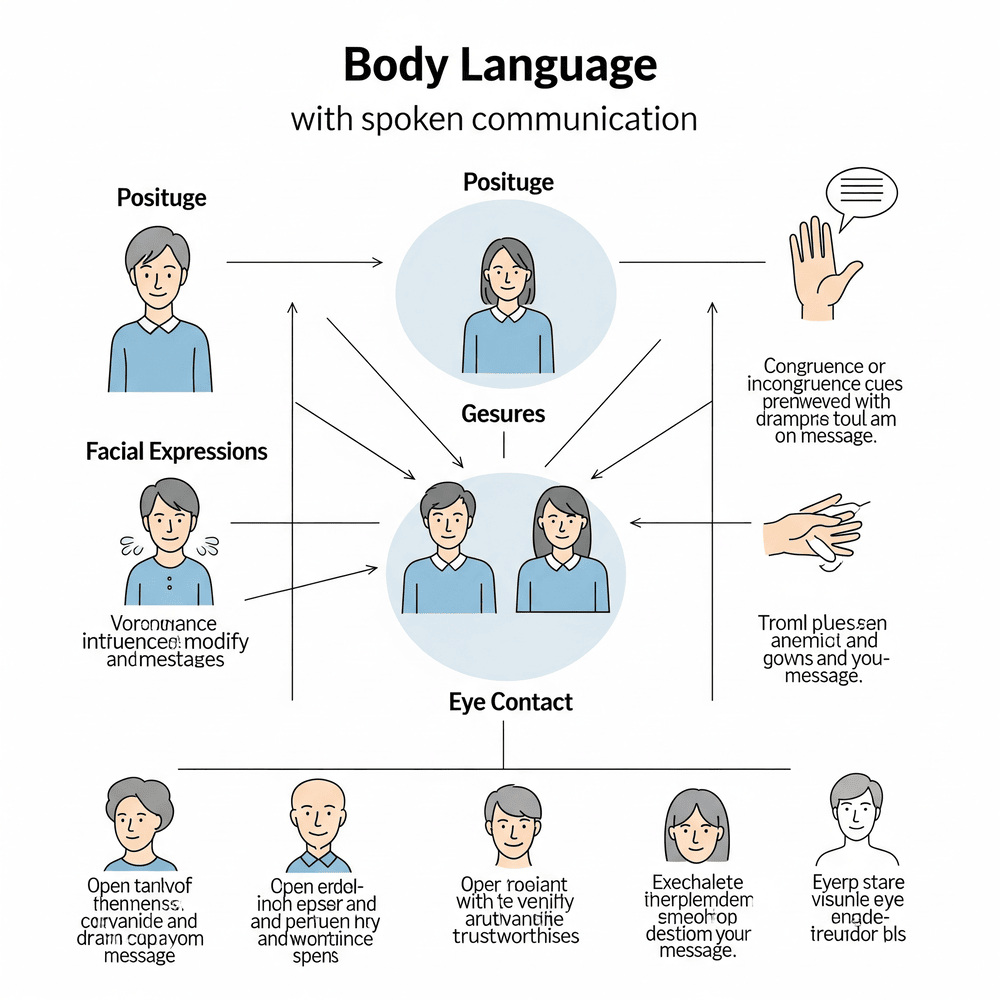
    Every day, in our interactions, more than 70% of the messages we receive do not come from words. Body language becomes a powerful catalyst that sends signals often more honest than speech. Understanding bodily cues not only helps you read others better, but also enhances your ability to communicate, lead, and build relationships.
    But why is body language still considered elusive and hard to grasp? Because behind seemingly simple movements lie complex patterns that require careful attention to interpret correctly. This article discusses some important concepts in body language that will open your eyes to see beyond just words.

    Read also : The Laws of Human Nature by Robert Greene

    Concept 1: Eye Gaze and Its Hidden Meanings

    Eyes are often called the windows to the soul. A gaze not only shows the direction someone is looking, but also reveals hidden inner feelings. For example, when someone looks up, they are often recalling something or even feeling hopeless. An askance glance—looking sideways with doubt or skepticism—indicates a lack of trust or concealed objections.
    Mastering the meanings of these gazes gives you an advantage in reading situations and the behavior of those you interact with more sharply. However, there is a significant risk of misinterpretation, so it’s important to study the context and accompanying behaviors that arise with such gazes.
    A complete framework for applying this understanding of eye gaze is discussed in five specific steps in the book we have summarized exclusively.

    Read also : Succeed For Yourself by Richard Denny

    Concept 2: Facial Expressions as Potent Emotional Cues

    Facial expressions can be the most powerful and undeniable signals of emotion. From a faint smile to a deep look of disappointment, a person’s face can reveal what they may not want to say. For example, eyes that appear glazed or vacant may indicate fatigue, boredom, or even the influence of substances like alcohol or drugs.
    Sensitivity to these shifts in expression will make you more adept at detecting the true emotions hidden behind words. However, incorrect interpretation can also lead to misunderstandings. Therefore, we present three common mistakes when interpreting facial expressions and how to avoid them in our summary.


    Concept 3: Hand Movements and Their Effects in Communication

    Hand movements add nuance to both verbal and nonverbal communication. From gestures that reinforce statements to unconscious movements like touching one’s own hands, each has a meaning you need to know. For example, erratic or inconsistent hand movements can indicate nervousness or confusion, while the position of the hands when speaking can reflect a person’s confidence and openness.
    Understanding the language of hands can help you better read the character and intentions of your conversation partner. However, more advanced techniques on this concept, including templates and practical examples, are part of the exclusive insights we’ve prepared at MentorBuku.

    Read also : The Book You Wish Your Parents Had Read by Philippa Perry

    Why Understanding Body Language Matters for You

    Body language is a strategic tool you can use to earn trust, influence decisions, and strengthen interpersonal relationships. With this insight, you become not only a good listener but also a keen observer. This is highly valuable in business, negotiation, and everyday social life.
    However, it is important to remember that reading body language requires practice and a systematic framework. Careless interpretation can lead to misunderstandings and even harm your relationships.


    Conclusion

    Body language occupies a vital role in effective communication. By deeply understanding eye gazes, facial expressions, and hand movements, you open up opportunities to communicate more authentically and better influence your surroundings.
    But this is just the beginning. Practical application, recognizing common pitfalls, and advanced techniques require a structured and systematic approach. Fortunately, all the secrets and methods to master them are available in our strategic summary.


    You have just seen the foundation. These concepts are just the tip of the iceberg of what this book has to offer. How do you apply them step by step, avoid common pitfalls, and integrate them into your strategy? All those answers are inside.

    Sign up and Get Free Access to MentorBuku Now!

  • Breaking the Chains of Awkwardness: 4 Secrets to Authentic Connection from ‘How to Talk to Anyone’ by Leil Lowndes

    Written by
    mentorbuku
    in
    Career & Professional Relationships, Communication, Personal Development, Social Skills

    Introduction: Why Do So Many People Fail to Build Relationships?

    Behind every influential conversation, there are always ‘hidden secrets’ that distinguish those who merely talk from those who truly leave an impression. Today’s social world moves ever faster: human connection is an increasingly valuable asset, but also ever harder to build. Say the wrong thing once or twice, and a formal relationship can turn cold. Present yourself poorly, and golden opportunities become fleeting memories.

    What actually makes some people seem natural in their interactions, while others remain trapped in a cycle of awkwardness? The book “How to Talk to Anyone” by Steven Hopkins dissects the psychological foundations behind social skills that appear effortless. Yet beneath the surface lie four strategic keys that are rarely truly understood—let alone mastered.

    This article will reveal those ‘secret’ foundations: making you realize that building influential conversations isn’t just about memorizing scripts or making small talk. There’s an art, a science, and a strategy behind every meaningful communication. Still, after understanding the “what” and “why” in this article, you’ll see—without knowing the ‘how’, your transformation will never truly happen.


    1. The Secret Mindset: Replacing Fear with a New Perspective

    Every fear of starting a conversation, haunted by awkward scenarios, actually stems from a flawed mindset. Hopkins reveals that social anxiety is often born from negative preconceptions about others’ reactions—in other words, overthinking and self-judgement. Believing that communication is simply about ‘delivering a message’ is a fundamental mistake.

    Hopkins’ key concept: Talking isn’t just exchanging words, but exchanging energy and intent. When you approach with the intent to understand (not just to be heard), the whole dynamic of the conversation changes—for both you and your counterpart.

    Why is this crucial? Because without a mindset reset, no matter how advanced your modern communication techniques are, they’ll still be a fragile ‘mask’. Authentic conversation grows from inner security—a realization that ‘social failure’ is merely a myth created by old fears.

    The full framework for breaking these limiting mindsets, including practical exercises and introspection, is thoroughly discussed in the opening chapter and in a special analysis at MentorBuku…


    2. “Opening Mastery” Technique: Conquering the Crucial First Five Seconds

    Social research proves: people form perceptions within the first few seconds. Hopkins emphasizes, the art of opening a conversation isn’t just about flashing a smile or making small talk; there’s a series of micro-strategies to ‘set’ your counterpart’s emotional state.

    One important concept here is the use of a ‘Positive Pre-Frame’—subtly influencing your conversation partner to feel open and comfortable from the outset. Small details matter: your tone of voice, eye contact, and making your introduction personal.

    Why is this revolutionary? Because most people fail to build relationships not because of the wrong message, but because the ‘emotional frequency’ set from the start is already off. You’re ‘playing’ on the wrong communication channel before ever talking about substance.

    However, there are three common (and very fatal) mistakes in applying this opening technique—from misguided gestures to tones that kill the momentum of closeness—all are thoroughly explained with corrective tactics in MentorBuku’s premium summary…


    3. Reading Body Language: “Listening with the Eyes”

    Dozens of ‘conversation tips’ become useless without the ability to read nonverbal cues. Hopkins busts the myth: effective communication is 90% body language. But it’s not about consciously observing, rather about creating a ‘feedback loop’ between your words and body gestures.

    ‘Listening with the Eyes’ becomes the key differentiator here. When you start ‘hearing’ by paying attention to micro-expressions, body language, and unspoken signals from your conversation partner, you gain the power to adapt your response in real time. The result? The conversation feels like it ‘flows automatically,’ creating the impression that you were meant to click as conversation partners.

    Why is this indispensable? Because in reality, the true message is often hidden in micro body movements—a slight smile, a raised brow, tensed shoulders—all signaling whether you’re welcome or should quickly change direction.

    Advanced techniques on reading, interpreting, and recoding body language—along with detailed exercises to develop your social instincts—are presented as part of exclusive insights for MentorBuku members…


    4. Planting Emotional Anchors: How to Make Every Conversation Unforgettable

    Amid the sea of rapid interactions, very few are truly memorable. What’s the secret? The next key concept from this book is ‘Emotional Anchoring’: the ability to plant a ‘positive trap’ in conversation so that you and your message stay lodged in the other person’s memory.

    Hopkins explains, a meaningful conversation isn’t the longest, but the one that can ‘slow down time’—becoming an experience the other person wants to repeat. This might be genuine appreciation, using an ‘emotional callback’ to a previous topic, or simply being fully present for a moment.

    Why is this emotional experience important? Because in the era of information overload, what sticks in people’s minds isn’t rational arguments, but emotional resonance. You want them to say, “I want to talk to you again,” without even knowing why.

    But did you know? Planting emotional anchors can backfire if the technique is wrong. Case studies, variations on anchoring, and drills for personal branding through conversation are some of the strongest modules at MentorBuku, taken directly from Hopkins’ strategies…


    Conclusion: The Knowledge Gap Waiting to be Filled

    Reading “How to Talk to Anyone,” you’ll realize: advanced communication isn’t just a skill—it’s an art and a system anyone can learn. This article only scratches the surface—revealing four key secrets that form the foundation of modern social savvy.

    But now you know: understanding the what and the why is just the beginning. If you want real transformation—to break career deadlocks, conquer networking events, or simply build relationships that last—you need to systematically explore the ‘how.’


    You’ve just seen the foundation. But how do you build the skyscraper? All the strategies, step-by-step guides, and case studies from this book have been thoroughly explored. Don’t just know the ‘what’—master the ‘how’ by subscribing at https://mentorbuku.com.