Tag: inspiration

  • The Fundamental Secrets of the Subconscious Mind: A Revolutionary Catalyst for Life Transformation. The Power of Your Subconscious Mind by Joseph Murphy

    The Invisible Gap Behind the Power of the Mind

    Have you ever felt like you’ve struggled as hard as you can, read countless motivational books, yet the life changes you’ve hoped for never come true? The answer may not lie in how hard you try in the outside world, but in how intelligently you orchestrate the power of your subconscious mind.
    A deep understanding separates ordinary people from world changers—the ability to use the subconscious as a catalyst for change. This article will take you beyond the surface layer of the concept of “positive thinking,” strategically dissecting how revolutionary ideas about visualization and suggestion can become the gateway to an authentic and fulfilling life.


    Visualization, the Main Pillar in Shaping Reality

    Imagination as a Real Foundation in Life

    Imagine being able to grasp your dreams before the world can see them. The secret? Visualization. In his book, the author describes how important it is to create a clear image in your mind before manifesting it in reality. Just like a painter who has already seen their masterpiece on the canvas of imagination before the brush touches the cloth, visualization is the process of seeing something “alive” in the mind as if it were already real.
    It’s not just daydreaming—visualization is the way the brain prepares the external world to receive a new reality. The mental images you create become the substance of “evidence of things not yet seen,” and if you consistently maintain these images, the energy to bring them into reality will accumulate in extraordinary ways.

    Read also : Measuring Marketing: 110+ Key Metrics Every Marketer Needs by John A. Davis

    However, why do so many people stop at just dreaming? Because there is a thin but essential difference between imagining and fully building belief in that image. To turn imagination into substance requires advanced techniques and inner discipline.
    The complete techniques for building visualization that is truly “alive” and rooted in the subconscious are outlined step by step in the book…


    Visualization Techniques that Have Inspired Thousands of Successful People

    The author reveals that before appearing in public, he always “plays” a mental recording: imagining the entire auditorium, seeing all the audience looking bright, enthusiastic, and inspired. This technique consistently makes performances more vibrant, energetic, and impactful on a much deeper level.
    This process is not just for the stage. Athletes, successful entrepreneurs, and even world-class scientists have proven that strong mental visualization enhances real-world performance.
    How to specifically prepare your mind so that your body and actions are programmed for achievement—all the frameworks are available as premium modules in MentorBuku…


    Planned Suggestion, the Elusive Driver Toward Real Change

    Phenomenal Studies: Proof of the Power of the Subconscious Mind

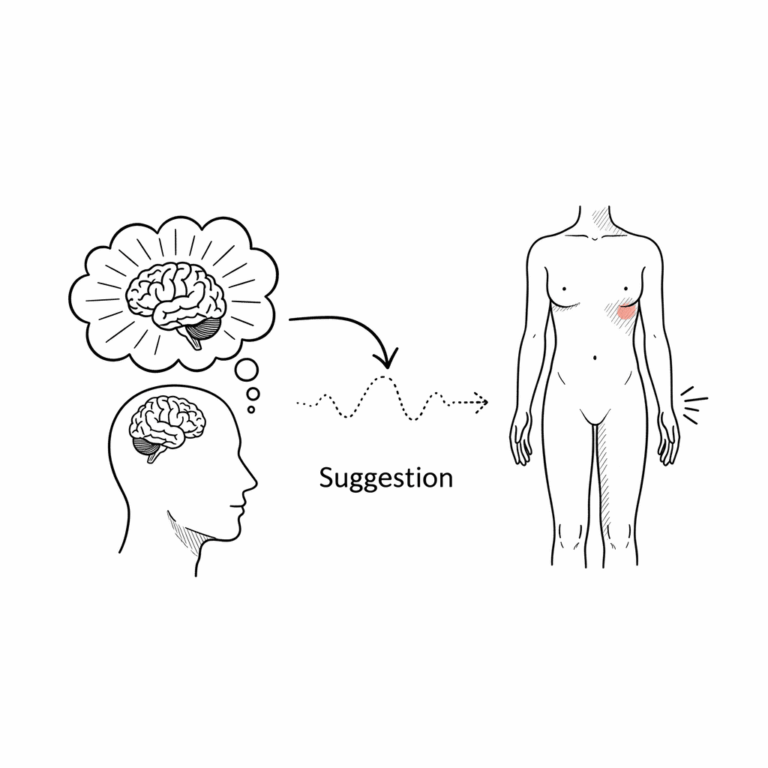
    An amazing story from Dr. M. Bourru highlights the power of suggestion: someone, given a command while under hypnosis—“at four o’clock your nose will bleed”—actually experiences a nosebleed at the designated time; not an illusion, but a real physical effect!
    In another case, someone’s name was lightly scratched onto their arm. With the suggestion, “later your name will appear from this scratch,” a few hours later, the letters actually appeared on the skin, even accompanied by blood. This is not just a stage phenomenon or sensory trick, but proof that the subconscious can control the body at a micro-biological level, far beyond conscious intention.
    Read also : Never Split the Difference by Chris Voss

    This story is a powerful reminder: anything absorbed by the subconscious can become an automatic command for our bodies and our lives.
    However, there are three common mistakes that people almost always make when applying suggestion techniques. All these pitfalls—along with their antidotes and strategies—are discussed in detail in a special session at MentorBuku…


    Why Suggestion Is More Dangerous or Powerful Than Mere Intention

    The main difference between conscious intention (simply wanting) and suggestion (an ingrained command) lies in the power of automatic execution. When suggestion is embedded, the subconscious works without needing to be pushed. That’s why suggestion, if misused, can lead to downfall—such as patterns of self-sabotage, addiction, or chronic doubt. Conversely, when suggestion reinforcement strategies are used correctly, they drive changes that feel almost “effortless” at the surface level of the mind.
    The strategy to eradicate self-sabotage and instill a highly competitive mindset belongs only to those who understand how to manage the power of suggestion.
    All patterns of affirmation sentences, repetition rhythms, and suggestion reinforcement techniques are shared exclusively in the premium guide at MentorBuku…


    The Mystery of Direct Experience from Experts: Between Imagination and Reality

    Many people believe it is impossible to change the real world “just” with the mind. However, modern science and the experiences of classic spiritualists show the interconnectedness between mental imagery and physiological change. In fact, today’s business world adopts this concept as “mindset engineering,” mental programming for great success.
    Between imagination and reality there is always an “invisible” space filled by the workings of the subconscious. Here, the laws of psychology and spirituality work together in synergy. From morning routines, affirmation repetition, to daily visualization—all are only effective if they truly reach the subconscious realm.
    How can you integrate simple techniques into your daily routine so the results last and build a much higher-quality life? The answer is a combination of empirical and spiritual strategies that you can only learn in depth through the authoritative discussion in this book…


    Closing – The Gateway to the Next Level

    Now, you have seen the deepest layers of how visualization and suggestion are not just theories, but the transformative foundation for life change. However, what you have read is only the beginning. The “how”—turning inspiration into habit, avoiding every pitfall of failure, and creating a framework for strategic implementation—all await you at the next level.


    You have just seen the foundation. These concepts are only the tip of the iceberg of what this book offers. How do you apply them step by step, avoid common pitfalls, and integrate them into your strategies? All the answers are inside.

    Sign up and Get Free Access at MentorBuku Now!

  • The Fundamental Secret of Visualization: A Powerful Catalyst for Transforming Your Life. The Miracle Morning: The Not-So-Obvious Secret Guaranteed to Transform Your Life Before 8 AM by Hal Elrod

    Visualization often sounds like a mystical concept—a practice believed to be useful only for athletes or those who believe in the “law of attraction.” However, in reality, visualization is a revolutionary key that can reshape your habits, ignite your enthusiasm, and truly change the course of your life. In this article, we will explore three fundamental catalysts of the art of visualization derived from “The Miracle Morning,” uncovering why they are so important and, of course, leaving you eager to learn about structured application strategies.

    Why Is Visualization a Game Changer?

    Every person carries the burden of the past: failures, doubts, or even trauma that hinders the path to the future. This is where visualization comes in, not as an escape, but as a “mental time machine” that can spark motivation and steer your life toward a more promising future. Instead of letting bad memories dictate your actions, you now have a tool to fill your mind with an exciting and limitless vision of the future.

    Interestingly, research shows that those who fill their minds with positive images of the future tend to be more resilient, more productive, and better able to maintain motivation when facing challenges. This is not just empty theory; it is the foundation of performance psychology that has helped millions of people change their routines and achieve unexpected accomplishments.

    But how exactly does visualization work as a catalyst for transformation? Let’s break down its three main, interwoven components.


    1. Directed Visualization: Reprogramming the Mind for Success

    Many people start visualizing by simply imagining “wanting to be successful.” However, the real power comes from directed visualization—where you consciously and intentionally design a “mental movie” of how you want to live your ideal day. For example, the author of “The Miracle Morning” makes it a habit each morning to sit quietly, close his eyes, and systematically visualize himself going through his day with enthusiasm and smoothness. From small routines to major achievements, everything is visualized as if it has already happened.

    The strength of this approach lies in its detail. By imagining sensations, emotions, even potential obstacles, you “trick” your brain into believing that success is truly attainable, not just wishful thinking. Every thought, every “scene” you repeat daily becomes the foundation for confidence and a consistent source of motivation.

    But how do you create effective directed visualization? There are three specific steps outlined in the book, including ways to manage the mental resistance that often arises at the start of the practice—and all of them are available in our strategic source.


    2. Vision Board: The Physical “Magnet” for Your Dreams

    Imagine your desk covered with inspiring images—dream destinations, role models, financial achievements, or even favorite quotes. That’s the Vision Board, a simple visual tool with extraordinary power. In truth, a Vision Board is a constellation of visuals that helps strengthen your mental images so that your brain can more easily connect your targets to reality.

    This concept was popularized by the book and movie “The Secret,” but what is often overlooked is the process of choosing the right images, arranging them strategically, and maintaining a routine of “interacting” with your Vision Board so that its impact goes beyond mere decoration. Many people make random Vision Boards and then feel disappointed when their dreams don’t come any closer. In fact, there is a specific way to activate this “magnet” so that it truly strengthens your focus and daily energy.

    A complete framework for building an impactful Vision Board, including how to set it up to fit your unique goals, is thoroughly explained in MentorBuku’s exclusive visualization toolkit.

    3. Emotion as Leverage: The Key to Creating Mental “Attraction”

    One often-overlooked secret in visualization is the power of emotion. Merely imagining success is not enough. You need to bring to life the emotions that accompany it—joy, gratitude, even a touch of fear. The stronger the emotions you feel during visualization, the more “real” the experience becomes to your brain. This is why many top coaches emphasize the importance of “feeling” victory even before it actually happens.

    Why are emotions so crucial? Because deep emotions make you see your goal not just as something “worth trying,” but as an inevitability. When you start your morning by “touching” the feeling of satisfaction after achieving success, your motivation to act switches into “turbo mode.”

    Specific steps to evoke emotion during visualization, along with tricks to overcome mental blocks that hinder genuine feelings, are described in a special chapter that is not only theoretical but also practical in our key book.


    4. “Habit Stacking”: Integrating Visualization with Daily Routines

    One reason most people fail to maintain the habit of visualization is the lack of integration into their routines. Visualizing right after waking up is much more effective than scheduling it for “whenever there’s time.” That’s where the concept of “Habit Stacking”—attaching a new habit (visualization) to an existing one (such as drinking a glass of water)—becomes a game changer.

    Not only does this make visualization easier to implement, but habit stacking also strengthens consistency and helps the brain form automatic habit pathways. Over time, visualization will no longer feel like a “chore” but will become an inseparable part of your morning energy.

    A series of powerful habit stacking techniques, along with practical examples for various professions, are offered as part of the bonus strategies available on the MentorBuku platform.


    Conclusion: Visualization Is Not a Dogma, but a Discipline

    Visualization is a catalyst for transforming your life, but only when practiced with discipline and mindfulness. With directed visualization, a meaningful Vision Board, ignited emotions, and habit stacking strategies, you have already opened the door to change. However, the journey doesn’t end here.

    Read also: The Rational Male by Rollo Tomassi

    Read also: The 7 Habits of Highly Effective Families: Creating a Nurturing Family in a Turbulent World by Stephen R. Covey


    Closing: Are You Ready to Become the Architect of Your Future?

    You have just seen the foundation. These concepts are only the tip of the iceberg of what this book offers. How do you apply them step by step, avoid common pitfalls, and integrate them into your strategies? All those answers await inside.

    Sign Up and Get Free Access at MentorBuku Now!

  • How to Be an Effective and Inspirational Idea Collector. Steal Like an Artist by Austin Kleon

    Exploring Creativity Through the Concept of Gathering Ideas: Becoming a Collector, Not a Hoarder

    In today’s fast-paced and technology-driven world, many people struggle with the process of generating new ideas. You may have felt stuck in a routine or, on the contrary, overwhelmed with unstructured information and inspiration. However, there is an approach that can help rejuvenate your creativity: becoming an idea collector.

    Why is Idea Collection Important?

    Collecting ideas is not just a hobby; it is one pathway to deep creativity. In the context of art, being a collector means you selectively seek out and gather ideas, perspectives, and experiences that can shape your own work. As Picasso stated, “Art is theft.” Ideas do not emerge from a vacuum; they come from the inspiration we draw from our surroundings.

    Collector vs. Hoarder: Choosing Wisely

    Distinguishing between a collector and a hoarder is crucial. A hoarder collects everything indiscriminately, while a collector chooses wisely, gathering only what truly touches their heart and soul. As the author expressed, we should collect the things we love to enrich our own ideas.

    “Garbage in, garbage out.” – a saying often quoted by parents, emphasizing that what you consume mentally greatly influences the quality of the ideas you produce.
    For example, if you spend your time only with shallow or meaningless content, your work will reflect the same. However, by surrounding yourself with high-quality works – from books, films, to fine arts – you open up opportunities to generate brilliant ideas.

    Read also : The Complete Home Guide to Herbs, Natural Healing, and Nutrition by Jill Davies

    The Power of Inspiration from the Environment

    One of the most effective ways to gather ideas is to immerse yourself in a supportive environment. Engaging with inspiring things can happen anywhere: while watching films, listening to music, reading novels, or even during everyday interactions. These moments can serve as catalysts for upcoming ideas.
    Examples of Inspiration:

    • Classic Films: Pay attention to the visual style and narration used. What makes it unique?
    • Music: Listen to the lyrics and melody. How are emotions transmitted through sound?
    • Visual Art: Observe the techniques and colors used. What can you learn for your own work?

    As you absorb various inspirations, the chances of ideas emerging increase. You can begin to develop concepts by hybridizing the different elements you have collected.

    Applying the Creative Process: From Gathering to Producing

    Collecting ideas is not enough; the next process is to transform those ideas into tangible works. Once you have a collection of ideas, the next step is to organize and develop those concepts. Some steps you might take include:

    1. Creating a Mind Map: Visualize the main ideas and the relationships between them.
    2. Keeping a Journal: Record your thoughts and ideas as they arise. You may discover interesting patterns.
    3. Collaborating: Discuss your ideas with others and explore new perspectives you may not have considered.

    This is important because only by developing ideas can you channel them into something more than mere concepts lying dormant in your mind.

    Read also : Light on Yoga: The Bible of Modern Yoga by B. K. S. Iyengar,Yehudi Menuhin

    Avoiding Common Mistakes in Creativity

    Every creative process inevitably faces its challenges. Here are some common mistakes that often occur and how to avoid them:

    • Stuck in Perfectionism: When you’re too anxious about perfection, you may halt the creative process. Remember that the process is more important than the final result.
    • Not Seeking Inspiration: Don’t hesitate to seek out and explore different sources of inspiration. Taking a nap, walking in nature, or trying new activities can provide the inspiration you need.
    • Not Recording Ideas: Set up tools to jot down emerging ideas. Whether it’s a digital notebook or a classic one, what matters is that you can record them when inspiration strikes.

    Keep in mind to revisit your ideas regularly to ensure you don’t miss out on the potential that may arise from initially simple concepts.

    Conclusion: Returning to the Basics

    The creative process is a long and challenging journey. By being a careful collector of ideas, you not only build a strong foundation for your creative work but also create a flow of continuity that enriches your experiences and final outcomes.
    You have just seen the foundation. These concepts are just the tip of the iceberg of what this book offers. How to apply them step by step, avoid common traps, and integrate them into your strategy? All the answers lie within.

    Sign Up and Get Free Access at MentorBuku Now!

  • Fundamental Secret: The Power of the Selflessness Paradigm That Can Change Your Life. Energize Your Mind by Gaur Gopal Das

    Why “Selflessness” Has Become the Catalyst for a Productive Life

    Have you ever wondered why some people seem so happy and productive, even when they seem to give more than they receive? The answer may lie in a single word we often overlook: selflessness.

    In an increasingly individualistic world, the book “Energize Your Mind” by Gaur Gopal Das offers a contrasting and revolutionary perspective. This book doesn’t just discuss motivation or time management techniques. Instead, it highlights how “giving” selflessly—in terms of time, energy, or thought—can become an unlimited source of mental energy.

    This article will review three key concepts from the book:

    1. Selflessness as the foundation of a meaningful life
    2. The “Chain of Kindness” principle and its impact on productivity
    3. The “Beyond Yourself” mindset as a catalyst for true happiness

    However, keep in mind: this discussion is only a “gateway” to knowledge. The concrete methods for applying these concepts can only be found at MentorBuku.


    Selflessness: The Foundation of a Meaningful Life

    Have you ever heard the saying, “A tree does not eat its own fruit, a river does not drink its own water”? Gaur Gopal Das quotes this ancient philosophy, affirming that great beings—like trees, rivers, and clouds—benefit others selflessly. This philosophy forms the foundation of “selflessness” as a mindset that we should adopt in modern life.

    Why is this important?
    Many modern studies show that giving—whether materially or emotionally—triggers the release of happiness hormones and reduces stress. But beyond that, selflessness also creates stronger mental resilience. When you stop focusing on yourself and start thinking about others, you actually activate a new energy center in your life.

    Furthermore, selflessness acts as a psychological “safety net” when facing challenges. When you give, you build strong social connections and expand the meaning of life. This is a principle that has been proven for thousands of years and is now relevant again in the fast-paced digital era.

    A complete framework for practicing selflessness in daily routines—without feeling exploited—is discussed systematically in this book and has been summarized exclusively at MentorBuku.

    See also: The Magic by Rhonda Byrne


    The Chain of Kindness Principle: Small, But Highly Impactful

    Next, “Energize Your Mind” introduces the principle of the “Chain of Kindness.” This philosophy asserts that one small act can create an unexpected positive domino effect. In the real-life story of Kamalamma, for example, a simple action she took became a national inspiration and changed many lives.

    Why is this concept so powerful? Because with the chain of kindness, you’re not just changing one person’s life, but building an ever-growing ecosystem of goodness. Every positive action you take can inspire others to do the same, creating a never-ending cycle of virtue.

    In the workplace, this principle can transform organizational culture. In personal relationships, it strengthens trust and loyalty. Even in everyday life, the chain of kindness increases gratitude and enriches the soul.

    However, there are three common mistakes often made when trying to build a chain of kindness, from wrong motivations to misguided social expectations. An in-depth analysis along with practical solutions can only be found in our summary at MentorBuku.

    See also: Great CEOs Are Lazy by Jim Schleckser


    The “Beyond Yourself” Mindset: Catalyst for True Happiness

    In another section, this book highlights the importance of developing a “Beyond Yourself” mindset—thinking and acting beyond personal interests. Many people are trapped in the “what’s in it for me” mindset, unknowingly closing the door to true happiness.

    Adopting this mindset changes the way you view challenges and opportunities. You no longer fear failure, because your main goal is contribution, not just personal achievement. This also makes you more resilient to social pressure and external expectations.

    In fact, positive psychology research shows that individuals focused on contribution have better mental health and a lower risk of burnout. They are more adaptive, creative, and happy.

    Advanced techniques for developing a “Beyond Yourself” mindset, including self-reflection templates and practical examples in everyday life, are part of the exclusive insights we offer at MentorBuku.

    See also: Stoicism for Inner Peace by Fleur Marie Vaz


    Spiritual Lessons from “Energize Your Mind”

    This book also touches on the spiritual dimension of selflessness. In ancient Indian teachings, giving selflessly is considered the highest form of devotion and the path to a more meaningful life. The author even thanks his spiritual teachers, signifying that learning to give is a lifelong journey.

    This spiritual spirit opens up new horizons regarding the meaning of success. It’s not just about material achievement, but about accomplishments that benefit as many people as possible. This perspective is highly relevant today, as the meaning of happiness is shifting from “having” to “sharing.”

    How can you integrate this spiritual dimension into your modern routine? The answer, complete with practical steps and self-reflection, can be found on the MentorBuku platform.

    Why You Should Adopt the Selflessness Paradigm Now

    Practicing selflessness does not mean sacrificing yourself without limits; rather, it means prioritizing contribution. In a highly competitive world, it is those who dare to give and share who become the true winners—both personally and professionally.

    This paradigm has stood the test of time. It is the foundation for great leaders, innovators, and individuals who lead meaningful lives. Now is the time for you to begin your journey of change with the first step: understanding and internalizing the concept of selflessness.

    However, understanding the “what” and “why” is only the beginning. You need practical strategies, real case studies, and step-by-step guidance to truly transform your life.

    Conclusion: Transformation Starts Here

    You have just seen the foundation. These concepts are only the tip of the iceberg of what this book has to offer. How do you apply them step by step, avoid common pitfalls, and integrate them into your strategy? All the answers are inside.
    [Sign Up and Get Free Access at MentorBuku]