Tag: healthy habits

  • The Secret of the New Breathing Paradigm: Unveiling the Forgotten Fundamental Power. Breath: The New Science of a Lost Art by James Nestor

    Introduction: Why Breath Is More Important Than We Ever Realized

    Every second, unconsciously, we breathe. Breathing is a fundamental and automatic process—yet behind this seemingly simple act lies extraordinary power that has long been overlooked by modern science. The book “Breath” takes us on a journey through the intricacies of breathing, from ancient heritage to contemporary research breakthroughs, revealing that the way we breathe profoundly influences health and daily life far beyond simply inhaling and exhaling air.
    In this article, you will be presented with four key concepts from “Breath” that can become catalysts for change in your life. Each concept will be explained in depth about the “what” and the “why”—but the secret of the “how” and the implementation steps? All of it is hidden, waiting for you to uncover further to the core.


    A Glimpse into the Ancient Heritage: Breath as the Path to Longevity

    Delving into Knowledge from Ancient Chinese Texts

    For thousands of years, Eastern cultures have recognized breath as the key to longevity and the core of vitality. Even in “The Primordial Breath,” one Taoist text, breath-control techniques are not only about health but also an art of prolonging life and maintaining harmony of body and soul. They believed that regulating the breath means regulating the fundamental life energy itself.
    Imagine, thousands of years before modern laboratories and sophisticated sensors, Tao practitioners had developed a breathing system with remarkable precision and purpose. This system is not merely mystical doctrine; it provides step-by-step guidelines proven in practice across generations.
    But how exactly did they “transport” breath and maximize its function for optimal health? The complete framework of these techniques, along with training examples, is examined in depth in the book’s dedicated chapters—full insight is available only if you delve further.

    Also read : Raising Responsible Teens in a Digital World by Brian Housman

    Breath: The Mysterious Connection Between Mind, Body, and the Ocean

    Modern Exploration: Breath, the Sea, and Lasting Health

    The author of “Breath” began from curiosity and experiences in the world of freediving—a breath-hold dive that requires full control over the breath. From this experience, an insight emerged: the human body actually harbors great potential if the breath is managed correctly. When breath becomes one with the rhythm of the sea, a symphony occurs between the physical, mental, and the surrounding environment.
    Modern scientific data also show that specific breathing techniques can reduce stress, regulate hormones, and even influence blood pressure and the immune system. However, on the other hand, incorrect breathing patterns in daily life can trigger problems—from fatigue, insomnia, to hidden metabolic disorders.
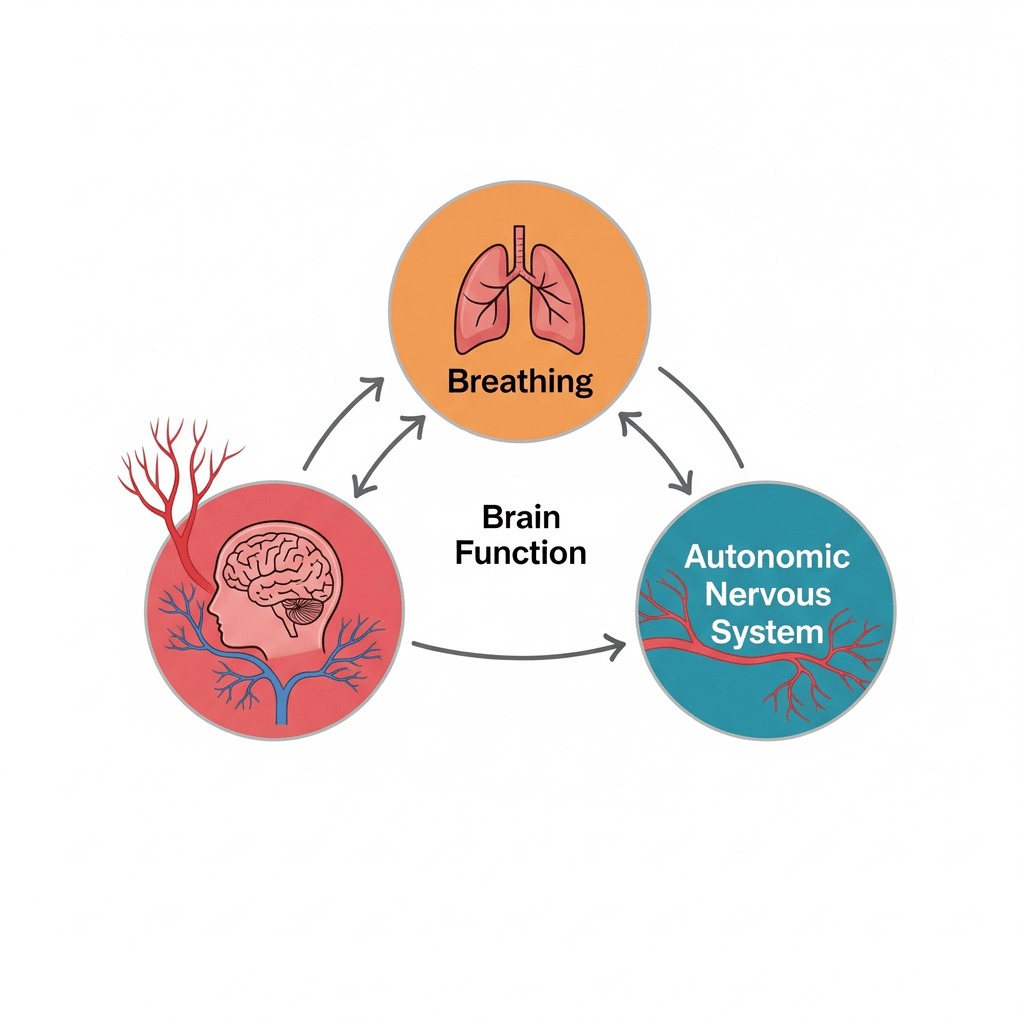
    So why is the breath–body connection so fundamental? Recent studies reveal the links between changes in breathing patterns, brain activity, and the functioning of vital organs. Yet the specific techniques on how to transform your breathing pattern into a source of strength? That is a major chapter that is unpacked step by step in the book, complete with research results and case studies from around the world.
    Also read : The Advertising Effect: How to Change Behaviour by Adam Ferrier

    Cracked House: A Modern Story of Breath Neglect

    A Trait Worth Envy, The Ancestors Paid Attention to Breath at All Times

    In the opening chapter, the author invites readers to a somber setting—like the old Amityville house rich with history and mystery. In that antique-toned room, a group of modern people from diverse backgrounds search for answers: why does their breath feel incomplete, whether due to stress, bad habits, or simply the fast-paced modern lifestyle.
    They arrive for a reason—noted by medical advice leading to health issues that won’t heal. In fact, breath turns out to be the starting point of recovery for a range of ailments, from sleep disorders to cardiovascular problems. The modern environment with pollution, sedentary living, and processed foods makes our breath shallower—and its effects erode daily vitality.
    But what can we do to avoid falling into the trap of incorrect breathing? The book contains structured discussions of the most common breathing mistakes and how to correct them—a step-by-step sequence that is accessible only to those ready to dive deeper.


    The Wonders of Modern Science: Astonishing Breath Studies

    Science Begins to Reappreciate Breath

    In recent decades, science has finally pursued the ancient wisdom about breath. Supported by the latest medical and neurological research, researchers identify the domino effects of breathing on mental health, hormonal balance, and human performance potential far beyond initial expectations.
    In fact, there are studies showing how small techniques to control the timing and depth of breathing can yield dramatic benefits for the immune system and the body’s healing processes. Yet what are the findings of this “troubling picture” uncovered by researchers—and how did they develop clinically tested breathing training protocols? Exclusive details and specific training recommendations are laid out clearly in the book’s pivotal sections.
    As a reader of this article, you have seen part of the picture of the urgency of breathing. However, advanced techniques, in-depth case studies, and proven habit-change templates—these are part of exclusive insights that are available only at MentorBuku.


    Breath as the Key to Personal Revolution: What Comes Next?

    The pressures of modern life, gadget addiction, and an increasingly polluted environment demand that we take full control of something we have long considered trivial: breath. There is no health innovation, self-development, or productivity strategy that can truly be effective if the foundation of breathing is left in disarray.
    This article is only the surface—there are still many mysteries, techniques, and real-life stories of personal transformation through breath waiting for you to explore further. Each chapter in the book “Breath” is like a layer of strategy and knowledge ready to change how you think, work, and enjoy daily life.

    You’ve just seen the foundation. These concepts are only the tip of the iceberg of what the book offers. How to apply them step by step, avoid common pitfalls, and integrate them into your strategy? All the answers are inside.
    Sign up and get free access at MentorBuku now!

  • Hacking the Automatic Brain: Why We’re Always Stuck in Bad Habits (and What’s Really Happening Behind the Scenes). “Atomic Habits” by James Clear

    Written by
    mentorbuku
    in
    Habits & Behavior, Self-Development, Productivity, Psychology

    H1: Introduction – When the Brain Runs on ‘Auto-Pilot’: A Modern Mystery

    Have you ever realized you’ve suddenly polished off an entire bag of snacks, spent hours scrolling through social media, or even done something boring—like swiping a credit card—without being truly aware of it? The surprising fact is: most of our daily behavior is driven by subconscious habit systems, like the brain switching to ‘auto-pilot’ mode. From shopping to aimless scrolling, why are people so susceptible to bad habits? This is where the domino effect of habits, supernormal stimuli, and modern stimulus systems play a key role.

    In this article, you’ll explore three of the most prevalent habit phenomena in the digital era: the power of auto-pilot brain, the danger of supernormal stimuli, and the secret of the ‘instant satisfaction rating’. We will uncover the ‘what’ and the ‘why’—but the secret ‘how’ to take control is only available in the next realm: MentorBuku.


    H2: The Brain’s “Auto-Pilot” Phenomenon – When Awareness Is Parked and Gone

    In a simple story, someone unconsciously swipes a customer’s actual credit card—it’s not that the employee doesn’t know the rules, but routine has shifted control from conscious intent to the brain’s subconscious layers. Auto-pilot, an informal term for automatic habits, is in fact responsible for so many of our repeated life decisions, made without active logical intervention [1].

    The key to auto-pilot habits is their reliability. The human brain is always searching for the easiest and quickest way to accomplish tasks, so it builds neurological ‘fast lanes’ that can take over behavior automatically. You don’t have to think hard each time you tie your shoes, brush your teeth, or even get ‘pulled’ into your favorite shopping app. In other words, habit is the brain’s solution for saving thinking energy.

    But here’s the problem: auto-pilot habits never choose based on long-term benefit; more often, they rely on past ‘success’ or instant pleasure. As a result, we easily get stuck in endless cycles of bad habits—and ironically, these habits often feel comfortable.

    The complete framework for exposing and breaking the auto-pilot loop is mapped out in the book we’re examining—including techniques for conscious intervention in your daily routines…


    H2: Supernormal Stimuli – The Invisible Enemy of Healthy Habit Paths

    What do junk food, social media, pornography, and modern digital ads have in common? They are ALL products of supernormal stimuli—artificial triggers designed not just to elicit a natural human response, but to amplify it to abnormal levels [1].

    The term ‘supernormal stimuli’ has evolutionary roots. Imagine: fast food packed with sugar, salt, and fat isn’t just food; it’s a work of art that tricks your brain into seeing it as far more ‘valuable’ than natural food. The same thing happens with social media apps: notifications and colorful visuals bombard your dopamine system non-stop, as if every like and comment is a form of instant reward.

    The impact? Consumptive, impulsive habits and addictive routines—which are not just lifestyle choices, but the result of systemic engineering that is tough to escape.

    Yet behind all that, there are three fatal mistakes most people make when trying to fight the current of supernormal stimuli—and they can only be addressed with the latest principles of habit psychology, as analyzed in MentorBuku’s insights…


    H2: Instant Satisfaction Ranking – Why the Brain Always Chooses ‘Satisfaction Now’

    The appeal of bad habits doesn’t just come from their automatic nature. The human brain is wired to prioritize instant gratification, a principle that has become ever more extreme in our digital world [1]. Every behavior (whether opening an app, shopping online, or eating fried snacks) gets repeated because the brain is ‘rewarded’ with a quick hit of satisfaction, even when the long-term consequences are negative.

    The paradox: the greater the immediate gratification promised by a behavior, the harder it is for your brain to resist. That’s why modern humans so often feel ‘powerless’ when trying to start good habits like exercising, journaling, or finishing important tasks—because the brain is programmed to chase the fastest reward.

    Even in a historical context, innovation always moves towards increasing the speed and intensity of rewards [1]: “If history is any guide, future opportunities will be even more tempting than today. The trend is for rewards to become ever more satisfying—which increases the likelihood that the behavior will be repeated in the future.”

    Do not underestimate the power of ‘reward’ in shaping behavior. The main book we analyzed gives you psychological weapons for taking control of the instant satisfaction system—along with ways to redirect your brain to healthier rewards. Yet advanced techniques, including practical templates and how to build a healthy reward system, are reserved for MentorBuku subscribers…


    H2: Why Habit Revolution Is the Struggle of the Modern Era

    Every bad habit is the result of psychological engineering beneath the auto-pilot system, supernormal stimuli, and instant rewards. In the digital era, this problem only grows more complex: artificial stimuli that are super accessible lead the brain deep into the chasm of destructive behavioral dependence. If you’ve ever wondered why it’s so hard to break out of old patterns—even when you know the risks—the answer doesn’t lie in ‘willpower,’ but in the system behind your own brain.

    However, knowing the ‘what’ and ‘why’ is merely a foundational step. True transformation never happens without tools, concrete steps, and strategies to “trap your own brain”—that’s the secret you’ll only get if you’re willing to leave the comfort zone of shallow knowledge.


    H2: Conclusion – When Knowledge Is No Longer Just Information, But a Transformative Key

    After exploring the power of auto-pilot, the danger of supernormal stimuli, and the dominance of instant gratification—one major conclusion emerges: without the right strategy, modern humans will only become victims of their own sophisticated habit systems. You’ve seen the foundation of ‘why’ change is so hard, and what the earliest traps are. But, your life’s turning point isn’t “what” you know, but mastery of the “how”: breaking down, redesigning, and conquering your habit system at a technical level.

    You’ve just seen the foundation. But ‘how’ do you build the skyscraper? We’ve unpacked all the strategies, detailed steps, and case studies from this book. Don’t just know the ‘what’—master the ‘how’ by subscribing at https://mentorbuku.com.