Tag: effective communication

  • The Secret of Authentic Negotiation: A New Mindset Paradigm in Never Split the Difference by Chris Voss with Tahl Raz

    Introduction: Why Do We Fail at Negotiation?

    Many people think negotiation is just about bargaining over prices or winning arguments. However, most of us fail. Why is that?
    Because all this time, we have often focused too much on “numbers” and “logic,” when in reality the real action takes place on a much deeper level: psychology and emotion. To truly understand and master negotiation, you must dare to look into the dark side of the human mind and apply strategies that are often overlooked.
    The book “Never Split the Difference” by Chris Voss—a former FBI hostage negotiator for high-stakes cases—offers a revolutionary new paradigm. It is not just theory, but the product of decades of life-and-death situations, direct from the front lines of the world’s toughest negotiations.

    Read also : Brand Naming: The Complete Guide to Creating a Name for Your Company, Product, or Service by Rob Meyerson

    Authentic Paradigm: Between Empathy, Reality, and Real Results

    Successful negotiation is born from the courage to face raw truth—including negative emotions. You’re not just talking to win, but subtly reading and guiding the meaning of the conversation. Chris Voss calls this “empathic negotiation.”

    Labeling – Turning Fear Into Strength

    One of Voss’s central techniques is “labeling.” Labeling is not just guessing or assuming what the other person is feeling, but actively “naming” their emotions and concerns. For example: “It seems you have doubts about this offer…” or “It looks like this situation is making you worried.”
    What’s its power? Neuroscience has proven that when someone is asked to name their emotions—such as fear—the brain’s activity shifts from the “fear” center (amygdala) to the logical area. As a result, panic intensity drastically decreases, and the other party is much more ready for a rational conversation.
    Additionally, labeling helps unravel the quality of communication in high-tension moments: “Exposing negative thoughts to daylight… makes them seem less frightening,” Voss writes. You can control the situation with just a single, simple sentence—if you know how.
    The complete framework for effective labeling—including specific phrases and practical exercises—is detailed in five special steps in this book…

    Master the Mindset: Negotiators Are Emotional Detectives

    A great negotiator trains themselves to become an “emotional detective.” Their task: to catch, understand, and handle emotional cues, whether implied or explicit.
    Rather than being busy “crafting the perfect response,” you should sharpen your sensitivity to changes in tone of voice, body language, and your counterpart’s expressions. This is the key to unlocking solutions that have long been hidden beneath layers of prejudice.
    However, there are three common pitfalls that often lead negotiators to complete failure when attempting to act as emotional detectives—all the strategies for overcoming them are thoroughly explained in the mentorbuku summary…

    Read also : Ghosts by Daylight: A Modern-Day War Correspondent’s Memoir of Love, Loss, and Redemption by Janine di Giovanni

    Field Story: Terrorists, the Media, and the Dark Side of Negotiation

    This book doesn’t stop at the conceptual level. You’re taken into the most brutal arena: elite negotiations with dangerous individuals. One example is when Chris Voss had to face Sabaya, the radical Abu Sayyaf figure known for recording acts of violence and sending them to the media.
    Sabaya: a terrorist-sociopath, a killer with a dark history and a string of brutal acts in the Philippines. He loved the media—and knew exactly how to manipulate public perception.
    In this real-life experience, ordinary strategies would surely fail. FBI negotiators were forced to go beyond reason: pushing themselves to understand the dark side of their opponents in order to save lives without “splitting the difference” or making dangerous compromises.

    Conquering the Opponent’s Ego Through a Realistic Approach

    The key to victory in this negotiation was not intimidating words or empty promises. It was the ability to subdue the opponent’s ego with a realistic approach and direct exposure to the emotional reality the perpetrator was experiencing.
    Every move, every sentence, had to be crafted to open up a space for dialogue with an opponent who was paranoid, manipulative, and full of hidden agendas.
    Yet, advanced communication techniques capable of “hypnotizing” the opponent’s narrative into submitting to reality can only be learned if you master the mix of strategies and authentic FBI sequencing as described in the book…

    Read also : Performance Marketing with Google Analytics: Strategies and Techniques for Maximizing Online ROI by Caleb Whitmore,Justin Cutroni,Sebastian Tonkin

    Why Does This FBI Concept Change the Game?

    Many negotiation books advise: “Find the middle ground,” or “Compromise is key.” But the reality on the field is very different. Chris Voss’s concept goes against the mainstream. His techniques expose the biggest myth: compromise is not a guaranteed solution.
    The FBI strategy focuses on achieving optimal solutions through deep psychology, not merely narrowing differences. When negotiating with lives at stake, compromise can end in disaster.
    Therefore, this approach offers a paradigm shift for anyone who wants to win negotiations—whether in business, family, or everyday life.
    However, without a fundamental understanding of the “worst consequences” from misapplying this FBI strategy, you are actually at risk. The three most terrifying patterns of failure when mistakenly adopting the principles from this book are structured and revealed in the MentorBuku reference. Don’t try it recklessly, without a solid foundation…

    Read also : Flying Free: My Victory Over Fear to Become the First Latina Pilot on the US Aerobatic Team by Cecilia Aragon

    Conclusion & The Path to the Next Level

    Every world-class negotiator knows: winning isn’t about speed, let alone volume. It’s about understanding human nature: emotions, fears, ego, and deepest needs.
    The FBI paradigm opens the “second gateway” in negotiation: a world where sharp empathy, labeling, ego play, and personal storytelling are the main weapons. What you have in your hands now is only the foundation—the what and the why.
    In the end, you’ll realize: the most important aspect of advanced negotiation techniques is not just knowing them, but applying them systematically, avoiding pitfalls, and building self-reflection.


    You’ve just seen the foundation. These concepts are only the tip of the iceberg of what this book has to offer. How do you apply them step by step, avoid common pitfalls, and integrate them into your strategy? All the answers are inside.

    Sign up and Get Free Access at MentorBuku Now!
  • Fundamental Secrets: The Catalyst for Harmony Between Men and Women in Modern Relationships. Men Are from Mars, Women Are from Venus by John Gray, Ph.D

    Introduction: The Knowledge Gap Behind “So-So” Relationships

    Have you ever felt that no matter how hard you try to maintain harmony, your relationship still feels full of friction? Or that communication becomes increasingly stiff and full of misunderstandings, even though you and your partner love each other? In this fast-paced modern era, the secret to building a harmonious relationship is not just about love, but also about a deep understanding of the psychology of men and women.
    The classic book “Men Are from Mars, Women Are from Venus” unpacks the fundamental differences between men and women in thinking, responding to stress, and expressing emotional needs. This article will explore three strategic concepts from the book that are ready to give you an “Aha! moment.” However, only on the level of what and why. For how to apply them concretely, we will provide a teaser of knowledge leading to the original source.


    H2: The “Different Planets” Paradigm – The First Key to Understanding Your Partner

    One of the most powerful foundations of this book is the idea that men and women are as if they come from entirely different planets: Mars and Venus. This means their thought patterns, needs, and ways of handling problems are very likely to be polar opposites.
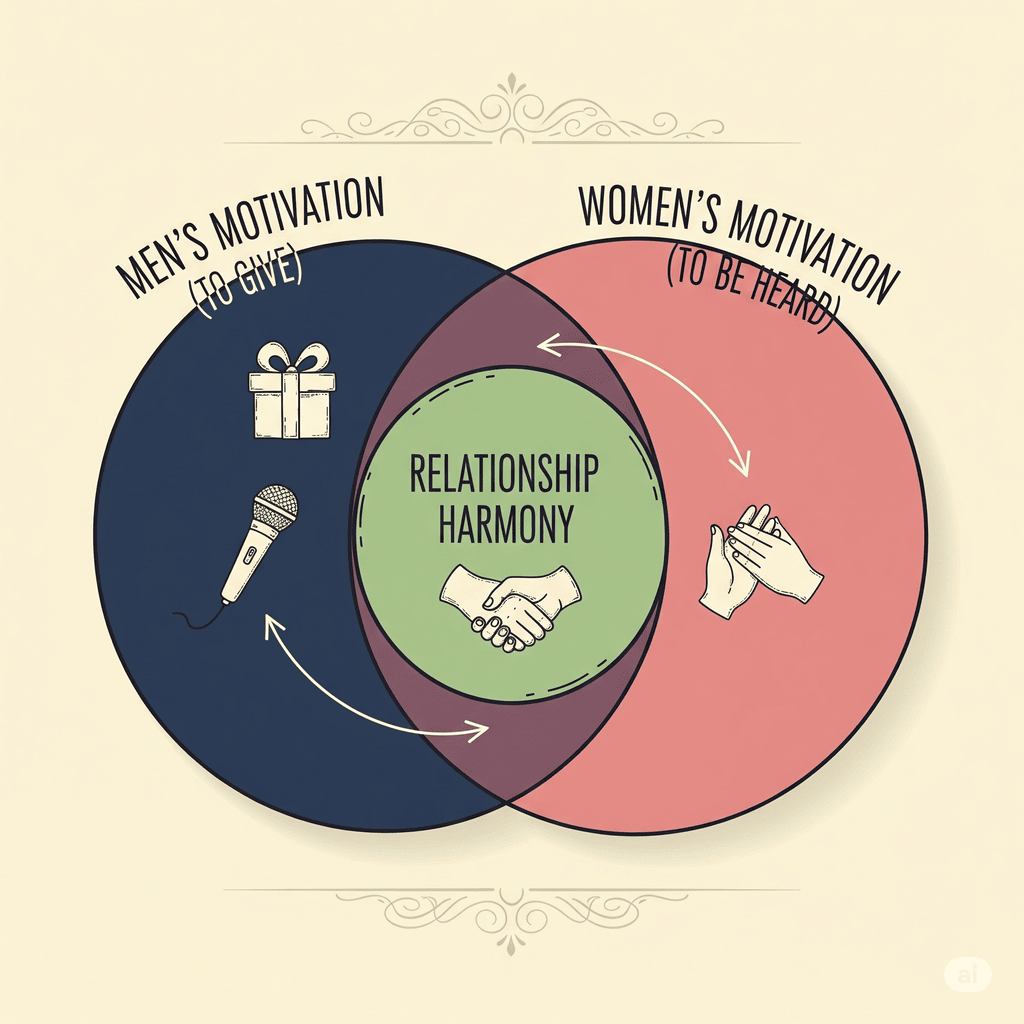
    In a man’s world, meaning in life often arises when they have the opportunity to give and contribute in a tangible way. They want to feel competent, needed, and capable of facing external challenges for the happiness of their loved ones. When men are given the space to prove their potential, they tend to show the best version of themselves. However, if they feel they have failed or their efforts are not appreciated, they can revert to selfish patterns and shut down.
    On the other hand, women—as “citizens of Venus”—are more inspired by the experience of being heard and understood in a safe emotional space. Communication and the expression of feelings are seen as strengths, not weaknesses. The process of telling stories and sharing is how women express affection, process stress, and rediscover their inner strength.
    Why is this important? Because, without the awareness that your and your partner’s “mental maps” are completely different, any good effort risks being misinterpreted. Men offer solutions when what women need is empathetic listening. Women pour out their feelings when men need space for themselves. The result: recurring frustration, accumulating petty arguments, and emotional burnout.
    The complete framework for applying this “different planets” paradigm is detailed through exercises and reflective conversations in the book…

    Read also : Secrets of the Millionaire Mind by T. Harv Eke

    H2: A Man’s Motivation – When Giving Brings Happiness

    The second revolutionary concept from this book is the transformation of a man’s motivation as he matures. In his youth, fulfilling his own personal needs is “enough” to make a man happy. However, as he ages and the relationship deepens, that need shifts. A man will only feel true happiness when he is able to bring happiness to others, especially his partner. This is an amazing, life-changing catalyst.
    When a man is in an environment that supports his ability to give and “strive” for his loved ones, he will experience new happiness and energy. Competence and success in the relationship make him more enthusiastic and resilient in the face of any hardship. However, when he feels like a failure, unappreciated, or unneeded, a man will “retreat,” even reverting to old life patterns that tend to be selfish and withdrawn.
    Why is this important to understand? Because many relationships fail when a wife does not provide enough opportunities for her husband to contribute, or conversely, the husband feels he can do nothing right when he tries to help. Instead of being a partner, the man feels like a “burden” or incompetent in his partner’s eyes. Understanding this core motivation is the best gateway to begin building emotional synergy.
    However, there are three common mistakes often made when trying to actualize this motivation to give, which are broken down in detail in our summary…

    H2: The Phase of Emotional Maturity – When a Man “Moves Beyond” Himself

    Still aligning with the previous concept, John Gray highlights the shift in a man’s emotional needs from self-gratification to selfless giving. This means life satisfaction is no longer found in self-fulfillment alone. On the contrary, when he “breaks free from the chains” of selfish motivation and begins to give selflessly, a man discovers a new meaning in life.
    For example, a husband who once focused only on his hobbies will begin to find incredible happiness when he successfully does something meaningful for his wife. In fact, when experiencing hardship—a man is willing to endure it as long as he knows his partner’s happiness is increasing. This is a transcendence of motivation, from seeking self-pleasure to living with a shared mission. This process also pushes a man out of ‘inertia’ (laziness, stagnation) to become a more energetic and purpose-driven version of himself.
    Why is this a game changer? Many couples get stuck in a “me-first” pattern because they don’t understand this phase. In reality, when a man is given the space and recognition to give, not only does the relationship grow, but so does their quality of life.
    Advanced techniques from this principle, including real-life examples and daily exercises, are part of the exclusive insights we present at MentorBuku…

    H2: Conclusion – Harmony Begins with Understanding the “What” and “Why”

    Understanding the basic psychological patterns of men and women is like having the key to unlock a long-lasting, harmonious relationship. Without this, all communication techniques or romantic gestures are only temporary solutions.
    In summary:

    • Men & women have different “mental maps”; understand their differences first before trying to improve communication.
    • Mature men find happiness when they are able to “give” and see their partner happy – not just from fulfilling their own needs.
    • The motivational phase from self-fulfillment to selfless giving is the greatest catalyst for personal and relational growth.

    However, let’s be honest: this knowledge is just the beginning. Its implementation in real life, as well as the common pitfalls to avoid, requires a practical framework and real-life examples. And, the original book, as well as MentorBuku’s premium summary, are the best resources to master the steps in depth.

    Read also : Josh Kaufman by Josh Kaufman

    This article is the spark. Imagine if one idea from this could change the way you work or think. Now, imagine what dozens of other strategic ideas could do. That is the power that awaits you.
    Sign Up and Get Free Access at MentorBuku Now!

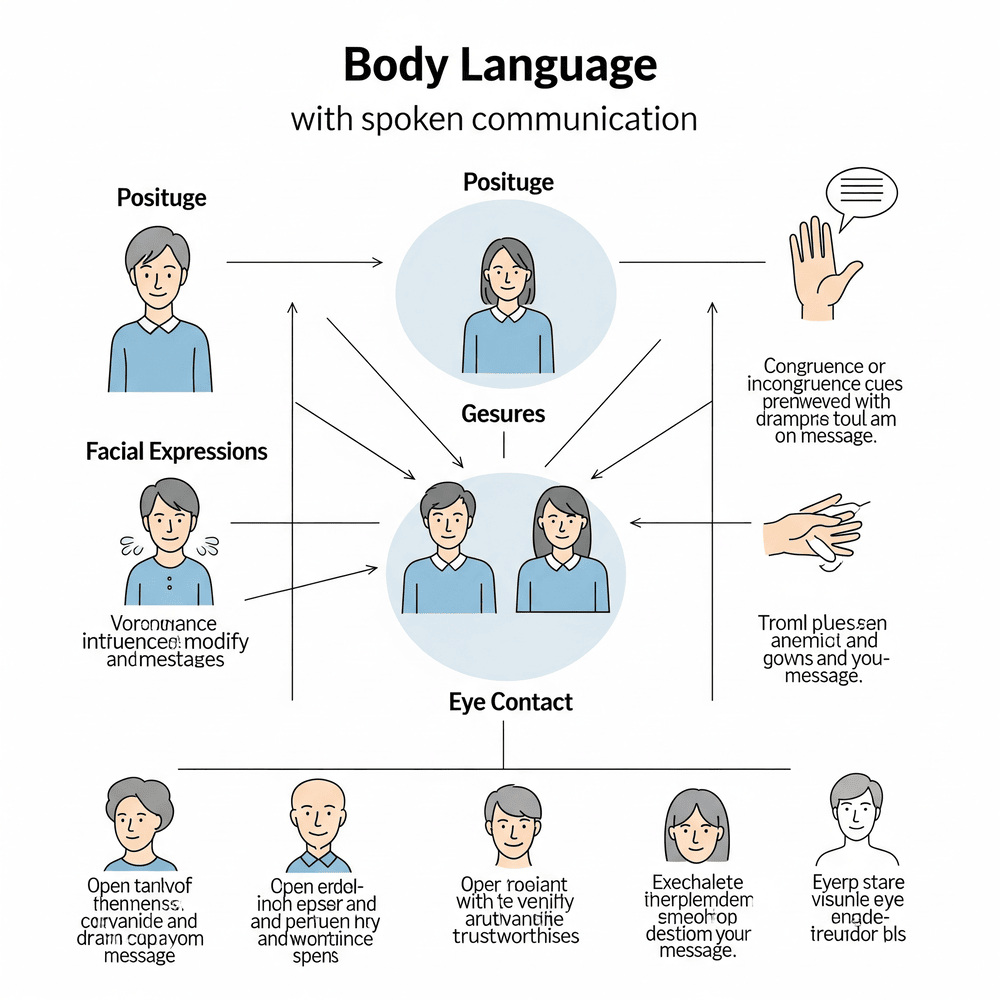
  • The Secret of Body Language: How to Read Surprising and Important Nonverbal Cues for You. The Dictionary of Body Language by Joe Navarro


    Understanding Body Language: The Elusive Yet Fundamental Key to Communication

    Every day, in our interactions, more than 70% of the messages we receive do not come from words. Body language becomes a powerful catalyst that sends signals often more honest than speech. Understanding bodily cues not only helps you read others better, but also enhances your ability to communicate, lead, and build relationships.
    But why is body language still considered elusive and hard to grasp? Because behind seemingly simple movements lie complex patterns that require careful attention to interpret correctly. This article discusses some important concepts in body language that will open your eyes to see beyond just words.

    Read also : The Laws of Human Nature by Robert Greene

    Concept 1: Eye Gaze and Its Hidden Meanings

    Eyes are often called the windows to the soul. A gaze not only shows the direction someone is looking, but also reveals hidden inner feelings. For example, when someone looks up, they are often recalling something or even feeling hopeless. An askance glance—looking sideways with doubt or skepticism—indicates a lack of trust or concealed objections.
    Mastering the meanings of these gazes gives you an advantage in reading situations and the behavior of those you interact with more sharply. However, there is a significant risk of misinterpretation, so it’s important to study the context and accompanying behaviors that arise with such gazes.
    A complete framework for applying this understanding of eye gaze is discussed in five specific steps in the book we have summarized exclusively.

    Read also : Succeed For Yourself by Richard Denny

    Concept 2: Facial Expressions as Potent Emotional Cues

    Facial expressions can be the most powerful and undeniable signals of emotion. From a faint smile to a deep look of disappointment, a person’s face can reveal what they may not want to say. For example, eyes that appear glazed or vacant may indicate fatigue, boredom, or even the influence of substances like alcohol or drugs.
    Sensitivity to these shifts in expression will make you more adept at detecting the true emotions hidden behind words. However, incorrect interpretation can also lead to misunderstandings. Therefore, we present three common mistakes when interpreting facial expressions and how to avoid them in our summary.


    Concept 3: Hand Movements and Their Effects in Communication

    Hand movements add nuance to both verbal and nonverbal communication. From gestures that reinforce statements to unconscious movements like touching one’s own hands, each has a meaning you need to know. For example, erratic or inconsistent hand movements can indicate nervousness or confusion, while the position of the hands when speaking can reflect a person’s confidence and openness.
    Understanding the language of hands can help you better read the character and intentions of your conversation partner. However, more advanced techniques on this concept, including templates and practical examples, are part of the exclusive insights we’ve prepared at MentorBuku.

    Read also : The Book You Wish Your Parents Had Read by Philippa Perry

    Why Understanding Body Language Matters for You

    Body language is a strategic tool you can use to earn trust, influence decisions, and strengthen interpersonal relationships. With this insight, you become not only a good listener but also a keen observer. This is highly valuable in business, negotiation, and everyday social life.
    However, it is important to remember that reading body language requires practice and a systematic framework. Careless interpretation can lead to misunderstandings and even harm your relationships.


    Conclusion

    Body language occupies a vital role in effective communication. By deeply understanding eye gazes, facial expressions, and hand movements, you open up opportunities to communicate more authentically and better influence your surroundings.
    But this is just the beginning. Practical application, recognizing common pitfalls, and advanced techniques require a structured and systematic approach. Fortunately, all the secrets and methods to master them are available in our strategic summary.


    You have just seen the foundation. These concepts are just the tip of the iceberg of what this book has to offer. How do you apply them step by step, avoid common pitfalls, and integrate them into your strategy? All those answers are inside.

    Sign up and Get Free Access to MentorBuku Now!

  • Beyond the Limits of Logic: 3 Essential Social Skills Pillars for Analytical Thinkers. “People Skills for Analytical Thinkers” by Gilbert Eijkelenboom

    Written by
    mentorbuku
    in
    Social Skills, Self-Development, Business Psychology, Professional Soft Skills

    Uncovering the Gap Between Logic and Social Reality
    Analytical thinkers are known as outstanding problem-solvers, experts at unraveling tangled data, and adept at building solid, logical arguments. Ironically, however, amidst the tidal wave of information and in team-based workplaces, logical thinking alone is no longer enough to ensure personal and professional success. There’s a major “blindspot”: social skills.

    Why do so many intelligent professionals find themselves caught up in conflict, friction during meetings, or feel disconnected from their teams? Is it true that logical abilities can actually backfire when navigating a social landscape full of emotional nuance and competing interests? If you’ve ever felt like an “alien” in a meeting or struggled to influence others without triggering defensiveness—you’re not alone.

    This article serves as your gateway to understanding why social skills are key leverage for analytical thinkers, and beyond that, introduces three rarely-taught yet crucial pillars of social interaction skills. However, in the spirit of the “Strategic Teaser” philosophy, you’ll only find the “why” and the “what” here. For a concrete framework for implementation, there’s one critical step you’ll have to take at the end of this article.

    First Pillar: Leaving the Complaint Zone—Adopting a Solution-Oriented Mindset

    One of the most common traps for analytical thinkers is the tendency to focus on problems—analyze, critique, identify gaps, and then stop there. This often results in “spreading complaints” in the workplace. In fact, organizational behavior research shows that energy focused on complaints is not only unproductive but also lowers team morale and diminishes your personal influence.

    However, the book “People Skills for Analytical Thinkers” offers a new perspective: Choose the harder—but more beneficial—path, which is to shift the habit of complaining into an active drive to improve situations. How is this done? It starts by activating the “rational brain”—also known as the “elephant rider,” capable of channeling emotional impulses toward constructive change. Is it easy? Of course not. But this is the hallmark of professional maturity and advanced social skills.

    The full framework for transforming from complainer to problem solver is thoroughly dissected in this book, complete with case studies and reflective exercises. If you want specific guidance on how to resist the urge to complain and turn it into solution initiatives, the entire blueprint is available at MentorBuku, waiting for you to delve deeper…

    Second Pillar: Managing Emotional Dynamics—“Riding the Elephant Within”

    This illustration will feel familiar: you’ve crafted a logical argument, prepared solid data, but conflicts still arise in meetings. Why does this happen? Because in social interactions, emotions play the role of a large “elephant” not easily controlled by rational explanations alone. The book uses the “elephant and rider” metaphor: where the emotional brain often dominates, and the rider (the rational mind) must struggle to steer the “elephant.”

    For analytical thinkers, understanding and managing this dynamic is at the core of advanced social skills. Emotions shouldn’t be seen as the enemy of logic but need to be leveraged to support your mission, goals, and long-term relationships. How do you recognize when the “elephant” is getting out of control, and what techniques calm it—both in yourself and others? The book delves into five main techniques and three common pitfalls that almost always appear when managing emotional interactions. If you want to turn conflict into collaboration and have your logic accepted rather than emotionally rejected, the key steps are available exclusively in MentorBuku’s summaries.

    Advanced strategies, including internal dialogue and “reframing” techniques, are ready to be explored if you truly want to master the art of riding the “elephant” of communication…

    Third Pillar: Honest Communication Without Damaging Relationships—Balancing Transparency and Diplomacy

    One classic mistake analytical thinkers make is equating honesty with “brutal directness.” In reality, in dynamic environments, being too blunt can trigger defensiveness and damage trust. On the other hand, being too “subtle” can weaken your message and cause confusion.

    The book “People Skills for Analytical Thinkers” emphasizes the importance of “constructively honest” communication—that is, having the courage to deliver tough messages while maintaining positive expectations and healthy professional relationships. You’ll be guided to explore a communication model that places transparency and empathy on opposite sides of the scale. Communication here is not just about delivering facts, but about effecting attitude change without causing resistance.

    Precisely how do you construct honest communication that isn’t destructive? How do you differentiate between honest, confrontational, and manipulative communication? All the step-by-step illustrations, exercises, and real dialogues have been compiled into a practical guide in MentorBuku’s exclusive materials.

    Three common mistakes that hinder open communication, as well as seven ready-to-use framework sentences for the workplace, are part of a secret toolkit you’ll only access once you become a member.

    Fourth Pillar: Negotiating Boundaries Effectively—Preserving Your Core Energy

    Often, analytical thinkers feel overwhelmed because they can’t say “no,” or get dragged into conflict for failing to set clear boundaries. This is the main source of chronic stress, overwork, and burnout in high-pressure professional environments. Assertiveness in social interaction—the ability to set boundaries clearly and gracefully—is a life skill that’s sorely needed.

    How do you set boundaries without offending? What’s the “mini-negotiation” formula that earns respect for your boundaries, rather than provoking questions or pushback? The book explores several reliable strategies, from mapping personal energy zones to practicing micro-negotiations during meetings and projects.

    However, the art of boundary negotiation is more than just saying “no.” There is a language pattern, timing, and response technique that you’ll only master by thoroughly studying the examples. Negotiation templates, conversation scripts, and personal reflection exercises to build your assertiveness muscle can only be mastered after exploring the full content on MentorBuku.

    The most critical part of this process is included in the self-evaluation checklist and case simulations never taught in conventional training…

    Conclusion: Daring to Go Beyond “Just” Smart, Toward Deep-Rooted Influence

    This article may well shake up your old beliefs: that logical intelligence alone is insufficient to navigate the modern workplace. The key pillars of social skills—ceasing to complain, managing emotions, honest communication, and boundary negotiation—are absolutely vital assets for analytical thinkers. But don’t be mistaken: knowing the “what” and the “why” is only the beginning.

    Consider the following analogy: You now have a treasure map, but only the overview. The real treasure—the action framework, transformative exercises, practical scripts, and case studies—is neatly stored behind a single gate of knowledge. Don’t be content to remain on the brink of discovery. It’s time to take a step further, and turn your social skills into your winning weapon.

    This article is just the spark. To ignite the fire of your career or business transformation, you need the full fuel. Get unlimited access to hundreds of the world’s best book summaries you can consume in minutes. Start your journey by subscribing now at https://mentorbuku.com.

  • Breaking the Chains of Awkwardness: 4 Secrets to Authentic Connection from ‘How to Talk to Anyone’ by Leil Lowndes

    Written by
    mentorbuku
    in
    Career & Professional Relationships, Communication, Personal Development, Social Skills

    Introduction: Why Do So Many People Fail to Build Relationships?

    Behind every influential conversation, there are always ‘hidden secrets’ that distinguish those who merely talk from those who truly leave an impression. Today’s social world moves ever faster: human connection is an increasingly valuable asset, but also ever harder to build. Say the wrong thing once or twice, and a formal relationship can turn cold. Present yourself poorly, and golden opportunities become fleeting memories.

    What actually makes some people seem natural in their interactions, while others remain trapped in a cycle of awkwardness? The book “How to Talk to Anyone” by Steven Hopkins dissects the psychological foundations behind social skills that appear effortless. Yet beneath the surface lie four strategic keys that are rarely truly understood—let alone mastered.

    This article will reveal those ‘secret’ foundations: making you realize that building influential conversations isn’t just about memorizing scripts or making small talk. There’s an art, a science, and a strategy behind every meaningful communication. Still, after understanding the “what” and “why” in this article, you’ll see—without knowing the ‘how’, your transformation will never truly happen.


    1. The Secret Mindset: Replacing Fear with a New Perspective

    Every fear of starting a conversation, haunted by awkward scenarios, actually stems from a flawed mindset. Hopkins reveals that social anxiety is often born from negative preconceptions about others’ reactions—in other words, overthinking and self-judgement. Believing that communication is simply about ‘delivering a message’ is a fundamental mistake.

    Hopkins’ key concept: Talking isn’t just exchanging words, but exchanging energy and intent. When you approach with the intent to understand (not just to be heard), the whole dynamic of the conversation changes—for both you and your counterpart.

    Why is this crucial? Because without a mindset reset, no matter how advanced your modern communication techniques are, they’ll still be a fragile ‘mask’. Authentic conversation grows from inner security—a realization that ‘social failure’ is merely a myth created by old fears.

    The full framework for breaking these limiting mindsets, including practical exercises and introspection, is thoroughly discussed in the opening chapter and in a special analysis at MentorBuku…


    2. “Opening Mastery” Technique: Conquering the Crucial First Five Seconds

    Social research proves: people form perceptions within the first few seconds. Hopkins emphasizes, the art of opening a conversation isn’t just about flashing a smile or making small talk; there’s a series of micro-strategies to ‘set’ your counterpart’s emotional state.

    One important concept here is the use of a ‘Positive Pre-Frame’—subtly influencing your conversation partner to feel open and comfortable from the outset. Small details matter: your tone of voice, eye contact, and making your introduction personal.

    Why is this revolutionary? Because most people fail to build relationships not because of the wrong message, but because the ‘emotional frequency’ set from the start is already off. You’re ‘playing’ on the wrong communication channel before ever talking about substance.

    However, there are three common (and very fatal) mistakes in applying this opening technique—from misguided gestures to tones that kill the momentum of closeness—all are thoroughly explained with corrective tactics in MentorBuku’s premium summary…


    3. Reading Body Language: “Listening with the Eyes”

    Dozens of ‘conversation tips’ become useless without the ability to read nonverbal cues. Hopkins busts the myth: effective communication is 90% body language. But it’s not about consciously observing, rather about creating a ‘feedback loop’ between your words and body gestures.

    ‘Listening with the Eyes’ becomes the key differentiator here. When you start ‘hearing’ by paying attention to micro-expressions, body language, and unspoken signals from your conversation partner, you gain the power to adapt your response in real time. The result? The conversation feels like it ‘flows automatically,’ creating the impression that you were meant to click as conversation partners.

    Why is this indispensable? Because in reality, the true message is often hidden in micro body movements—a slight smile, a raised brow, tensed shoulders—all signaling whether you’re welcome or should quickly change direction.

    Advanced techniques on reading, interpreting, and recoding body language—along with detailed exercises to develop your social instincts—are presented as part of exclusive insights for MentorBuku members…


    4. Planting Emotional Anchors: How to Make Every Conversation Unforgettable

    Amid the sea of rapid interactions, very few are truly memorable. What’s the secret? The next key concept from this book is ‘Emotional Anchoring’: the ability to plant a ‘positive trap’ in conversation so that you and your message stay lodged in the other person’s memory.

    Hopkins explains, a meaningful conversation isn’t the longest, but the one that can ‘slow down time’—becoming an experience the other person wants to repeat. This might be genuine appreciation, using an ‘emotional callback’ to a previous topic, or simply being fully present for a moment.

    Why is this emotional experience important? Because in the era of information overload, what sticks in people’s minds isn’t rational arguments, but emotional resonance. You want them to say, “I want to talk to you again,” without even knowing why.

    But did you know? Planting emotional anchors can backfire if the technique is wrong. Case studies, variations on anchoring, and drills for personal branding through conversation are some of the strongest modules at MentorBuku, taken directly from Hopkins’ strategies…


    Conclusion: The Knowledge Gap Waiting to be Filled

    Reading “How to Talk to Anyone,” you’ll realize: advanced communication isn’t just a skill—it’s an art and a system anyone can learn. This article only scratches the surface—revealing four key secrets that form the foundation of modern social savvy.

    But now you know: understanding the what and the why is just the beginning. If you want real transformation—to break career deadlocks, conquer networking events, or simply build relationships that last—you need to systematically explore the ‘how.’


    You’ve just seen the foundation. But how do you build the skyscraper? All the strategies, step-by-step guides, and case studies from this book have been thoroughly explored. Don’t just know the ‘what’—master the ‘how’ by subscribing at https://mentorbuku.com.