Tag: behavior change

  • The Fundamental Secrets of the Subconscious Mind: A Revolutionary Catalyst for Life Transformation. The Power of Your Subconscious Mind by Joseph Murphy

    The Invisible Gap Behind the Power of the Mind

    Have you ever felt like you’ve struggled as hard as you can, read countless motivational books, yet the life changes you’ve hoped for never come true? The answer may not lie in how hard you try in the outside world, but in how intelligently you orchestrate the power of your subconscious mind.
    A deep understanding separates ordinary people from world changers—the ability to use the subconscious as a catalyst for change. This article will take you beyond the surface layer of the concept of “positive thinking,” strategically dissecting how revolutionary ideas about visualization and suggestion can become the gateway to an authentic and fulfilling life.


    Visualization, the Main Pillar in Shaping Reality

    Imagination as a Real Foundation in Life

    Imagine being able to grasp your dreams before the world can see them. The secret? Visualization. In his book, the author describes how important it is to create a clear image in your mind before manifesting it in reality. Just like a painter who has already seen their masterpiece on the canvas of imagination before the brush touches the cloth, visualization is the process of seeing something “alive” in the mind as if it were already real.
    It’s not just daydreaming—visualization is the way the brain prepares the external world to receive a new reality. The mental images you create become the substance of “evidence of things not yet seen,” and if you consistently maintain these images, the energy to bring them into reality will accumulate in extraordinary ways.

    Read also : Measuring Marketing: 110+ Key Metrics Every Marketer Needs by John A. Davis

    However, why do so many people stop at just dreaming? Because there is a thin but essential difference between imagining and fully building belief in that image. To turn imagination into substance requires advanced techniques and inner discipline.
    The complete techniques for building visualization that is truly “alive” and rooted in the subconscious are outlined step by step in the book…


    Visualization Techniques that Have Inspired Thousands of Successful People

    The author reveals that before appearing in public, he always “plays” a mental recording: imagining the entire auditorium, seeing all the audience looking bright, enthusiastic, and inspired. This technique consistently makes performances more vibrant, energetic, and impactful on a much deeper level.
    This process is not just for the stage. Athletes, successful entrepreneurs, and even world-class scientists have proven that strong mental visualization enhances real-world performance.
    How to specifically prepare your mind so that your body and actions are programmed for achievement—all the frameworks are available as premium modules in MentorBuku…


    Planned Suggestion, the Elusive Driver Toward Real Change

    Phenomenal Studies: Proof of the Power of the Subconscious Mind

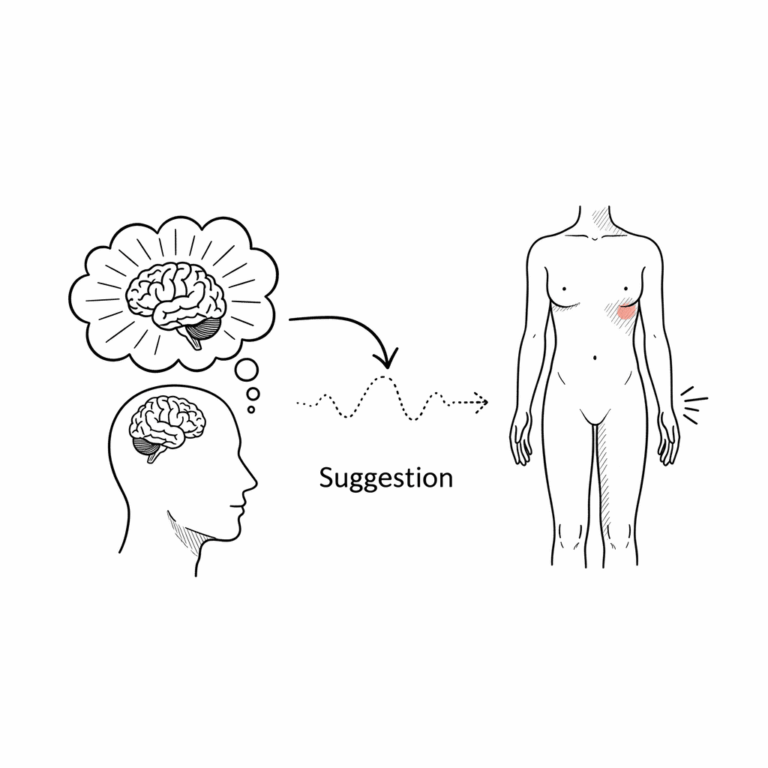
    An amazing story from Dr. M. Bourru highlights the power of suggestion: someone, given a command while under hypnosis—“at four o’clock your nose will bleed”—actually experiences a nosebleed at the designated time; not an illusion, but a real physical effect!
    In another case, someone’s name was lightly scratched onto their arm. With the suggestion, “later your name will appear from this scratch,” a few hours later, the letters actually appeared on the skin, even accompanied by blood. This is not just a stage phenomenon or sensory trick, but proof that the subconscious can control the body at a micro-biological level, far beyond conscious intention.
    Read also : Never Split the Difference by Chris Voss

    This story is a powerful reminder: anything absorbed by the subconscious can become an automatic command for our bodies and our lives.
    However, there are three common mistakes that people almost always make when applying suggestion techniques. All these pitfalls—along with their antidotes and strategies—are discussed in detail in a special session at MentorBuku…


    Why Suggestion Is More Dangerous or Powerful Than Mere Intention

    The main difference between conscious intention (simply wanting) and suggestion (an ingrained command) lies in the power of automatic execution. When suggestion is embedded, the subconscious works without needing to be pushed. That’s why suggestion, if misused, can lead to downfall—such as patterns of self-sabotage, addiction, or chronic doubt. Conversely, when suggestion reinforcement strategies are used correctly, they drive changes that feel almost “effortless” at the surface level of the mind.
    The strategy to eradicate self-sabotage and instill a highly competitive mindset belongs only to those who understand how to manage the power of suggestion.
    All patterns of affirmation sentences, repetition rhythms, and suggestion reinforcement techniques are shared exclusively in the premium guide at MentorBuku…


    The Mystery of Direct Experience from Experts: Between Imagination and Reality

    Many people believe it is impossible to change the real world “just” with the mind. However, modern science and the experiences of classic spiritualists show the interconnectedness between mental imagery and physiological change. In fact, today’s business world adopts this concept as “mindset engineering,” mental programming for great success.
    Between imagination and reality there is always an “invisible” space filled by the workings of the subconscious. Here, the laws of psychology and spirituality work together in synergy. From morning routines, affirmation repetition, to daily visualization—all are only effective if they truly reach the subconscious realm.
    How can you integrate simple techniques into your daily routine so the results last and build a much higher-quality life? The answer is a combination of empirical and spiritual strategies that you can only learn in depth through the authoritative discussion in this book…


    Closing – The Gateway to the Next Level

    Now, you have seen the deepest layers of how visualization and suggestion are not just theories, but the transformative foundation for life change. However, what you have read is only the beginning. The “how”—turning inspiration into habit, avoiding every pitfall of failure, and creating a framework for strategic implementation—all await you at the next level.


    You have just seen the foundation. These concepts are only the tip of the iceberg of what this book offers. How do you apply them step by step, avoid common pitfalls, and integrate them into your strategies? All the answers are inside.

    Sign up and Get Free Access at MentorBuku Now!

  • The Secret Power of Kaizen: A New Paradigm Towards Authentic Success. Great CEOs are Lazy by Jim Schleckser

    The Knowledge Gap in the Pursuit of Success

    Everyone wants to achieve success. But the question is: why do so few actually attain it authentically and consistently?
    Most people work hard. They follow “motivational” advice, try popular methods, and are even willing to wake up before dawn for a new routine. Ironically, reality is often far from expectations. Many give up halfway. They feel deceived by their initial enthusiasm that doesn’t last long.
    Behind these repeated failures lies a fundamental lesson: success is not about working “harder,” but “smarter”—and, more importantly, about shifting your fundamental paradigm of thinking.


    This article will take you on a journey through new territory: how even the smallest changes, if made correctly, can unexpectedly redirect the course of your life. Every small step becomes part of a continuous transformation—that’s the power of “Kaizen.”


    A New Paradigm of Thinking About Success and Failure

    For a long time, success has been associated with big results and instant achievements.
    We tend to focus on spectacular stories: athletes winning gold medals, entrepreneurs becoming billionaires overnight, or debut authors whose books become instant global bestsellers. Unfortunately, these narratives blind us to the continuum of failure and the long process that actually forms the foundation of true success.

    Why the Old Mindset Limits Your Big Leaps

    The conventional mindset always leads us to ask, “How can big success happen as quickly as possible?”
    However, the real question should be: “How can the process lead to repeated success, without burning yourself out along the way?”
    The book we’re discussing invites you to re-examine all your old beliefs about success. It highlights a fundamental mistake: over-glorifying “big wins” while underestimating the power of accumulated “incremental gains”.

    As a result, we often find ourselves stuck in a cycle of trial and error. We feel like failures, not because we didn’t work hard enough, but because our mindset was wrong—focusing on dazzling outcomes while ignoring the process of “transformative repetition”. This is the critical point:
    Shifting from a results paradigm to a process paradigm is the leap that separates truly successful people from fleeting trend followers.

    However, unraveling the deepest layers of how to identify and break the “failure mindset”—complete with practical examples—is a secret that this book thoroughly explains in a separate chapter.
    “The complete framework for applying the paradigm shift from failure to repeated success is outlined in five phases in this book…”

    Read also: The Heart of Business: Leadership Principles for the Next Era of Capitalism by Hubert Joly, Caroline Lambert


    Unveiling the Kaizen Pattern: Small Changes, Maximum Impact

    Is it possible for small, consistent changes to produce extraordinary results—even rivaling the big breakthroughs that are often celebrated?
    The concept of “Kaizen” completely overturns our understanding of how change, achievement, and personal excellence happen.
    Originating from Japanese philosophy, Kaizen is the principle of continuous improvement—making small, measurable, consistent improvements every day. But its most important aspect? The accumulation of domino effects that are nearly impossible to predict at first.

    The 1% Rule Phenomenon and Compound Mentality

    Imagine the impact of improving by just 1% each day. Over a year, those small increments add up to a change 37 times greater than where you started.
    This compound effect phenomenon isn’t just about math: it’s a game changer in the psychology of achievement.
    Kaizen practitioners don’t need to master superhuman discipline or rely on ironclad motivation. They just need to consistently “stretch themselves” bit by bit into new zones, so that ultimately, profound change happens without force.
    Massive improvement (big bang transformation), on the other hand, often ends up in a cycle of failure–trying again–giving up. Meanwhile, those who persist with Kaizen quietly build a foundation that eventually creates a “sudden” explosion of success.
    This concept dismantles the failure of the “all or nothing” approach, offering a new lens for evaluating daily efforts.
    “Advanced Kaizen techniques, including how to identify the right 1% steps and strategies to maintain them under daily pressure, have been transformed into a practical guide for you at MentorBuku…”

    Anti-Bad Habit Mindset—Letting Go of Your Old Self

    How can someone remain trapped in the same cycle of bad habits for years, even when they know it’s hindering their personal success?
    The answer: an auto-pilot mindset that resists structural change.
    Our subconscious belief system keeps whispering old comforts while dramatizing the risks of change. When you adopt Kaizen, you’re not just adding new habits; you’re dismantling old habit cycles, layer by layer.

    The Secret to Breaking the Failure-Repeat Cycle

    This book distinguishes addictive change (driven only by fleeting motivation) from systemic change that truly liberates you from the repeat-failure pattern.
    What’s the main secret? “Identity-based habits”—the strategy of building habits from the foundation of a new identity, not just a checklist of routines.

    In a specific chapter, the author shows that forming lasting change requires three pillars:

    1. Recognition of old habits (awareness).
    2. Gradually breaking the old “reward chain”.
    3. Constructing a new identity based on small successful experiences.

    Resilience becomes the byproduct: the more often you successfully break old routines, the stronger your new mentality becomes. However, the three most common traps in this mindset transition—and strategies to overcome mental blocks and self-sabotage—are discussed in detail only in the secret section of this book.
    “Psychological steps and templates for breaking bad habits, including new identity exercises, can be found as practical insights on MentorBuku…”

    Read also: What to Expect When You’re Expecting by Heldi Murkoff


    Redesigned Environment—The Catalyst of Transformation

    How much does the environment influence someone’s journey to success?
    Much more than most people realize. Your environment—physical, social, and digital—quietly creates (or holds back) the process of change.
    Successful people don’t just rely on discipline; they consciously design their environment to support their vision.

    For example: the friends you choose, visual stimuli, availability of positive triggers, or even the setup of your daily workflow.
    This book reveals that even a single detail in your environment (such as where you place your to-do list or who you converse with most) can accelerate—or unknowingly sabotage—your long-term goals.

    Key Factors Quietly Shaping the Final Result

    A simple analogy: an artist may have talent, but without good lighting and access to quality materials, they will never produce a masterpiece.
    Likewise, anyone risks repeating failure if they don’t change key elements of their environment—often, this is more decisive than the much-touted internal motivation.

    This book exposes clever ways to structure your micro and macro environments, along with a “success environment audit” so your change journey is no longer trial and error. However, the environment redesign checklist and real-time evaluation are all available as a special section in the MentorBuku program.
    “The environment redesign toolkit, complete with real case examples and authentic scenarios, becomes an exclusive insight you can access in our advanced summary…”

    Read also: An Unseemly Man: My Life as Pornographer, Pundit, and Social Outcast by Larry Flynt

    Read also: Emergency Medicine PreTest Self-Assessment and Review, Second Edition (PreTest Clinical Medicine) by Adam Rosh


    Conclusion – Strategic Gap & Call to Action

    After exploring these four key concepts—authentic success paradigm, the power of Kaizen, the anti-bad habit mindset, and the importance of environment—do you feel your knowledge gap is narrowing, or actually getting deeper? Here lies “the knowledge gap”:
    Knowing the “what” and “why” is just the beginning. But applying precise steps, avoiding traps along the way, and optimizing all these pillars simultaneously—that’s an achievement only possible with structured guidance.

    Insight is an asset that cannot be postponed. Every day without deeper understanding is a missed opportunity. Don’t let your competitors gain this advantage before you do.
    Sign up and Get Free Access to MentorBuku Now!

  • Hacking the Automatic Brain: Why We’re Always Stuck in Bad Habits (and What’s Really Happening Behind the Scenes). “Atomic Habits” by James Clear

    Written by
    mentorbuku
    in
    Habits & Behavior, Self-Development, Productivity, Psychology

    H1: Introduction – When the Brain Runs on ‘Auto-Pilot’: A Modern Mystery

    Have you ever realized you’ve suddenly polished off an entire bag of snacks, spent hours scrolling through social media, or even done something boring—like swiping a credit card—without being truly aware of it? The surprising fact is: most of our daily behavior is driven by subconscious habit systems, like the brain switching to ‘auto-pilot’ mode. From shopping to aimless scrolling, why are people so susceptible to bad habits? This is where the domino effect of habits, supernormal stimuli, and modern stimulus systems play a key role.

    In this article, you’ll explore three of the most prevalent habit phenomena in the digital era: the power of auto-pilot brain, the danger of supernormal stimuli, and the secret of the ‘instant satisfaction rating’. We will uncover the ‘what’ and the ‘why’—but the secret ‘how’ to take control is only available in the next realm: MentorBuku.


    H2: The Brain’s “Auto-Pilot” Phenomenon – When Awareness Is Parked and Gone

    In a simple story, someone unconsciously swipes a customer’s actual credit card—it’s not that the employee doesn’t know the rules, but routine has shifted control from conscious intent to the brain’s subconscious layers. Auto-pilot, an informal term for automatic habits, is in fact responsible for so many of our repeated life decisions, made without active logical intervention [1].

    The key to auto-pilot habits is their reliability. The human brain is always searching for the easiest and quickest way to accomplish tasks, so it builds neurological ‘fast lanes’ that can take over behavior automatically. You don’t have to think hard each time you tie your shoes, brush your teeth, or even get ‘pulled’ into your favorite shopping app. In other words, habit is the brain’s solution for saving thinking energy.

    But here’s the problem: auto-pilot habits never choose based on long-term benefit; more often, they rely on past ‘success’ or instant pleasure. As a result, we easily get stuck in endless cycles of bad habits—and ironically, these habits often feel comfortable.

    The complete framework for exposing and breaking the auto-pilot loop is mapped out in the book we’re examining—including techniques for conscious intervention in your daily routines…


    H2: Supernormal Stimuli – The Invisible Enemy of Healthy Habit Paths

    What do junk food, social media, pornography, and modern digital ads have in common? They are ALL products of supernormal stimuli—artificial triggers designed not just to elicit a natural human response, but to amplify it to abnormal levels [1].

    The term ‘supernormal stimuli’ has evolutionary roots. Imagine: fast food packed with sugar, salt, and fat isn’t just food; it’s a work of art that tricks your brain into seeing it as far more ‘valuable’ than natural food. The same thing happens with social media apps: notifications and colorful visuals bombard your dopamine system non-stop, as if every like and comment is a form of instant reward.

    The impact? Consumptive, impulsive habits and addictive routines—which are not just lifestyle choices, but the result of systemic engineering that is tough to escape.

    Yet behind all that, there are three fatal mistakes most people make when trying to fight the current of supernormal stimuli—and they can only be addressed with the latest principles of habit psychology, as analyzed in MentorBuku’s insights…


    H2: Instant Satisfaction Ranking – Why the Brain Always Chooses ‘Satisfaction Now’

    The appeal of bad habits doesn’t just come from their automatic nature. The human brain is wired to prioritize instant gratification, a principle that has become ever more extreme in our digital world [1]. Every behavior (whether opening an app, shopping online, or eating fried snacks) gets repeated because the brain is ‘rewarded’ with a quick hit of satisfaction, even when the long-term consequences are negative.

    The paradox: the greater the immediate gratification promised by a behavior, the harder it is for your brain to resist. That’s why modern humans so often feel ‘powerless’ when trying to start good habits like exercising, journaling, or finishing important tasks—because the brain is programmed to chase the fastest reward.

    Even in a historical context, innovation always moves towards increasing the speed and intensity of rewards [1]: “If history is any guide, future opportunities will be even more tempting than today. The trend is for rewards to become ever more satisfying—which increases the likelihood that the behavior will be repeated in the future.”

    Do not underestimate the power of ‘reward’ in shaping behavior. The main book we analyzed gives you psychological weapons for taking control of the instant satisfaction system—along with ways to redirect your brain to healthier rewards. Yet advanced techniques, including practical templates and how to build a healthy reward system, are reserved for MentorBuku subscribers…


    H2: Why Habit Revolution Is the Struggle of the Modern Era

    Every bad habit is the result of psychological engineering beneath the auto-pilot system, supernormal stimuli, and instant rewards. In the digital era, this problem only grows more complex: artificial stimuli that are super accessible lead the brain deep into the chasm of destructive behavioral dependence. If you’ve ever wondered why it’s so hard to break out of old patterns—even when you know the risks—the answer doesn’t lie in ‘willpower,’ but in the system behind your own brain.

    However, knowing the ‘what’ and ‘why’ is merely a foundational step. True transformation never happens without tools, concrete steps, and strategies to “trap your own brain”—that’s the secret you’ll only get if you’re willing to leave the comfort zone of shallow knowledge.


    H2: Conclusion – When Knowledge Is No Longer Just Information, But a Transformative Key

    After exploring the power of auto-pilot, the danger of supernormal stimuli, and the dominance of instant gratification—one major conclusion emerges: without the right strategy, modern humans will only become victims of their own sophisticated habit systems. You’ve seen the foundation of ‘why’ change is so hard, and what the earliest traps are. But, your life’s turning point isn’t “what” you know, but mastery of the “how”: breaking down, redesigning, and conquering your habit system at a technical level.

    You’ve just seen the foundation. But ‘how’ do you build the skyscraper? We’ve unpacked all the strategies, detailed steps, and case studies from this book. Don’t just know the ‘what’—master the ‘how’ by subscribing at https://mentorbuku.com.