Knowledge Gaps in the Pursuit of Success
Everyone wants to achieve success. But the question is: why do only a few truly achieve it authentically and consistently?
Most people work hard. They follow “motivational” advice, try popular methods, and even get up before dawn for a new routine. Ironically, the reality is often far from expectations. Many fall short along the way. They feel deceived by the initial enthusiasm that doesn’t last long.
Behind this repeated failure lies a fundamental lesson: success is not about “working harder,” but “working smarter”—and, more importantly, about shifting the underlying thinking paradigm.

This article will take you on a journey to explore new landscapes: how the smallest changes, when done correctly, can redirect your life in ways you never anticipated. Every small step becomes a part of continuous transformation—that’s the power of “Kaizen.”
A New Thinking Paradigm About Success and Failure
Success has long been associated with big results and instant achievements.
We tend to focus on spectacular stories: athletes winning gold medals, entrepreneurs becoming billionaires overnight, or debut authors whose books instantly become bestsellers in the global market. Unfortunately, this narrative blinds us to the continuum of failure and the long processes that actually form the foundation of true success.
Why Old Mindsets Limit Your Major Breakthroughs
Conventional mindsets always prompt us to ask, “How can a big success happen as quickly as possible?”
However, the real question should be: “How does the process lead to repeated success without burning out along the way?”
The book we are discussing invites you to reevaluate all your old beliefs about success. It highlights a fundamental mistake: overvaluing “big wins” while underestimating the power of accumulating “incremental gains.”
Ultimately, we often find ourselves trapped in a trial & error cycle. We feel like failures not because we worked less hard, but because of the wrong mindset—focusing on spectacular results while ignoring the transformative power of the “repetitive process.” This is the critical point:
Shifting from a results-oriented paradigm to a process-oriented paradigm is the leap that distinguishes authentic success from mere trend-following.
However, uncovering the deeper layers of how to identify and break the “failure mindset”—along with practical examples—is the secret that this book elaborates on in detail in a separate chapter.
“A complete framework for applying the paradigm shift from failure to repeated success is outlined in five phases in this book…”
Also read: Angels of Aceh: The compelling story of Operation Tsunami Assist by Sophie York
Unveiling the Kaizen Pattern: Small Changes, Maximum Impact
Can consistent small changes lead to extraordinary results, rivaling the big breakthroughs that are often glorified?
The concept of “Kaizen” completely reverses our understanding of how change, achievement, and personal excellence occur.
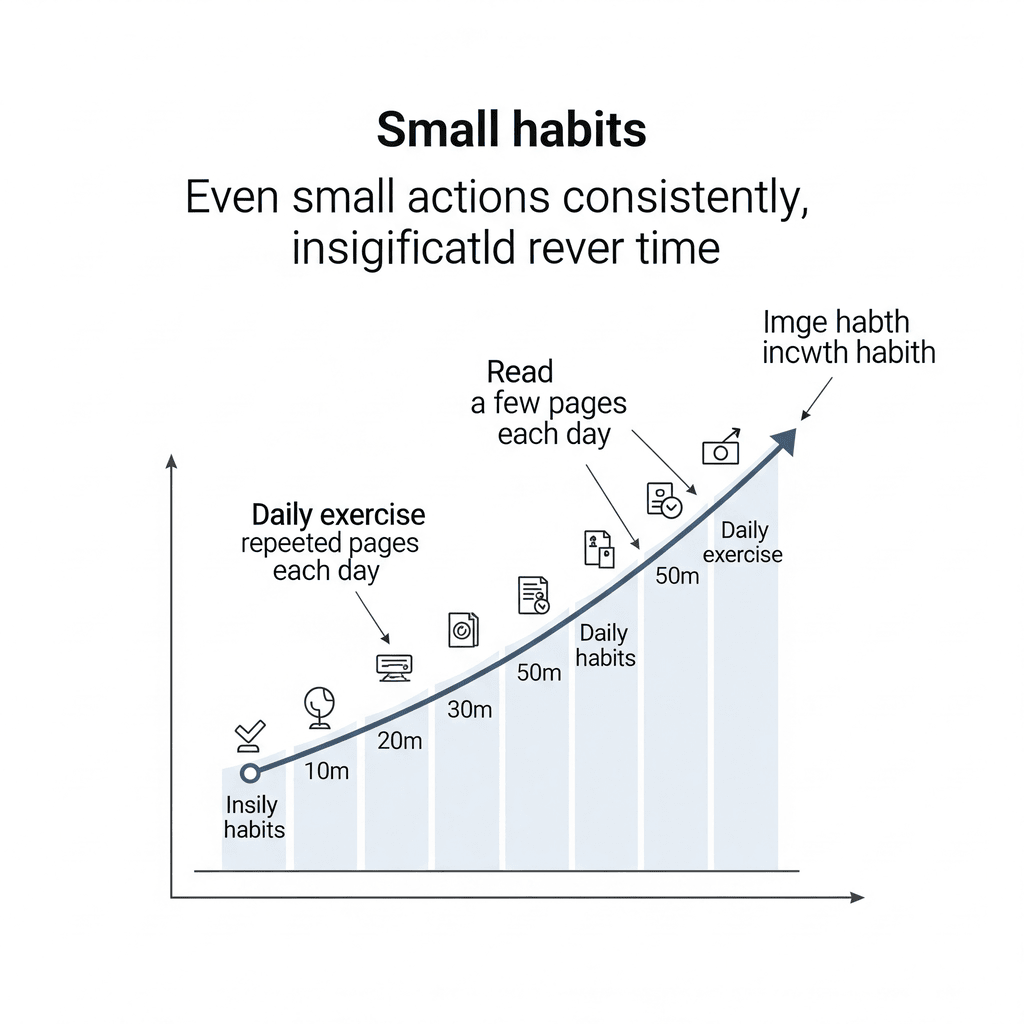
Originating from Japanese philosophy, Kaizen is the principle of continuous improvement—making small, measurable, and repeatable enhancements every day. But what is its most important aspect? The unpredictable domino effect that is hard to foresee at the beginning.
The 1% Rule Phenomenon and Compound Mentality
Imagine the impact of just a 1% improvement every day. Over the course of a year, that small accumulation can mean a change of 37 times from the original position.
The phenomenon of the compound effect is not just mathematics: it is a game changer in achievement psychology.
Kaizen warriors don’t have to master super disciplines, let alone rely on ironclad motivation. They simply need to consistently “stretch” themselves little by little into new zones until profound changes occur naturally.
On the other hand, massive improvements (big bang transformations) often end up in a cycle of failure–try again–despair. Meanwhile, those who persist with Kaizen quietly build foundations that eventually create a “sudden” success explosion.
This concept dismantles the failure of the “all or nothing” method and provides a new lens to evaluate daily efforts.
“Advanced techniques of Kaizen, including how to identify the right 1% steps and strategies to maintain them under daily pressure, turn into practical guidance for you at MentorBuku…”

Anti-Bad Habit Mindset—Breaking Free from Old Self
How does someone get trapped in the same cycle of bad habits for years, even when they know it hinders personal success?
The answer lies in an auto-pilot mindset that resists structural changes.
Our subconscious belief system constantly whispers comfort of the old while dramatizing the risks of change. When Kaizen is adopted, you are not just adding new habits; you are dismantling old habit cycles, layer by layer.
The Secret to Breaking the Fail-Repeat Cycle
This book distinguishes between addictive change (based solely on momentary motivation) and systemic change that truly frees you from the fail-repeat patterns.
The key secret? “Identity-based habits,” which is a strategy for building habits from the roots of a new identity rather than just a checklist of routines.
In a specific chapter, the author shows that creating lasting change requires three pillars:
- Recognition of old habits (awareness).
- Gradual severing of the old “reward chain.”
- Construction of a new identity based on small success experiences.
Resilience becomes a byproduct: the more frequently you succeed at canceling old routines, the stronger the new mentality becomes. However, the three most common traps in this mindset transition—along with strategies to break through mental blocks and self-sabotage—are discussed in detail in the secrets of this book.
“Psychological steps and templates for dismantling bad habits, including new identity exercises, can be found as practical insights in MentorBuku…”
Also read: The Power of Your Subconscious Mind by Joseph Murphy
Environment Redesign—The Catalyst for Transformation
How significant is the impact of the environment on someone’s journey to success?
More than many realize. The environment—whether physical, social, or digital—silently fosters (or hinders) the process of change.
Successful people do not solely rely on discipline but consciously design their environment to support their vision.
For example, the choice of friends, visual stimuli, availability of positive triggers, or even the setup of daily workflows.
This book reveals that even a single detail in the environment (such as where to place your to-do list, or who you often converse with) can accelerate or derail long-term goals without your awareness.
Key Factors That Secretly Shape Outcomes
A simple analogy: an artist may have talent, but without light and access to quality materials, they will never produce a masterpiece.
Similarly, anyone risks repeating failures if they don’t change key environmental elements—often, this is more determining than the internal motivation touted elsewhere.
This book breaks down smart ways to structure micro and macro environments, along with a “success environment audit” so your journey of change is no longer trial and error. From a checklist for redesigning the environment to real-time evaluations, everything is available as a special part of the MentorBuku program.
“The toolkit for redesigning the environment, complete with case examples and real scenarios, becomes exclusive insights that you can access in our advanced summaries…”
Also read: Keto Comfort Foods: Family Favorite Recipes Made Low-Carb and Healthy by Maria Emmerich
Also read: Essential Yoga: An Illustrated Guide to Over 100 Yoga Poses and Meditations by Olivia H. Miller
Conclusion – Strategic Gaps & Action Triggers
After exploring these four key concepts—the authentic success paradigm, the power of Kaizen, the anti-bad habit mindset, and the importance of environment—do you feel your understanding gap is narrowing, or rather deepening? This is where “the knowledge gap” lies:
Knowing the “what” and “why” is just the beginning. However, applying precise steps, avoiding traps in the process, and optimizing all these pillars simultaneously—that is the achievement that can only be attained with structured guidance.

Insight is an asset that cannot be postponed. Every day without a deeper understanding is a missed opportunity. Don’t let your competitors gain this advantage before you do. Sign up and get free access to MentorBuku now!