Category: Self-Development & Mindset

  • The Fundamental Secrets of the Subconscious Mind: A Revolutionary Catalyst for Life Transformation. The Power of Your Subconscious Mind by Joseph Murphy

    The Invisible Gap Behind the Power of the Mind

    Have you ever felt like you’ve struggled as hard as you can, read countless motivational books, yet the life changes you’ve hoped for never come true? The answer may not lie in how hard you try in the outside world, but in how intelligently you orchestrate the power of your subconscious mind.
    A deep understanding separates ordinary people from world changers—the ability to use the subconscious as a catalyst for change. This article will take you beyond the surface layer of the concept of “positive thinking,” strategically dissecting how revolutionary ideas about visualization and suggestion can become the gateway to an authentic and fulfilling life.


    Visualization, the Main Pillar in Shaping Reality

    Imagination as a Real Foundation in Life

    Imagine being able to grasp your dreams before the world can see them. The secret? Visualization. In his book, the author describes how important it is to create a clear image in your mind before manifesting it in reality. Just like a painter who has already seen their masterpiece on the canvas of imagination before the brush touches the cloth, visualization is the process of seeing something “alive” in the mind as if it were already real.
    It’s not just daydreaming—visualization is the way the brain prepares the external world to receive a new reality. The mental images you create become the substance of “evidence of things not yet seen,” and if you consistently maintain these images, the energy to bring them into reality will accumulate in extraordinary ways.

    Read also : Measuring Marketing: 110+ Key Metrics Every Marketer Needs by John A. Davis

    However, why do so many people stop at just dreaming? Because there is a thin but essential difference between imagining and fully building belief in that image. To turn imagination into substance requires advanced techniques and inner discipline.
    The complete techniques for building visualization that is truly “alive” and rooted in the subconscious are outlined step by step in the book…


    Visualization Techniques that Have Inspired Thousands of Successful People

    The author reveals that before appearing in public, he always “plays” a mental recording: imagining the entire auditorium, seeing all the audience looking bright, enthusiastic, and inspired. This technique consistently makes performances more vibrant, energetic, and impactful on a much deeper level.
    This process is not just for the stage. Athletes, successful entrepreneurs, and even world-class scientists have proven that strong mental visualization enhances real-world performance.
    How to specifically prepare your mind so that your body and actions are programmed for achievement—all the frameworks are available as premium modules in MentorBuku…


    Planned Suggestion, the Elusive Driver Toward Real Change

    Phenomenal Studies: Proof of the Power of the Subconscious Mind

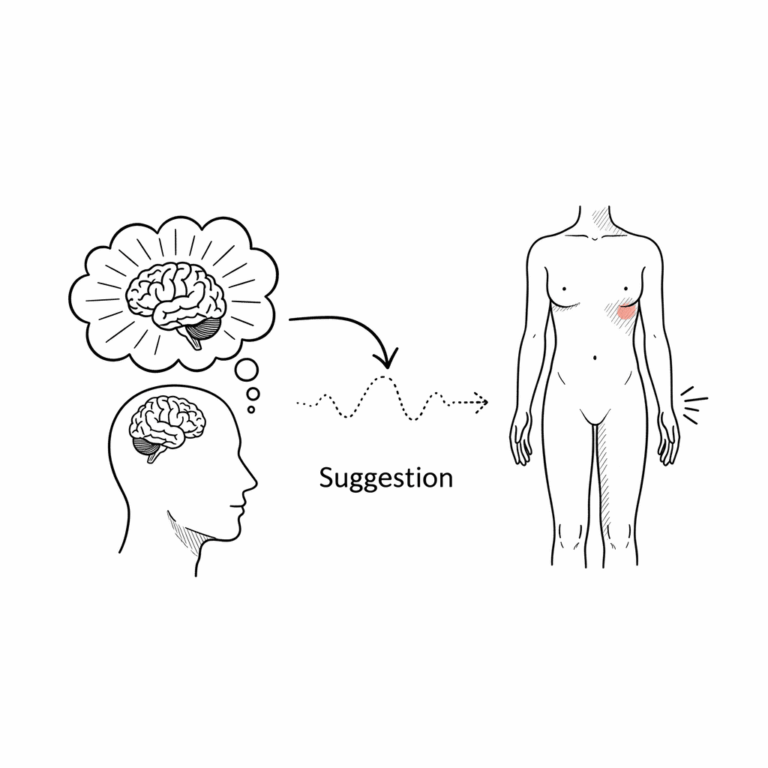
    An amazing story from Dr. M. Bourru highlights the power of suggestion: someone, given a command while under hypnosis—“at four o’clock your nose will bleed”—actually experiences a nosebleed at the designated time; not an illusion, but a real physical effect!
    In another case, someone’s name was lightly scratched onto their arm. With the suggestion, “later your name will appear from this scratch,” a few hours later, the letters actually appeared on the skin, even accompanied by blood. This is not just a stage phenomenon or sensory trick, but proof that the subconscious can control the body at a micro-biological level, far beyond conscious intention.
    Read also : Never Split the Difference by Chris Voss

    This story is a powerful reminder: anything absorbed by the subconscious can become an automatic command for our bodies and our lives.
    However, there are three common mistakes that people almost always make when applying suggestion techniques. All these pitfalls—along with their antidotes and strategies—are discussed in detail in a special session at MentorBuku…


    Why Suggestion Is More Dangerous or Powerful Than Mere Intention

    The main difference between conscious intention (simply wanting) and suggestion (an ingrained command) lies in the power of automatic execution. When suggestion is embedded, the subconscious works without needing to be pushed. That’s why suggestion, if misused, can lead to downfall—such as patterns of self-sabotage, addiction, or chronic doubt. Conversely, when suggestion reinforcement strategies are used correctly, they drive changes that feel almost “effortless” at the surface level of the mind.
    The strategy to eradicate self-sabotage and instill a highly competitive mindset belongs only to those who understand how to manage the power of suggestion.
    All patterns of affirmation sentences, repetition rhythms, and suggestion reinforcement techniques are shared exclusively in the premium guide at MentorBuku…


    The Mystery of Direct Experience from Experts: Between Imagination and Reality

    Many people believe it is impossible to change the real world “just” with the mind. However, modern science and the experiences of classic spiritualists show the interconnectedness between mental imagery and physiological change. In fact, today’s business world adopts this concept as “mindset engineering,” mental programming for great success.
    Between imagination and reality there is always an “invisible” space filled by the workings of the subconscious. Here, the laws of psychology and spirituality work together in synergy. From morning routines, affirmation repetition, to daily visualization—all are only effective if they truly reach the subconscious realm.
    How can you integrate simple techniques into your daily routine so the results last and build a much higher-quality life? The answer is a combination of empirical and spiritual strategies that you can only learn in depth through the authoritative discussion in this book…


    Closing – The Gateway to the Next Level

    Now, you have seen the deepest layers of how visualization and suggestion are not just theories, but the transformative foundation for life change. However, what you have read is only the beginning. The “how”—turning inspiration into habit, avoiding every pitfall of failure, and creating a framework for strategic implementation—all await you at the next level.


    You have just seen the foundation. These concepts are only the tip of the iceberg of what this book offers. How do you apply them step by step, avoid common pitfalls, and integrate them into your strategies? All the answers are inside.

    Sign up and Get Free Access at MentorBuku Now!

  • Debunking the Myth of Laziness: Why ‘Laziness’ Is an Illusion Created by the Era of Productivity. Laziness Does Not Exist by Devon Price

    The Hidden Secret Behind the Stigma of Laziness: What We Don’t Realize About “Laziness”

    Today is an era of productivity worship. We live amidst a constant stream of information, social media, and apps that relentlessly push us to “do more.” Yet beneath this ocean of motivation, one label is most feared: laziness. Seen as the biggest enemy of success, everything seems wrong if we’re not “diligent.” But is laziness actually real—or is it just a social construct masking deeper problems?
    In this article, we’ll explore three fundamental concepts from the book “Laziness Does Not Exist” that will transform how you view effort, productivity, and self-identity. Each concept will help you realize something important, yet intentionally leave you wanting to know “how” to overcome it—and that’s the magic of knowledge you’ll only discover if you keep searching deeper.


    A New Paradigm: Laziness as a Cultural Illusion

    The stigma of being “lazy” often haunts anyone who isn’t constantly active in the productivity sphere. Even successful creative professionals—like Michael Roy, a.k.a. Birdcap, a renowned mural artist—still feel plagued by this judgment. Michael is known for consistently producing monumental artworks in various countries. Yet behind his busy schedule of painting, building client networks, and managing a digital presence, he still feels guilty and considers himself “horrifically lazy.”
    Why does this happen? The social paradigm of success has shifted. It’s no longer enough to just “work hard”; now you always have to “look busy” and “be active everywhere.” Exposure to others’ success on social media intensifies this phenomenon. Many of us fall into the trap of comparing our personal process to the highlight reels of others’ lives. Laziness becomes a mirage that’s always tempting, when in reality what underlies it is a cluster of invisible mental burdens.

    Knowledge Teaser:
    A complete framework to free yourself from the stigma of laziness—and to identify the real roots of mental exhaustion—is explained in a special chapter of the original book. There, you’ll learn to distinguish between feeling “lazy” and the signals of burnout that actually require a pause.

    The Irony of Productivity: Relentless Activity or Mental Health?

    The world of visual arts is a prime example of how relentless the demand to always be active can be. Michael Roy, like thousands of other artists, isn’t just required to keep creating but must also maintain a personal “brand” on digital platforms. This challenge brings about a new burden: the fear of becoming irrelevant if they don’t “show up” on Instagram or Twitter for just a single day.
    Beyond the creative world, learning apps like Duolingo demonstrate a similar “level.” These platforms turn learning into a game, with rewards, scores, and notifications from their iconic green mascot every time you skip a session. If you don’t access the app for a few days, you’re subtly shamed for “not trying hard enough”—even if you might just be tired or need a break.
    This phenomenon reveals one thing: modern society often fails to distinguish between healthy rest and “laziness.” The dark side of the “always on” principle is that the more you meet external expectations, the greater your tendency to blame yourself when you can’t keep up. As a result, mental health is eroded by the endless obsession with “appearing productive”—not truly being productive.

    Knowledge Teaser:
    The four main signs that differentiate the need for rest from a tendency to give up (and why the two are so often confused) are explained with real case studies in a special MentorBuku summary. Included are introductory strategies for managing both internal and external expectations.

    “Gamifying” Life: The Benefits, Destructive Power, and the Illusion of Consistency

    Learning apps like Duolingo leverage gamification—embedding game elements into daily tasks—to boost motivation. This method proves effective in the short term; anyone earning a streak medal surely feels proud. However, there’s a hidden side: the pressure to maintain those numbers can turn into compulsive behavior. Instead of learning out of a desire to grow, users become trapped in a spiral of “not wanting to lose the streak.”
    This phenomenon is widespread: from language learning apps, to social networks, to office reward systems. Digital platforms exploit the basic human need to feel “successful,” often with fake rewards. When someone eventually “fails” to maintain their virtual consistency, feelings of guilt and “laziness” arise. Yet sometimes, “taking a break” is the essential need for keeping the mind fresh.
    Here lies the great illusion: modern systems define consistency as “never stopping,” when in reality, humans need ebb and flow to maintain long-term mental health and productivity.

    Knowledge Teaser:
    A guide to managing “gamification” in daily life—so it doesn’t become a productivity poison—is available in templates and practical action recommendations on MentorBuku. You might be surprised by how many hidden psychological traps exist in modern reward systems!

    Also read: Anatomy and Physiology For Dummies by Maggie Norris, Donna Rae Siegfried


    Progress Comparison: Enjoying the Process, Not Just the Outcome

    One of the biggest traps when discussing “laziness” is comparing your own journey with other people’s achievements. Yet every journey is different. Even successful artists can feel insecure, especially when they judge themselves only by the “amount of visible work.”
    Knowing your own work rhythm is the key—not chasing achievements based on someone else’s timeline. The book “Laziness Does Not Exist” emphasizes that feeling lazy is often a sign that your body and mind need care. Breaking the cycle of social comparison is the first step to stop getting caught in the “laziness” trap that actually hinders your authentic progress.
    Knowledge Teaser:
    Advanced techniques for building self-compassion, as well as steps to break the chain of destructive comparisons, are thoroughly discussed in exclusive MentorBuku materials. How can you prioritize mental balance while still growing? The answer surprises many professionals!

    Also read: The Art of Explanation: How to Communicate with Clarity and Confidence by Ros Atkins


    Conclusion: It’s Time to Redefine “Diligence” and “Laziness”

    Many failures of the modern industry stem from forcing everyone to act as if they’re machines. But psychological reality and the human body are very different. The stigma of laziness only adds to already heavy mental pressures: it blocks the necessary rest and reflection that should also count as productive.
    Remember, there is no universal definition of success or productivity. The key to transformation lies in recognizing your own signals and distinguishing real needs from mere social pressure.


    You’ve just seen the foundation. These concepts are only the tip of the iceberg of what this book offers. How do you apply them step by step, avoid common pitfalls, and integrate them into your own strategy? All those answers are inside.

    Sign up and Get Free Access at MentorBuku Now!

  • Membongkar Mitos Kemalasan: Mengapa ‘Laziness’ Adalah Ilusi yang Diciptakan Era Produktivitas. Laziness Does Not Exist by Devon price


    Rahasia Ajaib di Balik Stigma Kemalasan: Apa yang Tidak Kita Sadari tentang “Laziness”

    Masa kini adalah era pengkultusan produktivitas. Kita hidup di tengah arus informasi, media sosial, dan aplikasi yang terus-menerus mendorong kita untuk “melakukan lebih banyak”. Namun, di balik lautan motivasi ini, tersembunyi satu label yang paling ditakuti: kemalasan. Dianggap musuh utama kesuksesan, segalanya tampak salah jika kita “tidak rajin”. Tetapi, benarkah kemalasan itu nyata—atau hanya konstruksi sosial yang menutupi masalah yang lebih dalam?

    Dalam artikel ini, kita akan menyusuri tiga konsep mendasar dari buku “Laziness Does Not Exist” yang akan membalikkan cara Anda memandang usaha, produktivitas, dan identitas diri. Setiap konsep akan membawa Anda menyadari sesuatu yang penting, namun sengaja menyisakan kerinduan untuk mengetahui “bagaimana” cara mengatasinya—dan itulah keajaiban pengetahuan yang hanya bisa Anda temukan jika terus mencari lebih dalam.


    Paradigma Baru: Kemalasan sebagai Ilusi Budaya

    Stigma “malas” kerap menjadi momok, menempel pada siapa saja yang tidak continously aktif di ranah produktivitas. Bahkan para pekerja kreatif yang sudah sukses pun—seperti Michael Roy alias Birdcap, seorang seniman mural terkenal—masih merasa dihantui judgement ini. Michael dikenal konsisten menghasilkan karya seni monumental di berbagai negara. Namun, di balik kesibukannya melukis, membangun jaringan klien, dan mengelola eksistensi digital, ia masih merasakan perasaan bersalah dan menganggap dirinya “horrifically lazy”.

    Mengapa ini bisa terjadi? Paradigma sosial tentang keberhasilan telah berubah. Tidak cukup lagi hanya “bekerja keras”; kini Anda harus selalu “terlihat sibuk” dan “aktif di mana-mana”. Paparan tentang kesuksesan orang lain di media sosial memperparah fenomena ini. Banyak dari kita terjebak membandingkan proses pribadi dengan highlight reel hidup orang lain. Kemalasan menjadi fatamorgana yang selalu menggoda, padahal di balik itu ada kumpulan beban mental yang tak kasatmata.

    Pancingan Pengetahuan:
    Kerangka kerja lengkap untuk membebaskan diri dari stigma kemalasan—dan mengidentifikasi akar sebenarnya dari kelelahan mental—dijabarkan dalam bab khusus di buku asli. Di sana, Anda akan belajar membedakan antara perasaan “malas” dengan sinyal burnout yang justru menuntut jeda.


    Ironi Produktivitas: Aktivitas Tiada Henti atau Kesehatan Mental?

    Dunia seni visual adalah salah satu contoh nyata betapa kerasnya tuntutan selalu aktif. Michael Roy, seperti ribuan seniman lain, tak hanya diwajibkan terus mencipta, tetapi juga memelihara “brand” pribadi di media digital. Tantangan ini memunculkan beban baru: takut tidak relevan jika sehari saja tidak “nampang” di Instagram atau Twitter.

    Di seberang dunia kreativitas, aplikasi belajar seperti Duolingo menunjukkan “level” yang sama. Platform ini membuat pengalaman belajar menjadi seperti gim, dengan hadiah, skor, serta notifikasi dari maskot hijau andalannya setiap kali Anda absen. Jika tak mengakses aplikasi selama beberapa hari, Anda disindir karena “tidak cukup berusaha”—walaupun Anda mungkin sedang dalam kondisi lelah atau butuh istirahat.

    Fenomena ini menjelaskan satu hal: masyarakat modern sering gagal membedakan antara istirahat sehat dan “malas”. Sisi gelap dari prinsip “always on” ini adalah, semakin Anda memenuhi ekspektasi luar, semakin besar pula kecenderungan menyalahkan diri ketika tak bisa mempertahankannya. Akibatnya, kesehatan mental tergerus oleh obsesi tanpa henti untuk “nampak produktif”—bukan produktif sesungguhnya.

    Pancingan Pengetahuan:
    Empat tanda utama perbedaan antara kebutuhan istirahat dengan kecenderungan menyerah (dan mengapa keduanya sering tertukar) dijelaskan dengan studi kasus nyata dalam rangkuman khusus MentorBuku. Termasuk di dalamnya: strategi awal mengelola ekspektasi internal & eksternal.


    “Gamifikasi” Kehidupan: Manfaat, Daya Rusak, dan Ilusi Konsistensi

    Aplikasi pembelajaran seperti Duolingo memanfaatkan gamification—menyisipkan elemen permainan dalam tugas sehari-hari—untuk memacu motivasi. Ini terbukti ampuh dalam jangka pendek; siapa pun yang mendapat medali streak pasti merasa bangga. Namun, ada sisi tersembunyi: tekanan untuk mempertahankan pencapaian angka-angka itu bisa berubah menjadi perilaku kompulsif. Alih-alih belajar karena ingin berkembang, pengguna justru terjebak dalam spiral “tidak ingin kehilangan streak”.

    Fenomena ini berlaku luas: dari aplikasi belajar bahasa, jejaring sosial, hingga sistem reward di kantor. Perangkat digital memanipulasi kebutuhan dasar manusia untuk merasa “berhasil”, sering kali dengan imbalan semu. Ketika akhirnya seseorang “gagal” menjaga konsistensi virtual, perasaan bersalah dan “malas” pun muncul. Padahal, kadang “istirahat” justru kebutuhan yang hakiki agar otak tetap segar.

    Di sinilah letak ilusi besar: sistem modern mendefinisikan konsistensi sebagai “tidak pernah berhenti”, padahal dalam kenyataan, manusia butuh ritme turun-naik demi mempertahankan kesehatan mental dan produktivitas jangka panjang.

    Pancingan Pengetahuan:
    Panduan mengelola “gamifikasi” dalam hidup sehari-hari—agar tidak berubah menjadi racun produktivitas—tersedia dalam template dan rekomendasi aksi praktis di MentorBuku. Anda mungkin terkejut, betapa banyak jebakan psikologis tersembunyi dalam sistem reward modern!

    Baca juga : Anatomy and Physiology For Dummies by Maggie Norris,Donna Rae Siegfried


    Perbandingan Progres: Nikmati Proses, Bukan Sekadar Hasil

    Salah satu jebakan terbesar ketika membicarakan “kemalasan” adalah membandingkan perjalanan diri dengan pencapaian orang lain. Namun, setiap perjalanan berbeda. Seniman sukses pun masih bisa merasa insecure, apalagi ketika hanya menilai diri dari “banyaknya karya yang tampak”.

    Mengenal ritme kerja diri sendiri adalah kunci—bukan mengejar pencapaian berdasarkan timeline orang lain. Buku “Laziness Does Not Exist” menekankan bahwa perasaan malas sering kali justru penanda tubuh dan pikiran Anda sedang membutuhkan perawatan. Menghentikan siklus perbandingan sosial adalah langkah pertama agar tidak lagi terjebak dalam perangkap “kemalasan” yang justru kontraproduktif terhadap kemajuan otentik Anda.

    Pancingan Pengetahuan:
    Teknik lanjutan untuk membangun self-compassion, serta langkah memutus rantai perbandingan destruktif, hanya dibahas lengkap dalam materi eksklusif MentorBuku. Bagaimana Anda bisa memprioritaskan keseimbangan mental sekaligus tetap bertumbuh? Jawabannya mengagetkan banyak profesional!

    Baca juga : The Art of Explanation: How to Communicate with Clarity and Confidence by Ros Atkins


    Konklusi: Waktunya Meredefinisi “Rajin” dan “Malas”

    Banyak kegagalan industri modern adalah memaksa semua individu untuk seolah-olah menjadi mesin. Padahal realita psikologis dan tubuh manusia jauh berbeda. Stigma kemalasan justru memperparah tekanan mental yang sudah berat: ia menutup kemungkinan untuk istirahat dan refleksi yang seharusnya dianggap produktif juga.

    Ingat, tidak ada satu pun definisi sukses atau produktif yang berlaku universal. Kunci pembuka transformasi ada pada kemampuan mengenali sinyal diri sendiri, serta membedakan mana kebutuhan riil dengan sekadar dorongan sosial.


    Anda baru saja melihat fondasinya. Konsep-konsep ini hanyalah puncak gunung es dari apa yang ditawarkan buku ini. Bagaimana cara menerapkannya langkah demi langkah, menghindari jebakan umum, dan mengintegrasikannya ke dalam strategi Anda? Semua jawaban itu ada di dalam.

    Daftar dan Dapatkan Akses Gratis di MentorBuku Sekarang!