Category: Psychology and Motivation

  • The Magical Secret to Unveiling the Authentic Self-Esteem Paradigm: A Revolutionary Foundation for a Meaningful Life. The Power of Self-Esteem by Nathaniel Branden, Ph.D.


    Every person has doubted their abilities at some point. Everyone has questioned, “Am I good enough?” or even found themselves trapped in comparing themselves to impossible standards. But behind that simple question lies a fundamental key that determines the quality of our lives: self-esteem, or authentic self-worth.

    In today’s fast-paced era, many people equate self-esteem only with achievements, appearance, or the recognition of others. However, as revealed in the important book The Power of Self-Esteem, there is a much deeper paradigm that is rarely uncovered.

    This article will dissect four essential conceptual gems from the book, while also highlighting why you should go beyond simply ‘knowing’—and begin to yearn for ‘how’ to build it authentically. Discover the “strategic teaser” that will open your eyes to the power of authentic self-esteem, yet (deliberately) leave you with a curiosity that propels you to take the next step.


    Why Self-Esteem Is a Paradigm, Not a Temporary Label

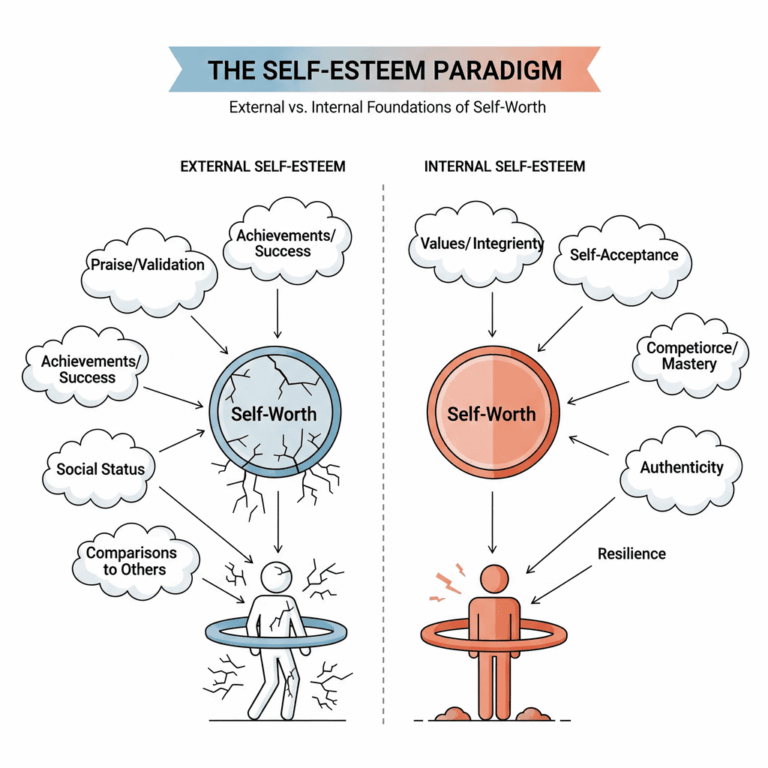
    Many people think of self-esteem as a price tag: something that can be attached, removed, or changed at will. However, The Power of Self-Esteem shows that self-esteem is a paradigm. It is not a ‘status’ suddenly gained through academic achievements, recognition from a boss, or a beautiful face in the mirror.

    Self-esteem grows as a result of how we conduct our daily lives, how we handle problems, interpret failures, and respond to criticism. The paradigm of true self-esteem is founded on responsible action, the courage to be honest with oneself, and the refusal to be trapped by superficial judgments.

    Why is this revolutionary? Because this paradigm breaks the chains of entrapment. If you depend on trophies (which can be lost), or youthful looks (which inevitably fade), your self-esteem will always be fragile. The new paradigm taught in this book urges you to build a foundation of self-value from the inside out—not from the outside in.

    “How do you shift the source of self-esteem from external to internal? Its comprehensive practical framework is only systematically revealed within the book…”
    Read also : GenderSell: How to Sell to the Opposite Sex by Judith C. Tingley Ph.D.

    Commitment to Awareness: The Main Pillar of High Self-Esteem

    There is one standout trait among people with high self-esteem: commitment to awareness, or “the will to understand.” They do not go through life on autopilot. Instead, they choose to live consciously—mindfully—in every action, decision, and interaction.

    This awareness is not just about being alert to the environment. It is the courage to be honest with oneself, to open one’s eyes to the motivations behind decisions, and to welcome feedback from others. People with high self-worth do not seek validation; they seek clarity: Am I progressing according to the goals and values I believe in? If not, what needs to be corrected?

    Why is this important? Because commitment to awareness keeps you “on course.” It is a vital compass in facing challenges and change. When someone loses self-awareness, they are easily trapped in reactive patterns, destructive habits, or even toxic relationships.

    “Techniques for building commitment to awareness, complete with proven daily exercises, are only thoroughly detailed in our exclusive guide…”

    Read also : The Illustrated Art of Manliness: The Essential How-To Guide: Survival, Chivalry, Self-Defense, Style, Car Repair, And More! by Brett McKay

    Authentic Pride: Enjoying Achievements Without Arrogance

    One of the classic pitfalls in the journey of building self-esteem is the confusion between healthy pride and empty arrogance. This book points out that authentic pride arises not from a desire to “prove oneself,” but from the satisfaction that grows after doing what is good and right.

    People with authentic pride will say, “I did what was necessary,” and feel quietly satisfied. They do not need to showcase their achievements or seek bombastic praise. This kind of pride does not come from an “emptiness wanting to be filled,” but from a “fullness longing to be savored.”

    Why is this important? Because authentic pride is a natural shield against feelings of inferiority, failure, and the compulsive urge to outdo others. It fosters a solid self-confidence—without having to sacrifice social relationships, as there is no false competition.

    “How do you distinguish authentic pride from false ego? A series of reflective tests and case studies are available only to those who dig deeper…”


    Avoiding the Trap of External Validation: The Quiet Path to Wholeness

    Oftentimes, people feel the need to please many parties at once—bosses, partners, friends, even “societal standards.” This creates a dilemma: striving to gain approval from one can mean facing rejection from another. If external validation becomes the sole source of self-worth, every rejection feels like a disaster.

    This book invites readers to move beyond that trap. By building inner wholeness, you no longer become a “slave” to popularity, status, or the opinions of the majority. Calmness, confidence, and happiness will grow from within—and endure even when circumstances are less than ideal.

    Why is this transition important? Because it frees you from collective anxiety, the fear of failure, or the worry of “losing face” in public.

    “There are three patterns of self-sabotage that most often keep people trapped in the web of external validation—and the strategies to overcome them are analyzed in depth in the complete version…”


    Conclusion: Embracing Change Before You Choose to Act

    Achieving authentic self-esteem is a journey, not a destination. By letting go of dependence on external validation, nurturing true pride, and committing to a mindful life, you deserve to enjoy inner freedom and meaningful accomplishment.

    However, this knowledge is just the tip of the iceberg. You have now grasped the “what” and “why.” The “how”? That’s where the true magic of transformation lies—and you deserve to experience it today.


    You have just seen the foundation. These concepts are only the tip of the iceberg of what the book has to offer. How do you apply them step by step, avoid common pitfalls, and integrate them into your strategy? All the answers are inside.

    Sign Up and Get Free Access at MentorBuku Now!
  • The Fundamental Secret to an Authentic “Glow Up”: Breaking Through Outdated Paradigms Toward True Transformation. The Mountain is You by Brianna Wiest

    Introduction: Why a “Glow Up” Is Actually Deeper Than You Think

    Everyone craves change. Many of us are obsessed with the “glow up”: a transformation to look more attractive, appear more successful, and simply—gain the world’s validation. However, behind the glitter of this trend, there is one fundamental question: Can external change truly bring inner fulfillment, or does it actually deepen the emptiness within?
    This article will uncover the secrets behind authentic transformation, connecting psychological foundations, the trap of false narratives, and revolutionary steps toward a meaningful life. Uniquely, this is the grand “what” and “why” that will open the path, but the “how” is only available through a deeper exploration. Let’s dig deeper and prepare for a paradigm shift!

    Read also : The Happiest Man on Earth by Eddie Jaku

    Debunking the Myth: Superficial “Glow Up” vs. True Transformation

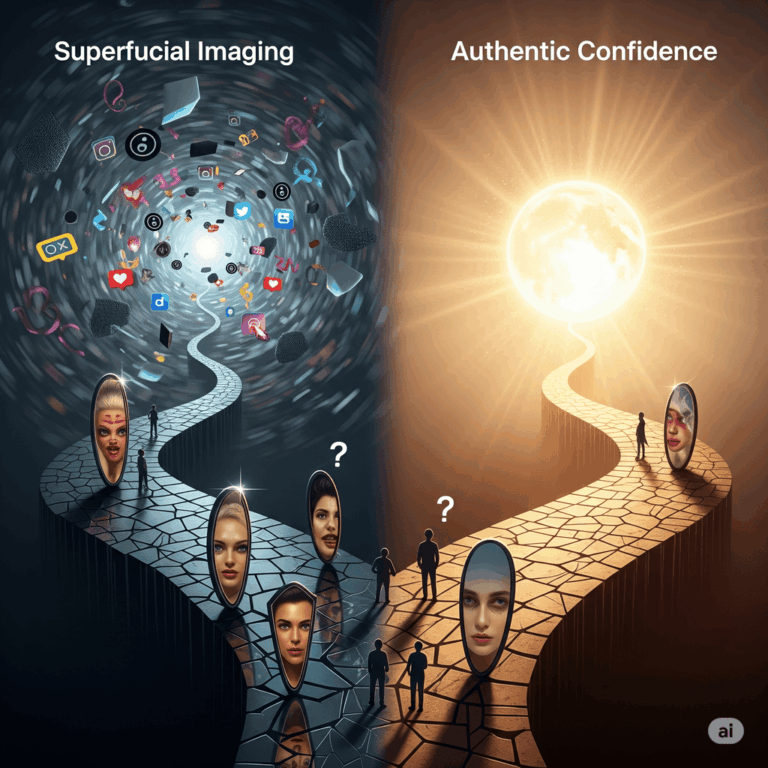
    Often, “glow up” is understood only as a change in appearance. People race to enhance their images on social media, edit photos, cover up flaws, spend a fortune on their looks, and weave narratives that appear happy, while their hearts may remain empty.
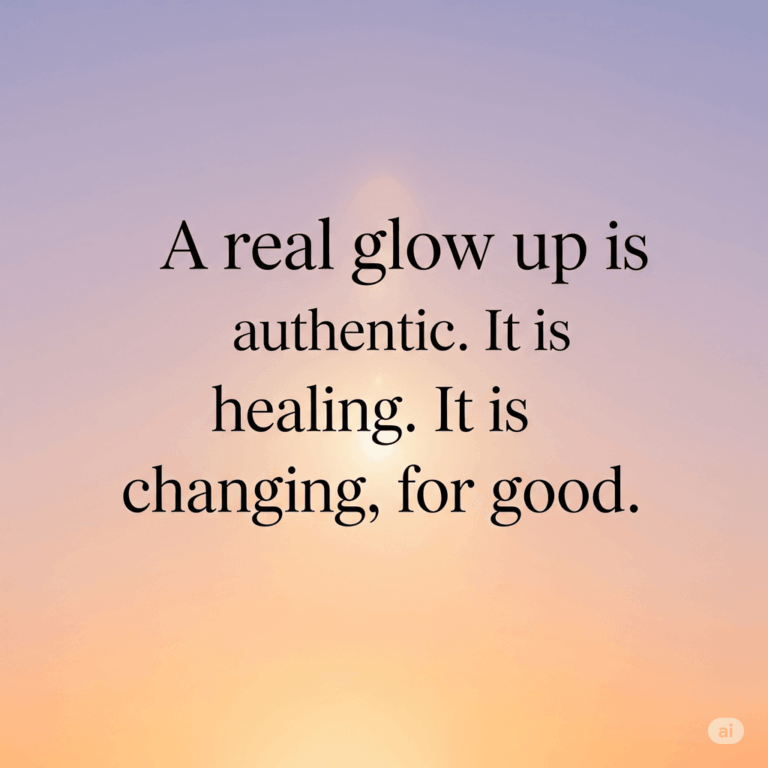
    However, according to one of the key insights from the book The Mountain is You, truly meaningful change—an authentic glow up—is not about becoming bigger, smaller, or more beautiful in the eyes of others. True transformation happens when someone dares to “remove all the false layers,” acknowledge their real issues, heal their inner wounds, and prioritize their own heart instead of simply meeting others’ expectations.
    This concept dismantles the culture of “image-building” that prevails today. Anyone can create a better appearance. But if someone becomes so obsessed with proving themselves to others, it often signals an untouched emptiness within.
    The framework for distinguishing between authentic and cosmetic transformation, as well as how to detect whether the changes we pursue truly fulfill our deepest needs, is thoroughly discussed in the book—including warning signs that should not be ignored.
    In-depth techniques and steps to dismantle false narratives in your life and build a genuine “glow up” have been specially crafted in MentorBuku’s exclusive summary…

    Read also : The 5AM Club by Robin Sharma

    Why Old Wounds Hold You Back from Total Transformation

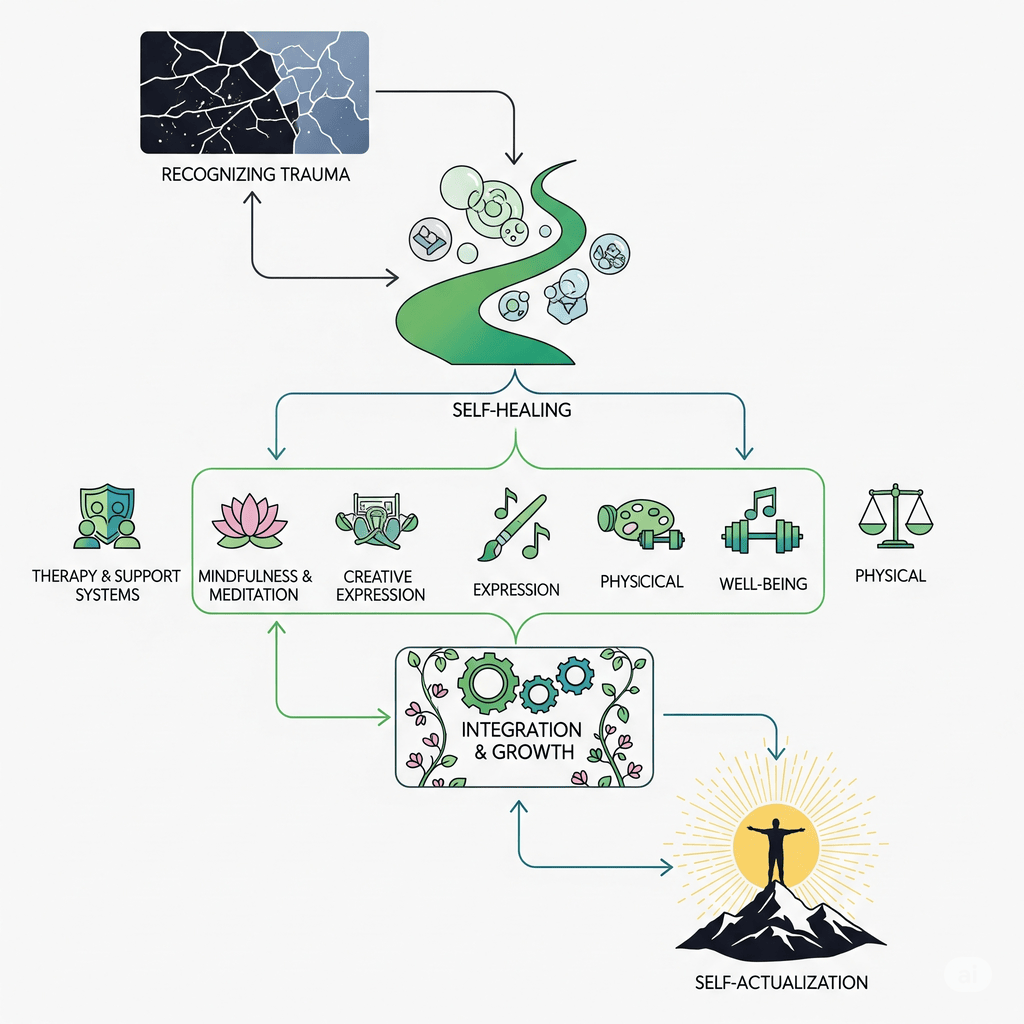
    Every desire for change is often overshadowed by one thing that rarely gets acknowledged—past trauma and psychological wounds. This book dissects the profound impact of trauma on three key brain structures: the amygdala, hippocampus, and prefrontal cortex.
    Because of trauma, the brain stops processing memories fully, emotions become difficult to regulate, and our ability to plan for the future and self-development is hindered. This is the main reason why so many attempts to “start over” end in failure, or feel nearly impossible even with strong determination.
    Understanding this foundation is the revolutionary key: we realize that to “climb the mountain” of life, we must dare to look back, confront old wounds, and process unresolved emotions. Without the courage to manage the remnants of trauma, change becomes nothing more than meaningless outer decoration.
    But what patterns of self-sabotage arise from this trauma? How can we distinguish spontaneous emotions from old patterns that hold you back? All the identification techniques and ways to navigate these challenges are specifically outlined in the in-depth chapters of this book.
    A complete framework for recognizing the traces of trauma and strategies for overcoming it can only be found in MentorBuku’s exclusive guide…


    Accessing Your Future Self: Revolutionary Practice to Break Through Old Limits

    Interestingly, the author introduces a unique introspective technique: meeting your “future self” in a structured meditation. The process is more than visualization; it’s a profound experience to break free from fears that are always rooted in past experiences.
    In the early stages, you are invited to sit quietly, meditate, and then imagine conversing with the most ideal, enlightened version of your “self.” Interestingly, at first, “fear” often disguises itself in the initial visualization. However, the author emphasizes that if you dare to push past this and open up, you can receive extraordinary messages from your future self—a roadmap to authentic transformation.
    This practice may seem simple, but it is incredibly deep. By overcoming fear and greeting your future, you free yourself from the traps of old thinking. You begin to carve out a new path that truly originates from your greatest potential, not from trauma or the expectations of those around you.
    What important messages commonly emerge from the “future self?” How can you make this session truly effective and not just empty imagination? All its secrets—including journaling formats, advanced visualization techniques, and the steps of integration—are fully explained in MentorBuku’s in-depth discussion.
    A detailed template and step-by-step guide for the ‘meeting your future self’ session can be found exclusively through MentorBuku’s internal resources…


    Putting Your Own Heart First—A New Paradigm for Authentic Happiness

    The most fundamental point of all these discussions is the courage to prioritize your own heart. In a world increasingly burdened by social pressures, we often care more about “how others judge us” than “what truly feels right in our hearts.”
    Why is this so important? Because as long as the direction of our lives is dictated by external expectations, all change will only repeat old patterns: chasing validation while still feeling empty. True transformation requires a radical decision: to prioritize conscience, follow your heart, and stop measuring yourself by external standards.
    But how do you take the first step to put your heart first amid real world demands? How can you establish healthy boundaries without feeling guilty or worrying about being labeled selfish? Practical answers and vital keys to inner freedom have been compiled in detail in MentorBuku’s mentoring program.
    Practical guides and daily routines for building the courage to prioritize your heart are available exclusively in official MentorBuku sources…


    Conclusion—The Path to True Transformation Is Right in Front of You

    By gaining a deep understanding of authentic “glow up,” you’re now able to distinguish between change that brings meaning and mere illusion. Recognizing the impact of trauma on the brain and on life, as well as daring to have conversations with your “future self,” results in a small revolution with profound effects. All of this leads to one thing: the decision to begin the journey inward, listen to your own heart, and go far beyond mere appearances.
    However, if you want practical strategies, daily templates, and step-by-step action frameworks—all of that is only available in MentorBuku’s exclusive collection of guides, summaries, and e-books. Don’t let true transformation remain just a discourse; it’s time to open the gateway to your transformation now.

    Also read: The One Thing by Gary W. Keller, Jay Papasan

    You’ve just seen the foundation. These concepts are only the tip of the iceberg of what this book has to offer. How do you implement them step by step, avoid common pitfalls, and integrate them into your strategy? All those answers are inside.
    Sign up and Get Free Access on MentorBuku Now!

  • The Fundamental Secret of Visualization: A Powerful Catalyst for Transforming Your Life. The Miracle Morning: The Not-So-Obvious Secret Guaranteed to Transform Your Life Before 8 AM by Hal Elrod

    Visualization often sounds like a mystical concept—a practice believed to be useful only for athletes or those who believe in the “law of attraction.” However, in reality, visualization is a revolutionary key that can reshape your habits, ignite your enthusiasm, and truly change the course of your life. In this article, we will explore three fundamental catalysts of the art of visualization derived from “The Miracle Morning,” uncovering why they are so important and, of course, leaving you eager to learn about structured application strategies.

    Why Is Visualization a Game Changer?

    Every person carries the burden of the past: failures, doubts, or even trauma that hinders the path to the future. This is where visualization comes in, not as an escape, but as a “mental time machine” that can spark motivation and steer your life toward a more promising future. Instead of letting bad memories dictate your actions, you now have a tool to fill your mind with an exciting and limitless vision of the future.

    Interestingly, research shows that those who fill their minds with positive images of the future tend to be more resilient, more productive, and better able to maintain motivation when facing challenges. This is not just empty theory; it is the foundation of performance psychology that has helped millions of people change their routines and achieve unexpected accomplishments.

    But how exactly does visualization work as a catalyst for transformation? Let’s break down its three main, interwoven components.


    1. Directed Visualization: Reprogramming the Mind for Success

    Many people start visualizing by simply imagining “wanting to be successful.” However, the real power comes from directed visualization—where you consciously and intentionally design a “mental movie” of how you want to live your ideal day. For example, the author of “The Miracle Morning” makes it a habit each morning to sit quietly, close his eyes, and systematically visualize himself going through his day with enthusiasm and smoothness. From small routines to major achievements, everything is visualized as if it has already happened.

    The strength of this approach lies in its detail. By imagining sensations, emotions, even potential obstacles, you “trick” your brain into believing that success is truly attainable, not just wishful thinking. Every thought, every “scene” you repeat daily becomes the foundation for confidence and a consistent source of motivation.

    But how do you create effective directed visualization? There are three specific steps outlined in the book, including ways to manage the mental resistance that often arises at the start of the practice—and all of them are available in our strategic source.


    2. Vision Board: The Physical “Magnet” for Your Dreams

    Imagine your desk covered with inspiring images—dream destinations, role models, financial achievements, or even favorite quotes. That’s the Vision Board, a simple visual tool with extraordinary power. In truth, a Vision Board is a constellation of visuals that helps strengthen your mental images so that your brain can more easily connect your targets to reality.

    This concept was popularized by the book and movie “The Secret,” but what is often overlooked is the process of choosing the right images, arranging them strategically, and maintaining a routine of “interacting” with your Vision Board so that its impact goes beyond mere decoration. Many people make random Vision Boards and then feel disappointed when their dreams don’t come any closer. In fact, there is a specific way to activate this “magnet” so that it truly strengthens your focus and daily energy.

    A complete framework for building an impactful Vision Board, including how to set it up to fit your unique goals, is thoroughly explained in MentorBuku’s exclusive visualization toolkit.

    3. Emotion as Leverage: The Key to Creating Mental “Attraction”

    One often-overlooked secret in visualization is the power of emotion. Merely imagining success is not enough. You need to bring to life the emotions that accompany it—joy, gratitude, even a touch of fear. The stronger the emotions you feel during visualization, the more “real” the experience becomes to your brain. This is why many top coaches emphasize the importance of “feeling” victory even before it actually happens.

    Why are emotions so crucial? Because deep emotions make you see your goal not just as something “worth trying,” but as an inevitability. When you start your morning by “touching” the feeling of satisfaction after achieving success, your motivation to act switches into “turbo mode.”

    Specific steps to evoke emotion during visualization, along with tricks to overcome mental blocks that hinder genuine feelings, are described in a special chapter that is not only theoretical but also practical in our key book.


    4. “Habit Stacking”: Integrating Visualization with Daily Routines

    One reason most people fail to maintain the habit of visualization is the lack of integration into their routines. Visualizing right after waking up is much more effective than scheduling it for “whenever there’s time.” That’s where the concept of “Habit Stacking”—attaching a new habit (visualization) to an existing one (such as drinking a glass of water)—becomes a game changer.

    Not only does this make visualization easier to implement, but habit stacking also strengthens consistency and helps the brain form automatic habit pathways. Over time, visualization will no longer feel like a “chore” but will become an inseparable part of your morning energy.

    A series of powerful habit stacking techniques, along with practical examples for various professions, are offered as part of the bonus strategies available on the MentorBuku platform.


    Conclusion: Visualization Is Not a Dogma, but a Discipline

    Visualization is a catalyst for transforming your life, but only when practiced with discipline and mindfulness. With directed visualization, a meaningful Vision Board, ignited emotions, and habit stacking strategies, you have already opened the door to change. However, the journey doesn’t end here.

    Read also: The Rational Male by Rollo Tomassi

    Read also: The 7 Habits of Highly Effective Families: Creating a Nurturing Family in a Turbulent World by Stephen R. Covey


    Closing: Are You Ready to Become the Architect of Your Future?

    You have just seen the foundation. These concepts are only the tip of the iceberg of what this book offers. How do you apply them step by step, avoid common pitfalls, and integrate them into your strategies? All those answers await inside.

    Sign Up and Get Free Access at MentorBuku Now!