Category: Mindset & Motivation

  • The “Ego Is the Enemy” Strategy: The Secret Paradigm of Self-Mastery for Authentic Greatness. Ego Is the Enemy by Ryan Holiday

    Introduction: Behind Success, There Lies a Hidden Foe

    History is full of stories about the failures of geniuses, leaders, and brilliant artists. Why do these individuals, despite being brimming with talent and brilliant ideas, often end up trapped in cycles of failure or mediocrity? The answer often whispers quietly but bites deeply: ego.
    The book “Ego Is the Enemy” delves into the deepest roots of this hidden enemy. Through sharp narratives and real-life examples, this book offers a series of insights into ego—not just in the context of psychology, but as an invisible “hijacker” that can strike anyone at any time.
    This article presents some gems of concepts from a book that has been, and always will be, relevant to anyone seeking to reach authentic and sustainable heights. This is an initial roadmap. However, the path to real change awaits in deeper sections.

    1. Ideas and Work: Why Do Ideas Remain Just Ideas?

    Many of us, like Edgar Degas the seasoned painter, feel full of ideas—sometimes even exploding with inspiration. However, inspiration without execution is powerless to bring real change. A famous conversation between Degas and the poet Mallarmé sums it up: “I can’t write the way I want to, even though my head is full of ideas,” Degas lamented. Mallarmé’s reply was gentle but piercing: “Poems aren’t made with ideas, Degas. They’re made with words.”
    Just like poetry, success in life is only achieved through work, not merely intention. Peter Drucker, the management maestro, asserted, “The best plan is just good intentions unless it degenerates into work.” The biggest obstacle is not a lack of inspiration, but the ego that whispers, “Great ideas are enough; the details can wait.”
    Without the ability to turn ideas into actions, great achievements are nothing but empty dreams. A framework for consistently translating ideas into concrete results, complete with techniques for daily discipline, is thoroughly explored in this book…


    2. The “Canvas Strategy”: The Unconscious Direction Setter

    Most people, driven by ego, want to be at center stage—to control everything, to be known by everyone, to receive instant recognition. Yet, a quiet strategy actually offers a different path: becoming the “canvas setter” who shapes the direction without needing to be in the spotlight.
    The Canvas Strategy teaches us to clear the way for others and contribute selflessly at the outset of our journey. Strangely, by doing so, you are the one shaping the future. Just as a canvas frames a painting, you decide its tone.
    This strategy knows no age, rank, or even length of experience. From before starting a career to leading an organization, anyone can begin. What sets people apart is the ability to restrain the ego—retrain yourself—and consistently focus on contribution rather than praise.
    The complete techniques for systematically practicing the Canvas Strategy, including how to build authentic reputation without appearing to “suck up” or self-sacrifice, are dissected in several dedicated chapters in this book…


    3. Resisting Illusion and Accepting Reality

    It is easier to build illusions of glory than to accept the harsh reality of failure or shortcomings. Ego often plunges us into the narrative of “I already know,” or “I can definitely do it,” even when the facts say otherwise.
    However, as illustrated in the story of John DeLorean, being lulled by baseless ambition for too long and ignoring the warning signs of failure actually led him to total ruin. In truth, falling is not the end. This book affirms that the only way to appreciate personal progress is by standing at the edge of the very pit of failure we once dug, then learning from it and improving our character.
    Challenging the ego to willingly accept facts, admit failure, and rise stronger is a fundamental lesson dissected thoroughly. Yet, the three most common ego traps that hinder your achievements—along with techniques to dismantle them one by one—are only comprehensively outlined within MentorBuku’s detailed guide…


    4. The Willingness to “Draw the Line”: Preserving Character

    Marcus Aurelius once said, “He can only destroy your life if he destroys your character.” In today’s world, dominated by fierce competition, the temptation to trade principles for superficial victory becomes ever more enticing. Ego persuades us to cross the line “just a little,” promising, “you can always go back later.”
    In reality, true strength lies in the courage to draw boundaries. Restraining oneself, saying “enough,” and choosing consistency of character over fleeting desires. This ability, more than just discipline, is the art of enduring life’s toughest trials.
    The big questions: How do you set healthy boundaries? How do you cultivate mental resilience so your character remains intact when pressure peaks? A practical framework for applying the “draw the line” concept in full, including modern case studies and character-building tools, are presented in detail among MentorBuku’s insights…


    5. Transformation through Humility: Becoming an Unshakable Individual

    One of the greatest paradoxes is: the more humble someone is, the harder it is for ego to bring them down. This book highlights the power of humility—active humility, not mere resignation. With humility, you open endless opportunities for learning, accept criticism, and turn failure into a leap of progress.
    The book reveals how the world’s most successful figures almost always share one common thread: a commitment to suppressing ego, learning at every step, and never tiring of self-improvement. However, the mental techniques of a “humility routine” and ways to build daily self-awareness habits—which truly set apart genuine winners—are only available in the exclusive MentorBuku recommendation modules…


    Conclusion: Becoming the Master, Not the Slave of Ego

    Why is ego so elusive, alluring, yet dangerous? Because it clings in the form of hopes, good intentions, even overconfidence. Yet, by dissecting the lessons of key figures and adopting the tactical strategies in this book, you have the chance to become the one in control of your life—not just a victim of your own ego’s impulses.
    Are you ready to follow the roadmap to conquer ego and rewrite your success narrative? The answer starts here.

    Read also : Parenting from the Inside Out by Daniel J Siegel


    Read also : Why Are All the Black Kids Sitting Together in the Cafeteria? by Beverly Daniel Tatum


    Read also : Conversations on Love by Lunn Natasha


    You have just seen the foundation. These concepts are only the tip of the iceberg of what this book has to offer. How do you apply them step by step, avoid common pitfalls, and integrate them into your strategy? All those answers are inside.
    Sign up and Get Free Access on MentorBuku Now!
  • The Fundamental Secrets of Building Wealth: A Strategic Paradigm from “Your Next Five Moves”. Your Next Five Moves: Master the Art of Business Strategy by Patrick Bet-David with Greg Dinkin

    Introduction: Unveiling the Layers of Strategy to Wealth

    Everyone dreams of building authentic wealth—one that can endure not just for a season, but form the foundation of the future. However, few understand that true success is not merely a matter of luck or hard work. It is the result of a series of meticulously planned strategic moves. This is the powerful message presented in the book “Your Next Five Moves: Master the Art of Business Strategy”.
    This article explores several fundamental concepts from the book—from discovering the path to wealth and knowing your own identity, to understanding the power of differentiation and a winner’s mindset. However, each of these concepts is just the surface. To master the ‘how’ and avoid common pitfalls, follow the explanation to the end.


    The Strategic Paradigm: Crafting the Path to Personal Wealth

    Lasting wealth is never accidental. According to Patrick Bet-David, the author of this book, “money is only a tool.” This means money is neutral—it will only take you as far as your vision and strategy carry it. However, it is not the money that determines the driver; you are the one controlling the direction Your Next Five Moves Master the Art of Business Strategy.pdf.

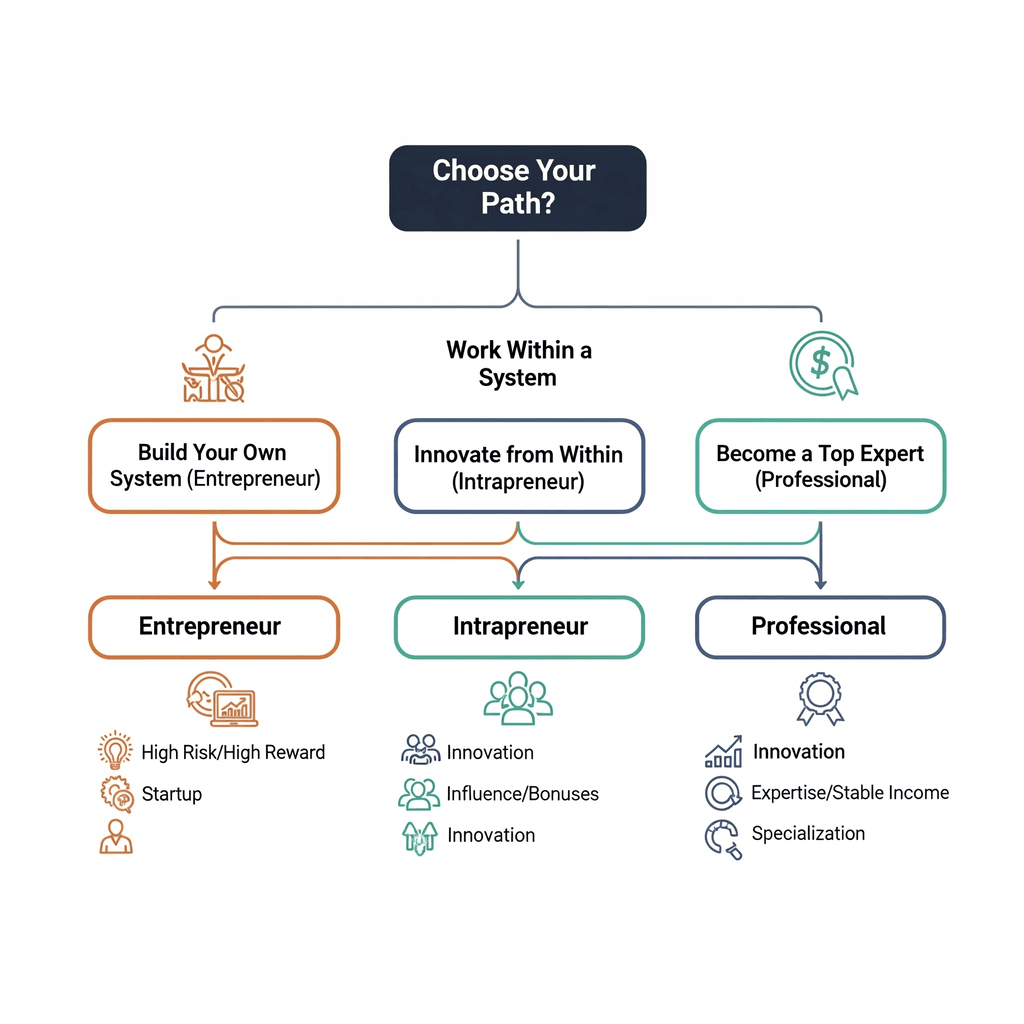
    The first point to understand is the importance of choosing a path to wealth based on your unique strengths. The book offers a “Personal Identity Audit” approach—a deep reflection to help each person understand what truly motivates them. Only by understanding who we are can we choose whether to become an entrepreneur, intrapreneur, or take on another role in building wealth—and each path has its own distinct strategy. Your Next Five Moves Master the Art of Business Strategy.pdf.
    But how exactly does one conduct an identity audit and translate it into the right path? The series of key questions and its in-depth process are outlined step-by-step in this book…


    Determining the Path: Entrepreneur vs. Intrapreneur

    Not everyone is cut out to be an entrepreneur, but every individual can find a value-creation path that aligns with their talents. The book emphasizes two main paths:

    1. Entrepreneur: The Risk-Taker and Game-Changer

    An entrepreneur breaks old boundaries and builds something new from scratch. They take on great risks, but also have the potential for the highest returns. However, the risks are not just in the form of capital—but also mental pressure and the acumen to spot opportunities. Your Next Five Moves Master the art of Business Strategy.pdf.

    2. Intrapreneur: The Innovation Leader Within an Organization

    On the other hand, an intrapreneur is a catalyst for change within a large company. They develop ideas, lead innovative projects, and build value, but within a framework that is relatively safer than that of an entrepreneur.

    Choosing this path cannot be done carelessly. You need to be aware of your strengths, weaknesses, and deepest motivations before making this big decision.
    A concrete framework for assessing your fit for the entrepreneur or intrapreneur role—including practical assessments and case studies—is presented in full in a special chapter of this book. The explanation of “blue ocean” and how to execute it is also dissected in detail in the exclusive summary on MentorBuku…


    The Power of Differentiation: Find Your Unique “Edge”

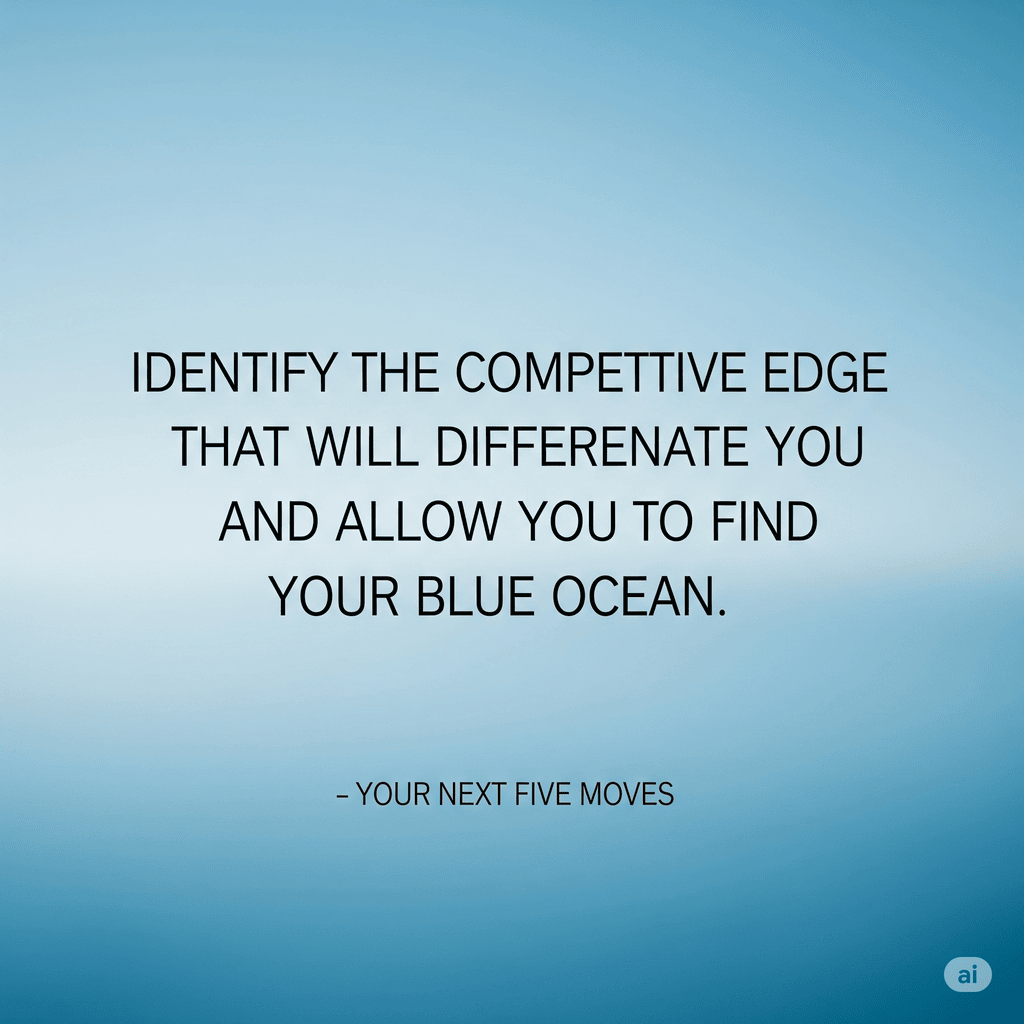
    In a world full of competition, only those who can stand out and be different will survive. Bet-David consistently emphasizes the importance of a “competitive edge”—something that sets you apart from the crowd and opens up a “blue ocean” or a new, untapped market. Your Next Five Moves Master the Art of Business Strategy.pdf.
    Differentiation is not just about creating a different product or service. It starts with knowing very clearly for whom you are offering value, what makes you relevant, and why people should choose you over others.
    Therefore, the step of finding this unique “edge” is often seen as simple, yet it is full of pitfalls. Many professionals fail to distinguish between a real competitive advantage and simply “following trends.”
    Market research techniques, the “Value Proposition” framework approach, as well as case studies on how large companies found their “blue oceans,” are all detailed in MentorBuku’s advanced guide. Three fatal mistakes in building differentiation are also thoroughly examined…


    The Mindset of a Great Player: Learning from the “Poker Master”

    There is an interesting story in this book about Eric Drache, one of the world’s greatest poker players. He was successful not only because of his playing skills, but also because he always chose opponents who made him grow—not just seeking easy wins. This analogy becomes an important lesson: in the business world, we are often required to make decisions by considering many steps ahead, like a chess grandmaster thinking about their “next five moves”. Your Next Five Moves Master the Art of Business Strategy.pdf.
    This kind of mindset distinguishes between ordinary businesspeople and those who can stay at the top of their game. You are required to:

    • Dare to make important decisions even when not all information is available
    • Always be prepared to face uncertainty
    • Choose challenges that sharpen your “mental muscle”

    However, how can one build this winner’s mindset? The book contains mental exercises, reflective reminders, and daily habits to hone strategic intuition. A template for developing “resilience” and real examples of decision mapping are available exclusively on MentorBuku…


    Strategy Integration: Creating a Personal Wealth Blueprint

    After understanding these major concepts, the main key is integration. You are faced with a critical question: how do you combine the personal identity audit, path determination (entrepreneur/intrapreneur), the search for a “competitive edge,” and a winner’s mindset into a single strategic blueprint?
    This series of integrative steps, which includes setting milestones, periodic reviews, and the technique of “reverse engineering” life goals, becomes an essential foundation for real transformation.
    A strategy integration framework, a self-evaluation checklist, and real blueprint examples are presented exclusively in the MentorBuku summary. You will also find cases of the biggest failures caused by a lack of “strategic integration,” and how to avoid them…


    Conclusion: Why You Shouldn’t Stop Here

    If you want to build wealth that is not only substantial but also resilient and true to your identity, the foundation you’ve learned in this article is just the tip of the iceberg. There are detailed secrets, practical techniques, and inspiring case studies that are intentionally not revealed here. You can get all of that if you are willing to dig deeper.

    Read also : Courage Is Calling by Ryan Holiday


    Read also : Do Epic Shit by Ankur Warikoo


    Read also : Energize Your Mind by Gaur Gopal Das

    You have just seen the foundation. These concepts are merely the tip of the iceberg of what this book offers. How do you apply them step by step, avoid common pitfalls, and integrate them into your strategy? All those answers are inside.
    Sign Up and Get Free Access on MentorBuku Now!