Category: Mindset & Mindfulness

  • The Magical Secret to Unveiling the Authentic Self-Esteem Paradigm: A Revolutionary Foundation for a Meaningful Life. The Power of Self-Esteem by Nathaniel Branden, Ph.D.


    Every person has doubted their abilities at some point. Everyone has questioned, “Am I good enough?” or even found themselves trapped in comparing themselves to impossible standards. But behind that simple question lies a fundamental key that determines the quality of our lives: self-esteem, or authentic self-worth.

    In today’s fast-paced era, many people equate self-esteem only with achievements, appearance, or the recognition of others. However, as revealed in the important book The Power of Self-Esteem, there is a much deeper paradigm that is rarely uncovered.

    This article will dissect four essential conceptual gems from the book, while also highlighting why you should go beyond simply ‘knowing’—and begin to yearn for ‘how’ to build it authentically. Discover the “strategic teaser” that will open your eyes to the power of authentic self-esteem, yet (deliberately) leave you with a curiosity that propels you to take the next step.


    Why Self-Esteem Is a Paradigm, Not a Temporary Label

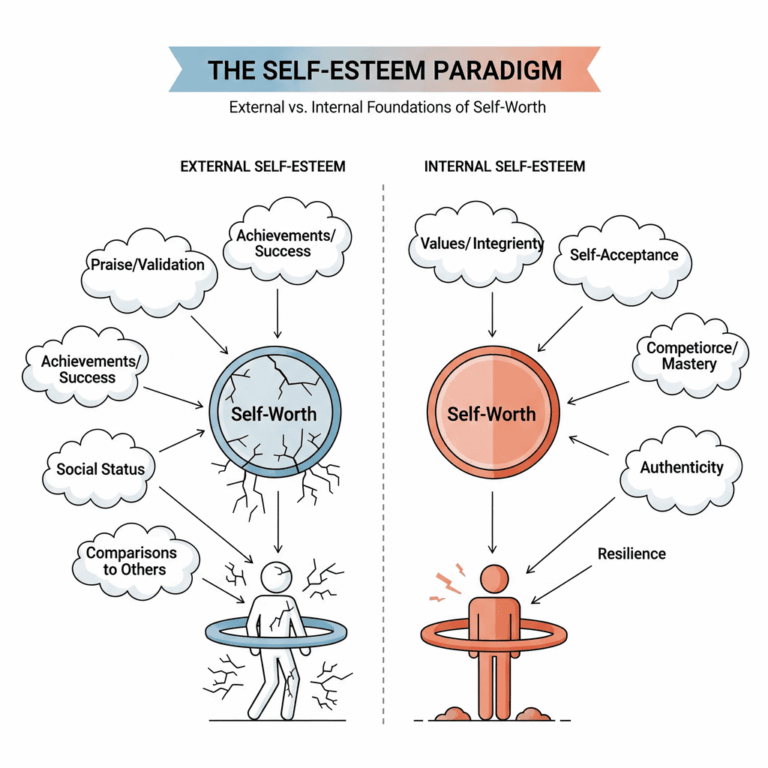
    Many people think of self-esteem as a price tag: something that can be attached, removed, or changed at will. However, The Power of Self-Esteem shows that self-esteem is a paradigm. It is not a ‘status’ suddenly gained through academic achievements, recognition from a boss, or a beautiful face in the mirror.

    Self-esteem grows as a result of how we conduct our daily lives, how we handle problems, interpret failures, and respond to criticism. The paradigm of true self-esteem is founded on responsible action, the courage to be honest with oneself, and the refusal to be trapped by superficial judgments.

    Why is this revolutionary? Because this paradigm breaks the chains of entrapment. If you depend on trophies (which can be lost), or youthful looks (which inevitably fade), your self-esteem will always be fragile. The new paradigm taught in this book urges you to build a foundation of self-value from the inside out—not from the outside in.

    “How do you shift the source of self-esteem from external to internal? Its comprehensive practical framework is only systematically revealed within the book…”
    Read also : GenderSell: How to Sell to the Opposite Sex by Judith C. Tingley Ph.D.

    Commitment to Awareness: The Main Pillar of High Self-Esteem

    There is one standout trait among people with high self-esteem: commitment to awareness, or “the will to understand.” They do not go through life on autopilot. Instead, they choose to live consciously—mindfully—in every action, decision, and interaction.

    This awareness is not just about being alert to the environment. It is the courage to be honest with oneself, to open one’s eyes to the motivations behind decisions, and to welcome feedback from others. People with high self-worth do not seek validation; they seek clarity: Am I progressing according to the goals and values I believe in? If not, what needs to be corrected?

    Why is this important? Because commitment to awareness keeps you “on course.” It is a vital compass in facing challenges and change. When someone loses self-awareness, they are easily trapped in reactive patterns, destructive habits, or even toxic relationships.

    “Techniques for building commitment to awareness, complete with proven daily exercises, are only thoroughly detailed in our exclusive guide…”

    Read also : The Illustrated Art of Manliness: The Essential How-To Guide: Survival, Chivalry, Self-Defense, Style, Car Repair, And More! by Brett McKay

    Authentic Pride: Enjoying Achievements Without Arrogance

    One of the classic pitfalls in the journey of building self-esteem is the confusion between healthy pride and empty arrogance. This book points out that authentic pride arises not from a desire to “prove oneself,” but from the satisfaction that grows after doing what is good and right.

    People with authentic pride will say, “I did what was necessary,” and feel quietly satisfied. They do not need to showcase their achievements or seek bombastic praise. This kind of pride does not come from an “emptiness wanting to be filled,” but from a “fullness longing to be savored.”

    Why is this important? Because authentic pride is a natural shield against feelings of inferiority, failure, and the compulsive urge to outdo others. It fosters a solid self-confidence—without having to sacrifice social relationships, as there is no false competition.

    “How do you distinguish authentic pride from false ego? A series of reflective tests and case studies are available only to those who dig deeper…”


    Avoiding the Trap of External Validation: The Quiet Path to Wholeness

    Oftentimes, people feel the need to please many parties at once—bosses, partners, friends, even “societal standards.” This creates a dilemma: striving to gain approval from one can mean facing rejection from another. If external validation becomes the sole source of self-worth, every rejection feels like a disaster.

    This book invites readers to move beyond that trap. By building inner wholeness, you no longer become a “slave” to popularity, status, or the opinions of the majority. Calmness, confidence, and happiness will grow from within—and endure even when circumstances are less than ideal.

    Why is this transition important? Because it frees you from collective anxiety, the fear of failure, or the worry of “losing face” in public.

    “There are three patterns of self-sabotage that most often keep people trapped in the web of external validation—and the strategies to overcome them are analyzed in depth in the complete version…”


    Conclusion: Embracing Change Before You Choose to Act

    Achieving authentic self-esteem is a journey, not a destination. By letting go of dependence on external validation, nurturing true pride, and committing to a mindful life, you deserve to enjoy inner freedom and meaningful accomplishment.

    However, this knowledge is just the tip of the iceberg. You have now grasped the “what” and “why.” The “how”? That’s where the true magic of transformation lies—and you deserve to experience it today.


    You have just seen the foundation. These concepts are only the tip of the iceberg of what the book has to offer. How do you apply them step by step, avoid common pitfalls, and integrate them into your strategy? All the answers are inside.

    Sign Up and Get Free Access at MentorBuku Now!

  • ANALYSIS & THEMATIC ANGLE DETERMINATION. The Magic of Thinking Big by David J. Schwartz.


    After reviewing the key parts of the book “The Magic of Thinking Big” by David J. Schwartz, there are three gems of ideas that are closely related and can be woven into a single common thread:

    1. The power of mental pictures in our minds—that we think not in words, but in images formed from words.
    2. The importance of believing in growth and improvement—a proactive attitude to seek opportunities for expansion, efficiency, and new ideas that bring progress.
    3. The destructive impact of a negative mindset—that negative thoughts can have real consequences on outcomes and lead to missed opportunities.

    Main Thematic Angle: “How a Positive Mindset Becomes a Catalyst for Success and Growth—Starting from How You See the World in Your Mind.”
    Step 2: MAGNETIC TITLE & FRAMEWORK DEVELOPMENT
    Title Options (40-60 characters):

    1. The Secret to a Positive Mindset: A Real Catalyst for Success!
    2. Revealed! The Big-Thinking Method You Often Ignore
    3. Authentic Paradigm: The Key to Visualizing Instant Success
    4. The Magical Mindset That Shapes Your Future Now
    5. Avoid This Fatal Mistake: The Thinking That Destroys Potential

    Best Title: The Secret to a Positive Mindset: A Real Catalyst for Success!
    Article Outline:

    • H1: The Secret to a Positive Mindset: A Real Catalyst for Success!
      • Introduction: Why Your Way of Thinking Is the Starting Point for Success
      • H2: Mind Pictures: The Foundation of How Your Mind Works
        • H3: Turning Words into Pictures of Success
      • H2: A Proactive Attitude: Echoing Growth and Innovation
        • H3: Case Study: Three Different Ways to Approach Challenges
      • H2: The Power and Peril of a Negative Mindset
        • H3: Opportunities Lost Due to the Wrong Mindset
      • H2: Conclusion: Changing the World Through Your Mindset
      • CTA: Steps to Gain Deeper Insight

    Step 3: ARTICLE DRAFT WRITING (1500-1600 words, SEO & CTA Integrated)


    The Secret to a Positive Mindset: A Real Catalyst for Success!

    Why Your Way of Thinking Is the Starting Point for Success

    Everyone desires greater achievements in life—be it a soaring career, harmonious relationships, or continuous self-development. However, there is one universal foundation that sets winners apart: mindset. But did you know that a mindset is not just a collection of motivational words passing through your mind? It is a collection of “pictures” that unconsciously shapes our attitudes, decisions, and daily actions.
    The book “The Magic of Thinking Big” teaches a fundamental concept—your mind is a giant movie theater. Every word, comment, and thought you consume is actually converted by the brain into a series of mental pictures. This is where major change begins. This is not merely a theory; it is a strategy of how the human brain works, affirmed by experts and supported by modern research.
    This article will invite you to see how the power of a positive mindset can become the greatest catalyst for real success. We will dissect three core concepts of “thinking big” that will open up a new perspective. However, remember: you will only see the foundation here. The complete effective implementation methods are available with a MentorBuku membership.

    Read also : Zero to One by Peter Thiel

    Mind Pictures: The Foundation of How Your Mind Works

    Have you ever realized that when you hear someone say, “I failed,” you automatically picture a gloomy atmosphere, disappointment, or a person with their head down? The brain doesn’t stop at words. Every word heard and read is immediately processed into a “mind picture,” or a visual image that greatly influences your emotions and attitude. — The Magic of Thinking Big by David J. Schwartz.
    This is why the language you use with yourself or others largely determines your next actions. For example: the word “challenge” creates an image of a demanding but inspiring uphill path, while the word “problem” conjures an image of a dead end or a trap.
    A small change in word choice can make the difference between feeling motivated or discouraged. Great leaders guide their teams with visionary words that ignite images of great future possibilities, rather than simply staying in their comfort zone or giving up.

    “When you speak or write, you are a film director showing a movie in other people’s minds. The picture you create determines how you and others will react.” — The Magic of Thinking Big by David J. Schwartz.
    However, to master this art, you must understand the specific formula for consistently building “mind pictures” with a positive aura—including choosing strategic diction and how to practice it in daily communication. This book dissects the structure and practical exercises for creating narratives that build images of success in your subconscious—a vital component that can only be found in the concise summary for MentorBuku members.

    Baca juga : 12 Rules for Life by Jordan B. Peterson

    A Proactive Attitude: Fostering Growth and Innovation

    Next, let’s look at a concrete example from the real world, as shared by Schwartz. There are three types of people in an organization: the self-satisfied, the pessimist, and the visionary. Only one category continues to grow—those who always seek opportunities to advance, find room for innovation, and dare to suggest improvements. These are the people who build a culture of growth, both for the business and for themselves.
    When asked to assess their workplace, a visionary employee says, “We’re already good, but we can be better.” They then share a wealth of innovative ideas: from finding ways to acquire new clients to devising fresh marketing campaigns and revamping the compensation system to better motivate the team.
    Companies that survive and thrive are those filled with people who have this kind of proactive attitude. They are not content with the comfort zone; there is always a “we can do better” spirit and an exploration of solutions. Even when achievements fall short of the target, their feedback remains constructive: “What can be improved next?”
    However, it’s not just about intention. There is a specific mindset, set of habits, and particular questions that strengthen this visionary character in daily life—from goal setting and evaluation to self-negotiation. You will find the complete framework for its implementation, including the daily question list of great thinkers, only in our exclusive summary.

    The Power and Peril of a Negative Mindset

    Not many people realize that a negative mindset doesn’t just worsen your mood; it can literally ruin your destiny and opportunities. Schwartz reveals a true story: a professional lost an important client simply because he maintained a pessimistic tone during a forty-minute discussion. In reality, the client was fundamentally a good person; it was the professional’s negative mindset that caused the failure. — The Magic of Thinking Big by David J. Schwartz.
    Every negative attitude, comment, and conversation sticks like a ‘stain’ in your mind. Over time, it will eat away at your self-confidence, relationships, and even your own business. This vicious cycle is hard to break if you don’t start with self-awareness and the right mental strategy.
    Sometimes, even one pessimistic experience is enough to bury years of potential success. Imagine how many opportunities pass you by just because you allow doubt and anxiety to take the wheel. This isn’t rhetoric—its impact is real in both professional and personal aspects.

  • ANALISIS & PENENTUAN ANGLE TEMATIK. The Magic of Thinking Big by David J. Schwartz.

    Setelah menelaah bagian kunci dari buku “The Magic of Thinking Big” karya David J. Schwartz, terdapat tiga permata ide yang berhubungan erat dan bisa dijalin dalam satu benang merah:

    1. Kekuatan gambar mental (mind picture) pada pikiran kita—bahwa cara kita berpikir bukan dalam kata, melainkan dalam gambar yang dibentuk dari kata.
    2. Pentingnya keyakinan akan pertumbuhan dan perbaikan—sikap proaktif untuk mencari peluang ekspansi, efisiensi, dan ide baru yang membawa kemajuan.
    3. Dampak destruktif dari pola pikir negatif—bahwa pikiran negatif bisa berakibat nyata terhadap hasil dan kehilangan peluang.

    Angle Tematik Utama: “Bagaimana Pola Pikir Positif Menjadi Katalisator Sukses dan Pertumbuhan—Dimulai dari Cara Anda Melihat Dunia di dalam Pikiran.”

    Langkah 2: PEMBANGUNAN JUDUL MAGNETIK & KERANGKA

    Pilihan Judul (40-60 karakter):

    1. Rahasia Pola Pikir Positif: Katalisator Sukses Nyata!
    2. Terungkap! Cara Berpikir Besar yang Sering Anda Abaikan
    3. Paradigma Otentik: Kunci Visualisasi Menuju Sukses Instan
    4. Pola Pikir Ajaib yang Membentuk Masa Depan Anda Sekarang
    5. Hindari Kesalahan Fatal: Cara Berpikir yang Menghancurkan Potensi

    Judul Terbaik: Rahasia Pola Pikir Positif: Katalisator Sukses Nyata!

    Kerangka Artikel:

    • H1: Rahasia Pola Pikir Positif: Katalisator Sukses Nyata!
      • Introduksi: Mengapa Cara Berpikir Anda Menjadi Titik Awal Kesuksesan
      • H2: Mind Picture: Dasar Cara Kerja Pikiran Anda
        • H3: Mengubah Kata-Kata Menjadi Gambar Kesuksesan
      • H2: Sikap Proaktif: Menggemakan Pertumbuhan dan Inovasi
        • H3: Studi Kasus: Tiga Cara Berbeda Menyikapi Tantangan
      • H2: Kekuatan dan Kerugian Pola Pikir Negatif
        • H3: Peluang Yang Hilang Karena Pikiran yang Salah
      • H2: Kesimpulan: Mengubah Dunia Lewat Pola Pikir
      • CTA: Langkah Mendapatkan Wawasan Lebih Dalam

    Langkah 3: PENULISAN DRAF ARTIKEL (1500-1600 kata, SEO & CTA Terintegrasi)


    Rahasia Pola Pikir Positif: Katalisator Sukses Nyata!

    Mengapa Cara Berpikir Anda Menjadi Titik Awal Kesuksesan

    Setiap orang menginginkan pencapaian yang lebih besar dalam hidup—baik itu karier yang melesat, relasi yang harmonis, maupun pengembangan diri yang berkelanjutan. Namun, ada satu fondasi universal yang membedakan para pemenang: pola pikir. Tapi tahukah Anda, pola pikir bukan sekadar kumpulan kata-kata motivasi yang lewat di benak? Ia adalah sekumpulan “gambar” yang secara tak sadar membentuk sikap, keputusan, dan tindakan kita sehari-hari.

    Buku “The Magic of Thinking Big” mengajarkan hal mendasar—pikiran Anda adalah sebuah bioskop raksasa. Setiap kata, komentar, dan pemikiran yang Anda konsumsi sebenarnya diubah oleh otak menjadi rangkaian gambar mental. Di sinilah titik awal perubahan besar terjadi. Bukan teori semata, ini adalah strategi kerja otak manusia yang diamini para pakar dan didukung riset modern.

    Artikel ini akan mengajak Anda melihat bagaimana kekuatan pola pikir positif mampu menjadi katalisator terbesar menuju sukses nyata. Kami akan membedah tiga inti konsep “thinking big” yang akan membuka perspektif baru. Namun, ingat: Anda hanya akan melihat fondasinya di sini. Seluruh cara penerapan efektifnya tersimpan di balik keanggotaan MentorBuku .


    Baca juga : Zero to One by Peter Thiel

    Mind Picture: Dasar Cara Kerja Pikiran Anda

    Pernahkah Anda sadar, ketika mendengar seseorang berkata, “Saya gagal,” secara otomatis Anda membayangkan suasana muram, kekecewaan, atau wajah orang yang tertunduk? Otak tidak berhenti pada kata-kata. Setiap kata yang didengar dan dibaca langsung diolah menjadi “mind picture” atau gambaran visual yang sangat mempengaruhi emosi dan sikap Anda The magic of thinking big — David Joseph Schwartz.

    Inilah sebabnya, bahasa yang Anda gunakan ke diri sendiri atau orang lain sangat menentukan tindakan berikutnya. Misal: kata “tantangan” menciptakan gambar jalan menanjak yang menantang tapi membangkitkan semangat; sedangkan kata “masalah” menimbulkan gambaran jalan buntu atau jebakan.

    Perubahan kecil dalam pilihan kata dapat membedakan apakah Anda akan merasa termotivasi atau malah ciut. Para pemimpin hebat membawa timnya dengan kata-kata penuh visi yang membakar gambaran akan kemungkinan besar di masa depan, bukan sekadar berada di zona nyaman atau menyerah.

    “Ketika Anda berbicara atau menulis, Anda adalah pemutar film yang menayangkan film dalam pikiran orang lain. Gambar yang Anda ciptakan menentukan bagaimana reaksi Anda dan orang lain.”The magic of thinking big — David Joseph Schwartz.

    Namun, untuk menguasai seni ini, Anda harus memahami formula spesifik membangun “mind picture” aura positif secara konsisten—termasuk memilih diksi strategis dan cara praktiknya dalam komunikasi sehari-hari. Buku ini membedah struktur dan latihan praktis menciptakan narasi yang membangun gambaran sukses dalam bawah sadar Anda—komponen vital yang hanya dapat ditemukan dalam resume ringkas anggota MentorBuku.


    Baca juga : 12 Rules for Life by Jordan B. Peterson

    Sikap Proaktif: Menggemakan Pertumbuhan dan Inovasi

    Selanjutnya, mari lihat contoh konkret dari dunia nyata, seperti yang dibagikan Schwartz. Ada tiga tipe manusia dalam organisasi: si puas diri, si pesimis, dan si visioner. Hanya satu kategori yang terus berkembang—mereka yang selalu mencari peluang untuk maju, menemukan celah inovasi, dan berani memberi ide pembaruan. Orang-orang inilah yang membangun budaya pertumbuhan, baik untuk bisnis maupun dirinya sendiri.

    Saat diminta menilai organisasi tempat kerja, seorang karyawan yang visioner berkata, “Kita sudah bagus, tapi kita bisa lebih baik.” Ia lalu membagikan segudang ide inovasi: mulai dari mencari cara mendapatkan klien baru, hingga menyusun kampanye pemasaran segar dan membenahi sistem kompensasi agar lebih memotivasi tim.

    Perusahaan-perusahaan yang bertahan dan berkembang adalah yang selalu dipenuhi orang dengan sikap proaktif semacam ini. Mereka tidak puas di zona nyaman; selalu ada semangat “bisa lebih” dan eksplorasi solusi. Bahkan, ketika pencapaian belum segemilang target, feedback mereka tetap konstruktif: “Apa yang bisa ditingkatkan berikutnya?”

    Namun, bukan sekadar niat. Ada pola pikir, kebiasaan, dan pertanyaan spesifik yang memperkuat watak visioner ini dalam keseharian—mulai dari setting goal, evaluasi, hingga negosiasi dengan diri sendiri. Anda akan menemukan kerangka lengkap penerapannya, termasuk daftar pertanyaan harian para pemikir besar, hanya dalam rangkuman eksklusif kami.


    Kekuatan dan Kerugian Pola Pikir Negatif

    Tak banyak orang menyadari, pola pikir negatif bukan hanya membuat suasana hati memburuk, namun secara literal dapat merusak nasib dan peluang. Schwartz membocorkan kisah nyata: seorang profesional kehilangan klien penting hanya gara-gara selama empat puluh menit berdiskusi dengan nada pesimis. Padahal, sang klien pada dasarnya adalah sosok baik; pola pikir negatif si profesional-lah yang justru menyebabkan kegagalan The magic of thinking big — David Joseph Schwartz.

    Setiap sikap, komentar, dan obrolan negatif itu menempel sebagai ‘noda’ dalam pikiran Anda. Lama kelamaan, ia akan menggerogoti kepercayaan diri, relasi, bahkan bisnis Anda sendiri. Lingkaran setan ini sulit diputus bila Anda tidak mulai dengan self-awareness dan strategi mental yang tepat.

    Kadang, bahkan satu pengalaman pesimistis sudah cukup mengubur potensi kesuksesan bertahun-tahun. Bayangkan berapa banyak peluang lewat hanya karena Anda mengizinkan keraguan dan kecemasan mengambil alih kemudi. Ini bukan retorika—dampaknya nyata terjadi dalam aspek profesional dan personal.

    Bagaimana cara mendeteksi dan memutus rantai pola pikir destruktif ini? Buku “The Magic of Thinking Big” bukan cuma membahas bahaya, melainkan menyediakan latihan step-by-step mencegah relapse ke mindset negatif. Termasuk di dalamnya: check-list deteksi, strategi pembalikan cepat, serta mantra positif peny