Category: Mental Health

  • Why Love Is Not Just Romance: Ayisha Malik’s Perspective That Changes Lives. Conversations on Love by Natasha Lunn

    Introduction

    For a long time, we have been trapped in the narrative that love equates to romantic relationships. In reality, a richly emotional life is born when we free ourselves from that myth. Ayisha Malik—author of The Other Half of Happiness—proves it. Through her personal journey, she invites us to see love as a multidimensional force rooted in various aspects of life. This article reveals how this revolutionary perspective can be the key to overcoming loneliness and discovering true fulfillment.


    Ayisha Malik’s Journey: From Romance to a Love That Is Wider

    Initially, Ayisha believed that a perfect love story should be centered on a romantic partner. This view proved to limit her freedom. Over time, she realized that love can be found anywhere: in work, faith, family, and even the process of understanding oneself. This shift is not merely a change in perspective; it is a liberation from cultural constraints that narrow the meaning of love.
    What’s surprising is that this approach actually brought her peace. When romantic relationships experience ups and downs, Ayisha still feels “connected” because the foundation of her love does not depend on one person. She has built an emotional safety net from various sources.

    Knowledge Hook:
    Ayisha’s concrete strategy for identifying non-romantic sources of love—along with her daily exercises—is described in 4 practical steps in the original book. Its exclusive summary is available to MentorBuku members.

    Also read : The First Episode of Psychosis: A Guide for Patients and Their Families by Michael T. M.D. Compton

    Five Pillars of Love Often Overlooked
    Based on an interview with Ayisha, there are at least five sources of love that are often considered secondary:

    1. Love for Work
      For Ayisha, work is a channel to express personal values. When she wrote The Other Half of Happiness, the creative process itself became a form of self-love. This is different from simply earning an income.
    2. Love for Faith or Life Philosophy
      Spiritual beliefs or philosophies provide a framework of meaning. Ayisha finds peace by reflecting on the principles she holds. This approach becomes a “compass” when facing emotional confusion.
    3. Unconditional Love for Family
      Blood relations are often considered ordinary. Yet, according to Ayisha, family is the first mirror of how we learn to give and receive support without transactions.
    4. Friendship as a Safe Space
      “Friends are the pillars that keep us whole when romance falters,” she says. Friendship offers honesty and acceptance that are hard to find in romantic relationships.
    5. Investing in Self-Understanding
      Ayisha emphasizes that loving oneself is foundational. Without it, love for others is prone to becoming dependency.

    Knowledge Hook:
    Three fatal mistakes in building these five pillars—plus how to avoid them—are thoroughly discussed in a dedicated chapter in the book. The summary version is accessible as soon as you join MentorBuku.

    Romantic Love Myths and the Art of Self-Liberation

    Pop culture paints romantic love as the “finishing touch” of life. Ayisha dismantles this illusion firmly: “There is no one who can see your entire self.” This statement becomes the key to her liberation.
    Why is it dangerous? An overemphasis on romance makes us overlook other sources of love that are actually more stable. As a result, when romantic relationships encounter trouble, the world seems to crumble.
    Vivek Murthy in Together: Loneliness, Health and What Happens When We Find Connection reinforces this: modern loneliness often stems from a lack of multidimensional connections. The solution isn’t to seek a partner, but to broaden the definition of love.

    Knowledge Hook:
    Ayisha’s techniques for detecting the influence of romantic myths on our thinking—complete with a self-assessment quiz—are available in MentorBuku premium materials. You will receive a self-evaluation template.
    Also read: 100 Ways to Motivate Yourself by Steve Chandler


    Why This Concept Is Revolutionary in an Era of Loneliness?

    Data shows that 33% of the global population experiences chronic loneliness. The main cause? Inability to see love beyond romantic relationships. Ayisha’s approach offers a solution:

    • Emotional Resilience: With many sources of love, romantic failure no longer destroys us.
    • Happiness Autonomy: Happiness isn’t handed to you by others.
    • Inclusivity: This can be applied by anyone, whether they have a partner or not.

    Knowledge Hook:
    The specific steps to build Ayisha’s “love portfolio”—including real-life case studies—are detailed in a 7-day structured exercise in the book. Our practical guide is provided exclusively for members.


    Conclusion: A Door to Deeper Understanding

    You’ve just seen the foundation. These concepts are only the tip of the iceberg of what the book offers. How to apply them step by step, avoid common pitfalls, and integrate them into your strategy? All the answers are inside.
    Sign up and get free access at MentorBuku now!


  • The Fundamental Secrets of the Subconscious Mind: A Revolutionary Catalyst for Life Transformation. The Power of Your Subconscious Mind by Joseph Murphy

    The Invisible Gap Behind the Power of the Mind

    Have you ever felt like you’ve struggled as hard as you can, read countless motivational books, yet the life changes you’ve hoped for never come true? The answer may not lie in how hard you try in the outside world, but in how intelligently you orchestrate the power of your subconscious mind.
    A deep understanding separates ordinary people from world changers—the ability to use the subconscious as a catalyst for change. This article will take you beyond the surface layer of the concept of “positive thinking,” strategically dissecting how revolutionary ideas about visualization and suggestion can become the gateway to an authentic and fulfilling life.


    Visualization, the Main Pillar in Shaping Reality

    Imagination as a Real Foundation in Life

    Imagine being able to grasp your dreams before the world can see them. The secret? Visualization. In his book, the author describes how important it is to create a clear image in your mind before manifesting it in reality. Just like a painter who has already seen their masterpiece on the canvas of imagination before the brush touches the cloth, visualization is the process of seeing something “alive” in the mind as if it were already real.
    It’s not just daydreaming—visualization is the way the brain prepares the external world to receive a new reality. The mental images you create become the substance of “evidence of things not yet seen,” and if you consistently maintain these images, the energy to bring them into reality will accumulate in extraordinary ways.

    Read also : Measuring Marketing: 110+ Key Metrics Every Marketer Needs by John A. Davis

    However, why do so many people stop at just dreaming? Because there is a thin but essential difference between imagining and fully building belief in that image. To turn imagination into substance requires advanced techniques and inner discipline.
    The complete techniques for building visualization that is truly “alive” and rooted in the subconscious are outlined step by step in the book…


    Visualization Techniques that Have Inspired Thousands of Successful People

    The author reveals that before appearing in public, he always “plays” a mental recording: imagining the entire auditorium, seeing all the audience looking bright, enthusiastic, and inspired. This technique consistently makes performances more vibrant, energetic, and impactful on a much deeper level.
    This process is not just for the stage. Athletes, successful entrepreneurs, and even world-class scientists have proven that strong mental visualization enhances real-world performance.
    How to specifically prepare your mind so that your body and actions are programmed for achievement—all the frameworks are available as premium modules in MentorBuku…


    Planned Suggestion, the Elusive Driver Toward Real Change

    Phenomenal Studies: Proof of the Power of the Subconscious Mind

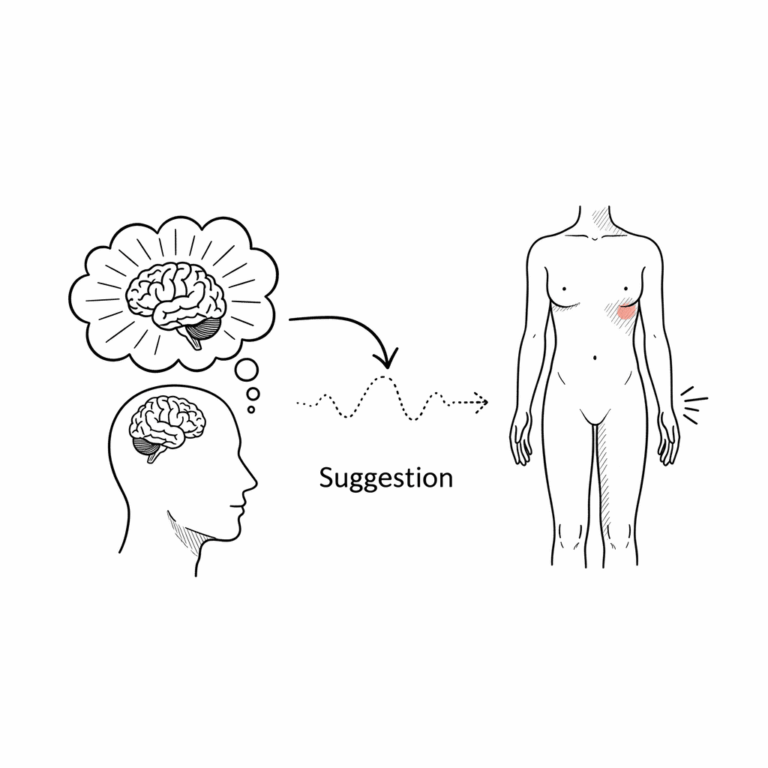
    An amazing story from Dr. M. Bourru highlights the power of suggestion: someone, given a command while under hypnosis—“at four o’clock your nose will bleed”—actually experiences a nosebleed at the designated time; not an illusion, but a real physical effect!
    In another case, someone’s name was lightly scratched onto their arm. With the suggestion, “later your name will appear from this scratch,” a few hours later, the letters actually appeared on the skin, even accompanied by blood. This is not just a stage phenomenon or sensory trick, but proof that the subconscious can control the body at a micro-biological level, far beyond conscious intention.

    Read also : Never Split the Difference by Chris Voss

    This story is a powerful reminder: anything absorbed by the subconscious can become an automatic command for our bodies and our lives.
    However, there are three common mistakes that people almost always make when applying suggestion techniques. All these pitfalls—along with their antidotes and strategies—are discussed in detail in a special session at MentorBuku…


    Why Suggestion Is More Dangerous or Powerful Than Mere Intention

    The main difference between conscious intention (simply wanting) and suggestion (an ingrained command) lies in the power of automatic execution. When suggestion is embedded, the subconscious works without needing to be pushed. That’s why suggestion, if misused, can lead to downfall—such as patterns of self-sabotage, addiction, or chronic doubt. Conversely, when suggestion reinforcement strategies are used correctly, they drive changes that feel almost “effortless” at the surface level of the mind.
    The strategy to eradicate self-sabotage and instill a highly competitive mindset belongs only to those who understand how to manage the power of suggestion.
    All patterns of affirmation sentences, repetition rhythms, and suggestion reinforcement techniques are shared exclusively in the premium guide at MentorBuku…


    The Mystery of Direct Experience from Experts: Between Imagination and Reality

    Many people believe it is impossible to change the real world “just” with the mind. However, modern science and the experiences of classic spiritualists show the interconnectedness between mental imagery and physiological change. In fact, today’s business world adopts this concept as “mindset engineering,” mental programming for great success.
    Between imagination and reality there is always an “invisible” space filled by the workings of the subconscious. Here, the laws of psychology and spirituality work together in synergy. From morning routines, affirmation repetition, to daily visualization—all are only effective if they truly reach the subconscious realm.
    How can you integrate simple techniques into your daily routine so the results last and build a much higher-quality life? The answer is a combination of empirical and spiritual strategies that you can only learn in depth through the authoritative discussion in this book…


    Closing – The Gateway to the Next Level

    Now, you have seen the deepest layers of how visualization and suggestion are not just theories, but the transformative foundation for life change. However, what you have read is only the beginning. The “how”—turning inspiration into habit, avoiding every pitfall of failure, and creating a framework for strategic implementation—all await you at the next level.


    You have just seen the foundation. These concepts are only the tip of the iceberg of what this book offers. How do you apply them step by step, avoid common pitfalls, and integrate them into your strategies? All the answers are inside.

    Sign up and Get Free Access at MentorBuku Now!

  • Debunking the Myth of Laziness: Why ‘Laziness’ Is an Illusion Created by the Era of Productivity. Laziness Does Not Exist by Devon Price

    The Hidden Secret Behind the Stigma of Laziness: What We Don’t Realize About “Laziness”

    Today is an era of productivity worship. We live amidst a constant stream of information, social media, and apps that relentlessly push us to “do more.” Yet beneath this ocean of motivation, one label is most feared: laziness. Seen as the biggest enemy of success, everything seems wrong if we’re not “diligent.” But is laziness actually real—or is it just a social construct masking deeper problems?
    In this article, we’ll explore three fundamental concepts from the book “Laziness Does Not Exist” that will transform how you view effort, productivity, and self-identity. Each concept will help you realize something important, yet intentionally leave you wanting to know “how” to overcome it—and that’s the magic of knowledge you’ll only discover if you keep searching deeper.


    A New Paradigm: Laziness as a Cultural Illusion

    The stigma of being “lazy” often haunts anyone who isn’t constantly active in the productivity sphere. Even successful creative professionals—like Michael Roy, a.k.a. Birdcap, a renowned mural artist—still feel plagued by this judgment. Michael is known for consistently producing monumental artworks in various countries. Yet behind his busy schedule of painting, building client networks, and managing a digital presence, he still feels guilty and considers himself “horrifically lazy.”
    Why does this happen? The social paradigm of success has shifted. It’s no longer enough to just “work hard”; now you always have to “look busy” and “be active everywhere.” Exposure to others’ success on social media intensifies this phenomenon. Many of us fall into the trap of comparing our personal process to the highlight reels of others’ lives. Laziness becomes a mirage that’s always tempting, when in reality what underlies it is a cluster of invisible mental burdens.

    Knowledge Teaser:
    A complete framework to free yourself from the stigma of laziness—and to identify the real roots of mental exhaustion—is explained in a special chapter of the original book. There, you’ll learn to distinguish between feeling “lazy” and the signals of burnout that actually require a pause.

    The Irony of Productivity: Relentless Activity or Mental Health?

    The world of visual arts is a prime example of how relentless the demand to always be active can be. Michael Roy, like thousands of other artists, isn’t just required to keep creating but must also maintain a personal “brand” on digital platforms. This challenge brings about a new burden: the fear of becoming irrelevant if they don’t “show up” on Instagram or Twitter for just a single day.
    Beyond the creative world, learning apps like Duolingo demonstrate a similar “level.” These platforms turn learning into a game, with rewards, scores, and notifications from their iconic green mascot every time you skip a session. If you don’t access the app for a few days, you’re subtly shamed for “not trying hard enough”—even if you might just be tired or need a break.
    This phenomenon reveals one thing: modern society often fails to distinguish between healthy rest and “laziness.” The dark side of the “always on” principle is that the more you meet external expectations, the greater your tendency to blame yourself when you can’t keep up. As a result, mental health is eroded by the endless obsession with “appearing productive”—not truly being productive.

    Knowledge Teaser:
    The four main signs that differentiate the need for rest from a tendency to give up (and why the two are so often confused) are explained with real case studies in a special MentorBuku summary. Included are introductory strategies for managing both internal and external expectations.

    “Gamifying” Life: The Benefits, Destructive Power, and the Illusion of Consistency

    Learning apps like Duolingo leverage gamification—embedding game elements into daily tasks—to boost motivation. This method proves effective in the short term; anyone earning a streak medal surely feels proud. However, there’s a hidden side: the pressure to maintain those numbers can turn into compulsive behavior. Instead of learning out of a desire to grow, users become trapped in a spiral of “not wanting to lose the streak.”
    This phenomenon is widespread: from language learning apps, to social networks, to office reward systems. Digital platforms exploit the basic human need to feel “successful,” often with fake rewards. When someone eventually “fails” to maintain their virtual consistency, feelings of guilt and “laziness” arise. Yet sometimes, “taking a break” is the essential need for keeping the mind fresh.
    Here lies the great illusion: modern systems define consistency as “never stopping,” when in reality, humans need ebb and flow to maintain long-term mental health and productivity.

    Knowledge Teaser:
    A guide to managing “gamification” in daily life—so it doesn’t become a productivity poison—is available in templates and practical action recommendations on MentorBuku. You might be surprised by how many hidden psychological traps exist in modern reward systems!

    Also read: Anatomy and Physiology For Dummies by Maggie Norris, Donna Rae Siegfried


    Progress Comparison: Enjoying the Process, Not Just the Outcome

    One of the biggest traps when discussing “laziness” is comparing your own journey with other people’s achievements. Yet every journey is different. Even successful artists can feel insecure, especially when they judge themselves only by the “amount of visible work.”
    Knowing your own work rhythm is the key—not chasing achievements based on someone else’s timeline. The book “Laziness Does Not Exist” emphasizes that feeling lazy is often a sign that your body and mind need care. Breaking the cycle of social comparison is the first step to stop getting caught in the “laziness” trap that actually hinders your authentic progress.
    Knowledge Teaser:
    Advanced techniques for building self-compassion, as well as steps to break the chain of destructive comparisons, are thoroughly discussed in exclusive MentorBuku materials. How can you prioritize mental balance while still growing? The answer surprises many professionals!

    Also read: The Art of Explanation: How to Communicate with Clarity and Confidence by Ros Atkins


    Conclusion: It’s Time to Redefine “Diligence” and “Laziness”

    Many failures of the modern industry stem from forcing everyone to act as if they’re machines. But psychological reality and the human body are very different. The stigma of laziness only adds to already heavy mental pressures: it blocks the necessary rest and reflection that should also count as productive.
    Remember, there is no universal definition of success or productivity. The key to transformation lies in recognizing your own signals and distinguishing real needs from mere social pressure.


    You’ve just seen the foundation. These concepts are only the tip of the iceberg of what this book offers. How do you apply them step by step, avoid common pitfalls, and integrate them into your own strategy? All those answers are inside.

    Sign up and Get Free Access at MentorBuku Now!

  • Facing Uncertainty: Valuable Lessons from Courage Is Calling by Ryan Holiday and Stephen Hanselman

    In a fast-paced and uncertain world, courage is often considered a rare quality. The book “Courage Is Calling” invites us to explore the meaning of courage and how we can implement it in our daily lives. Through deep and reflective narration, we are encouraged to consider not only heroic acts, but also the small moments that require bravery in facing everyday challenges.

    1. Courage in Facing Obstacles

    One of the main themes raised in this book is the courage to confront obstacles. In this context, the author describes the struggle of Admiral James Stockdale, who endured torture at the Hanoi Hilton. Stockdale was not just a prisoner of war; he was a figure who fought for his fellow inmates, even risking his own life to stop the ongoing torture.

    This brave moment shows that courage often manifests as sacrifice. Stockdale demonstrates the importance of solidarity and collective courage in facing injustice. However, an important question arises: how can we apply this principle in our daily lives?
    Techniques for applying the principle of courage in professional and personal fields are discussed in more detail in the book…

    Read also : Sell or Be Sold by Grant Cardone

    2. Kintsugi: Embracing and Transforming Fragility into Strength

    Another fascinating concept presented in this book is kintsugi, the Japanese art of transforming broken objects into something even more valuable. In kintsugi, damage is not merely repaired, but celebrated and made a part of a new kind of beauty.
    We are invited to reflect: will we find ways to become stronger in places of fragility, or will we fall back into our old patterns that could lead to further destruction? Kintsugi teaches that moments of failure can be the starting point for a greater revival.
    Some practical steps for applying the kintsugi philosophy in daily life will be explained in detail in this book…

    Read also : The Post-Truth Business: How to Rebuild Brand Authenticity in a Distrusting World by Sean Pillot de Chenecey

    3. Focus on the Present: Reducing Fear

    Wilfred Owen, a war poet, wisely emphasized the importance of not letting our imagination take over. When we imagine all the worst possibilities, we miss the opportunity to focus on what we can do right now.
    In this context, the Stoics encourage us to stay focused on the “first impression”—what is right in front of us at this moment, rather than on unknown challenges. Reducing worry and concentrating on concrete things we can control is an important step in building resilience and courage.
    Strategies for practicing mindfulness and being present will be further outlined in our summary…

    Conclusion

    The book “Courage Is Calling” offers deep reflections on courage through real-life stories, philosophy, and art. By understanding that courage can mean fighting for others, accepting our weaknesses, and focusing on the present moment, we can develop greater resilience in facing life’s challenges.
    You have just seen the foundation. These concepts are only the tip of the iceberg of what this book has to offer. How do you apply them step by step, avoid common pitfalls, and integrate them into your strategy? All those answers are inside.

    Sign Up and Get Free Access on MentorBuku Now!

  • Unveiling the 4 Psychological Pillars for True Life Mastery (Why ‘Master Your Emotions’ by Thibaut Meurisse Will Change the Way You See the World)

    Written by
    mentorbuku
    in
    Books & Book Summaries, Mental Health, Self-Development, Psychology, Life Strategies

    Why Do Emotions Always Linger in Our Lives?

    Have you ever felt controlled by your own mood, as if there’s an invisible remote dictating your daily decisions? Every human being, without exception, is emotional first before becoming rational. This is not just a mantra echoed by popular psychologists; modern brain science has proven that emotions often act faster than logic. Yet, why do so many of us feel trapped in cycles of negative emotions and find it hard to discover a way out?

    “Master Your Emotions” by Thibaut Meurisse offers a radical insight: your internal habits—your deeply ingrained emotional identity—are often the root of the problem. This book lays out simple science and modern techniques to escape destructive thought patterns and redesign your quality of life. But are you ready to embrace a philosophy that will challenge the core of your self-perception?

    In this article, we’ll break down four strategic pillars from the book that can flip the dominance of negative emotions into powerful engines of growth. One important note: we won’t reveal the detailed “how-to”—the strategic execution secrets are available exclusively via MentorBuku’s subscription. Curious? Start by understanding the ‘WHAT’ and the ‘WHY’.


    Pillar #1: Unpacking Emotional Identity—Why Have You Been Stuck All This Time?

    Everyone carries an ‘emotional identity’ shaped from childhood—a part of your “self” you’ve believed in for years. This identity is a catalog of roles, expectations, beliefs, and layers of values you’ve accumulated throughout your life, mostly unconsciously. Ironically, that identity often forms an invisible prison: you feel you must react to external events in certain, preset ways.

    Thibaut Meurisse highlights just how powerful these identity biases are in hijacking our modern emotional system. When things don’t go as expected, your old “self”—shaped by past wounds, ego, or limitations—immediately takes over, usually with automatic responses: anger, disappointment, anxiety, or withdrawal. This is the root of repetitive negative cycles that make life feel stagnant or full of drama.

    Recognizing the source of your emotional identity is the first step to freeing yourself from that ‘invisible remote’. But how do you let go and unpack those deeply buried layers of identity? The complete framework—including key techniques to separate ‘who you are’ from ‘what you feel’—is explained in detail in the original book and revealed systematically only on MentorBuku…


    Pillar #2: The Power of Visualization—Replacing Negative Patterns with a New Reality

    Many people think visualization is just cheap motivational advice—simply fantasizing about success without action. However, modern science proves that visualization is more than daydreaming. The brain struggles to distinguish between real experiences and highly detailed mental imagery: this is why elite athletes and world-class CEOs use visualization every day.

    Meurisse proposes a much deeper approach to visualization: instead of merely projecting future wishes, you can train your brain to intensely relive moments of peace, relief, and accomplishment. If undertaken technically and structurally, this process can rewire emotional circuits so the brain is more easily “anchored” to calmness rather than stress or failure.

    Imagine being able to switch off the “negative” light and turn on the “positive projector” at any time. However, the step-by-step secrets to powerful visualization—including the difference between “rote visualization” and “emotional immersion”, as well as the best times to practice—are only available in MentorBuku’s advanced strategies…


    Pillar #3: Managing Intrusive Thoughts—Logic Is Not Always the Answer

    Often, we chase logical solutions for negative emotions: finding “reasons”, giving ourselves advice, or drowning in overthinking. Yet, according to Meurisse, many intrusive thoughts are merely ‘symptoms’ of an under-processed emotional system. Trying to “fix” emotions by thinking can actually prolong the suffering—it’s like adding fuel to a fire.

    What’s rarely realized is that destructive thoughts often arise because your nervous system is already “on edge” from lingering emotional residue. So, the real solution isn’t just about calming the mind, but addressing the root—the physiological and emotional state that gives rise to those thoughts.

    Managing intrusive thoughts requires a training system that combines acceptance, refocusing, and structured mind-body interventions. These revolutionary techniques, complete with “case examples” and daily application checklists, are exclusive material from MentorBuku…


    Pillar #4: Breaking Free from Negative Drama—The Science of Letting Go

    People often feel that “letting go” of negative feelings is a sign of weakness, or even a failure. But Meurisse actually calls letting go the highest skill in emotional maturity. Instead of suppressing, denying, or judging bad emotions, you are invited to consciously embrace and release them—until the energy of those emotions dissipates naturally.

    This is science, not just philosophy. Recent studies show that proper letting go is a transformative catalyst for the immune system, mental health, and even work performance. However, there’s a trap: letting go does not mean giving up, nor is it about ignoring or just “getting used to” suffering.

    Releasing negative emotions is a gradual process—consisting of several phases, from recognizing physical sensations and naming specific emotions to integrating personal meaning. At MentorBuku, we break down the stages of letting go in detailed and practical terms, along with exercises and crucial precautions you MUST understand before trying it in real life…


    Epilogue: The Road to Emotional Freedom Is in Front of You—Are You Ready to Step into the ‘How’?

    The four pillars above merely unveil the mystery of why most people are stuck in cycles of sluggish emotions, prolonged anxiety, and endless drama. In “Master Your Emotions”, Thibaut Meurisse not only exposes the root causes but also provides a blueprint to break free. Still, like a gateway to knowledge, the key to transformation lies in your willingness to put it into practice.

    Are you ready to take this journey further? The techniques, training templates, and in-depth case studies—that set apart those who remain stagnant from those who grow extraordinarily—are available only through a MentorBuku subscription.

    You’ve just seen the foundation. But how do you build the skyscraper? All the strategies, detailed steps, and case studies from this book have been thoroughly reviewed. Don’t just know ‘what’, master the ‘how’ by subscribing to https://mentorbuku.com.