Category: Business & Finance Book Inspiration

  • The Fundamental Secrets of the 4-Hour Workweek: Paradigms, Catalysts, and Fatal Mistakes Almost Everyone Makes

    Introduction: Why the World of Work Must Be Completely Overhauled

    Imagine if you could flip the work paradigm: more free time, a steady flow of income, and freedom from the trap of daily routines. The book “The 4-Hour Workweek” doesn’t just offer a dream; it strips away conventional ways that have imprisoned workers, entrepreneurs, and even visionaries. But why do most people still get stuck in the old model? Because they haven’t truly understood the main catalysts, how the paradox of time and value work together, and—most importantly—the fundamental mistakes almost everyone makes when first attempting this revolutionary strategy.

    This article uncovers three key gems: the “minimal work, maximum results” paradigm, the freedom-inducing architecture of automated businesses, and fatal traps you must beware of. However, we are only peeling back a few layers—not providing step-by-step technical guides. To transform your life, you need to understand the “why” before diving into “how.”


    Minimal Work, Maximum Results Paradigm: The Liberating Paradox

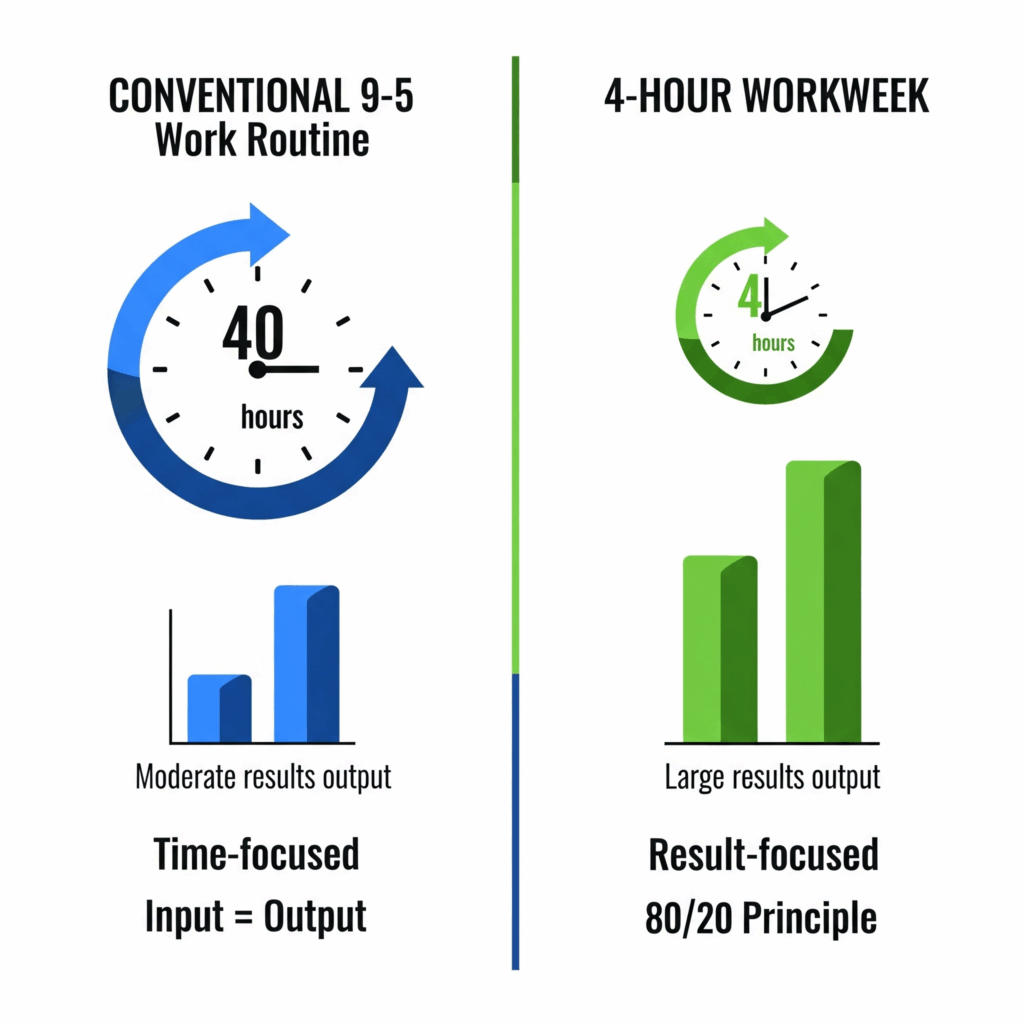
    One of the greatest revolutions from this book is the destruction of the “hard work = big results” mentality. The author dismantles the old myth, replacing it with one key question: “If I could only work 4 hours a week, what would I do differently?”

    This paradigm doesn’t mean you become lazy or neglect your responsibilities. On the contrary, you’re required to be radical in selecting and cutting activities: focus only on the highest-value work. With the 80/20 principle, you are encouraged to identify the 20% of activities that generate 80% of the results. This is the main catalyst that breaks the binds of work hours.

    Moreover, this new paradigm challenges your perception of what you truly want from life: time, mobility, or money? Most workers and business people become absorbed in routines without ever re-evaluating their life goals.

    However, after realizing the importance of cutting work hours and choosing high-value activities, a tempting question arises: “How exactly do you map out your 20% activities? The technique for filtering priority activities used by the author is taught only in the original book…”
    Automated Business Architecture: Turning Ideas into Money While You Sleep

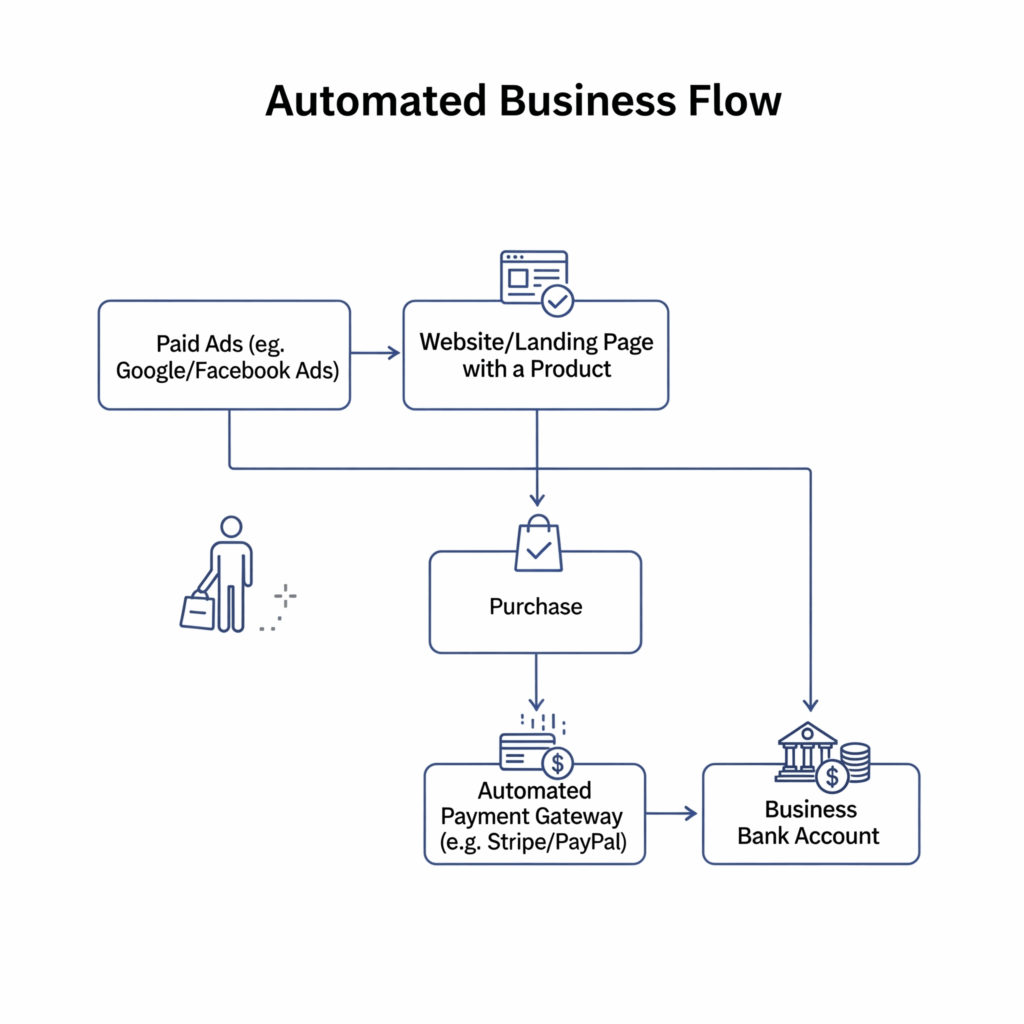
    One of the most compelling sections of this book discusses the architecture of automated business systems. Instead of becoming a “forever worker” in your own company, you’re encouraged to build a business model that requires minimal intervention. There’s a simple diagram that illustrates the flow of money: from advertising (online/offline), to a landing page, to automatic payment processing, and finally—money flows into your account without you being physically or mentally present.

    This concept is the backbone of the “minimal work, maximum results” lifestyle. With automation integration, you can truly become “invisible” behind the scenes—even as your business keeps running and the money keeps coming in.

    This is where the revolution lies: you don’t need to be a tech expert to piece together this architecture. For example, many start with a simple product idea, then run ads and rely on automated payment systems so that orders keep coming in 24/7. However, an important question arises: “The technical steps, tools, and detailed costs required are only explained step-by-step in the architecture diagram and dedicated chapters of this book…”
    Taking Smart Risks: The Zen Story Behind Star Wars

    Freeing yourself from the old system isn’t just about business strategy, but also mental courage. Readers are introduced to real-life stories—one of them being Hans Keeling, who, after taking a huge risk (literally: jumping off a cliff and paragliding in Rio de Janeiro), found a new meaning to life amidst uncertainty.

    Stories like these show that “The 4-Hour Workweek” is more than just a business blueprint. It’s an invitation to courageously face your fears, step outside your comfort zone, and open up new opportunities that previously only existed in dreams. The author often quotes legendary characters like Yoda: “Do, or do not. There is no try.” If you only procrastinate or hesitate, change will never come.

    However, the strategies for resetting personal and mental risk taught in this book are never simply described outside of certain chapters. There are psychological checklists and in-depth questions that can only be found in the original guide.


    Fatal Traps: Common Mistakes Almost Every Beginner Makes

    Tangible failures of this concept usually stem from half-hearted understanding. Many people mistakenly believe that everything can be automated without knowing their priorities, or try to cut work hours without filtering for high-value activities. As a result, they actually become more stressed or lose control over their business and life.

    Another common mistake is the obsession with “work freedom” before having a stable automated income model. In fact, the author warns: streamline your system, truly test the market, and maximize your minimum product or service before completely letting go of daily control.

    Unfortunately, details about the three main mistakes and how to avoid them are discussed through real-life cases in the book. Often, real experiences from seminar participants and failed experiments become the foundation for fail-proof strategies.

    Read also: Young Consumer Behaviour: A Research Companion by Ayantunji Gbadamosi

    Read also: Introducing Economics: A Graphic Guide by David Orrell, Borin van Loon

    Read also: Apartheid and the Making of a Black Psychologist: A Memoir by N. Chabani Manganyi


    Case Studies, Experiments, and Behind-the-Scenes Secrets: What Makes “The 4-Hour Workweek” Different?

    At the heart of this book are dozens of real-life examples—from seminar photo contests, simple experiments to crowdsource marketing content, to stories from families, doctors, and digital entrepreneurs breaking free from traditional work systems. Each case study fuels the reader’s inspiration to dare, fail, and then find their own breakthrough.

    Even reports about how the author “killed the BlackBerry,” broke free from notification chains, and finally “became invisible” in his own business, act as key sparks for shifting mindsets.

    But the most important question always arises: “How do I adapt all these case studies for myself? Templates, worksheets, and communication scripts are covered in depth only in the main source.”


    Conclusion: Why This Book Is More Than Just a Business Guide

    “The 4-Hour Workweek” is an idea catalyst, not just a collection of tricks. It challenges the status quo, teaches you to boldly reject routine, and redesigns life and work based on your deepest desires: freedom and meaning. However, the real secrets are hidden beneath layers of concepts that must be practiced in a structured way—and can only be fully accessed at MentorBuku.


    You’ve just seen the foundation. These concepts are only the tip of the iceberg of what this book has to offer. How do you implement them step by step, avoid common traps, and integrate them into your strategy? All those answers are inside.

    Sign Up and Get Free Access at MentorBuku Now!

  • Powerful Financial Secrets from The Richest Man In Babylon. The Richest Man In Babylon by George S. Clason


    Revealed! 4 Powerful Financial Secrets from The Richest Man In Babylon

    Introduction: Why Babylonian Financial Principles Are Still Relevant

    Have you ever wondered why some people seem to have the “Midas touch” with their finances? Or why some emerge from a financial crisis even stronger? The answer, it turns out, was locked away and passed down thousands of years ago by the ancient citizens of Babylon—the wealthiest city of the ancient world. Through “The Richest Man In Babylon,” we learn that financial success never comes by chance. It is born from wisdom, habits, and systematic strategies that continue to resonate in the modern financial world today [1].
    In a fast-paced world full of distractions, many of us forget the fundamental principles that made Babylon a symbol of prosperity. This book asserts: prosperity is a result of personal wisdom and discipline. Simply put, financial strength is the fruit of discipline and a sharp understanding of money and how it works [1].
    This article will unlock four key principles—from the art of managing money, building personal habits, and strategies for getting out of debt, to how to turn a surplus into a money-making machine. However, you will soon discover that even with the foundation in hand, applying these steps in reality is an art in itself.

    Read also : Emotional Intelligence by Daniel Goleman

    The Art of Money Management: Managing Money with Discipline

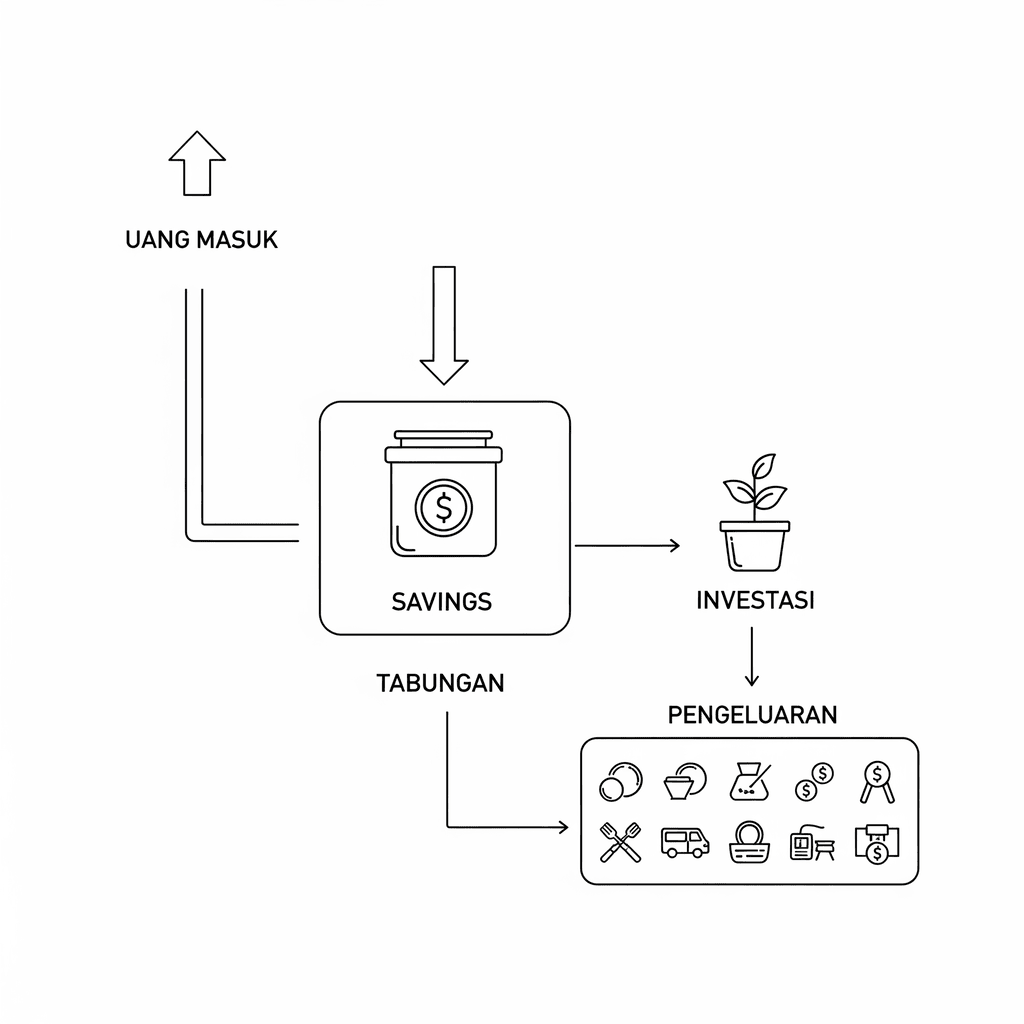
    “The Babylonians became the wealthiest because they understood the value of money and were disciplined in managing it,” according to the book [1]. The principle of money is not just about income, but how you save, spend, and grow it. The Art of Money Management is the first pillar: How one consciously limits spending, invests strategically, and ensures that every coin works hard for its owner.
    The book emphasizes the need to pay yourself first, a revolutionary paradigm even in modern times. By setting aside a portion of every income before anything else, you create the foundational habit of ‘saving first, spending later’. Furthermore, the discipline to resist the temptation of a lavish lifestyle and impulsive consumption is seen as a financial fortress.
    Behind the simplicity of this principle lies a specific framework that ensures your savings are not merely ‘saved’ but truly grow. The complete framework, including allocation tips and automation methods, is detailed step-by-step in MentorBuku’s internal guide and the summary of the original book.

    The complete framework for implementing this art of money management is discussed in 5 specific steps within the book…

    Read also : Effortless by Greg McKeown

    Personal Habits: The Foundation of Financial Strength

    This book highlights a frequently overlooked fact: Habits shape our personal financial ecosystem [1]. Every small action—from tracking expenses and reviewing assets to reinvesting interest—contributes to the accumulation of wealth. However, not all habits are productive. There are mindsets like ‘money is the enemy’ or ‘just getting by is good enough’—two afflictions that erode opportunities like termites.
    The Babylonians emphasized the importance of mental preparation before taking action. They knew, “financial realization is only possible when supported by wise thinking and deep understanding.” This mindset becomes the catalyst for every decision: from conservative investments to more aggressive strategies, it all begins with the habit of daily reflection.
    On the other hand, building positive financial habits is not instantaneous. There are stages, practice techniques, and effective “daily reminders” to ensure the change becomes truly permanent in both your nervous system and your wallet.

    However, there are three common mistakes that often occur when trying to build financial habits, which are dissected in detail in our summary…


    A Structured Plan to Escape the Trap of Debt: Inspired by Dabasir

    This book isn’t just about accumulating money, but also about how one can escape from the most frightening financial abyss: debt [1]. The story of Dabasir from Babylon is monumental—he returned from slavery, wrote down a detailed plan, and then paid off his debts one by one.
    What made Dabasir’s strategy so effective? He didn’t merely intend to pay off his debts. He created a phased payment system, set specific goals, and wrote them down as a “covenant on clay tablets” for personal accountability. Every step was calculated, from the payment amounts to the allocation for basic needs and future goals.
    This similar strategy is now widely adapted into the “Debt Snowball” or “Debt Avalanche” methods in modern financial literature, but its historical roots and psychological depth are unique to Dabasir and the citizens of Babylon.
    Advanced techniques from this concept, including a template for creating an effective debt repayment plan, are part of the exclusive insights we have prepared at MentorBuku…

    Read also : The 7 Habits of Highly Effective People by Stephen R. Covey

    The Secret to Building Sustainable Wealth with a Surplus

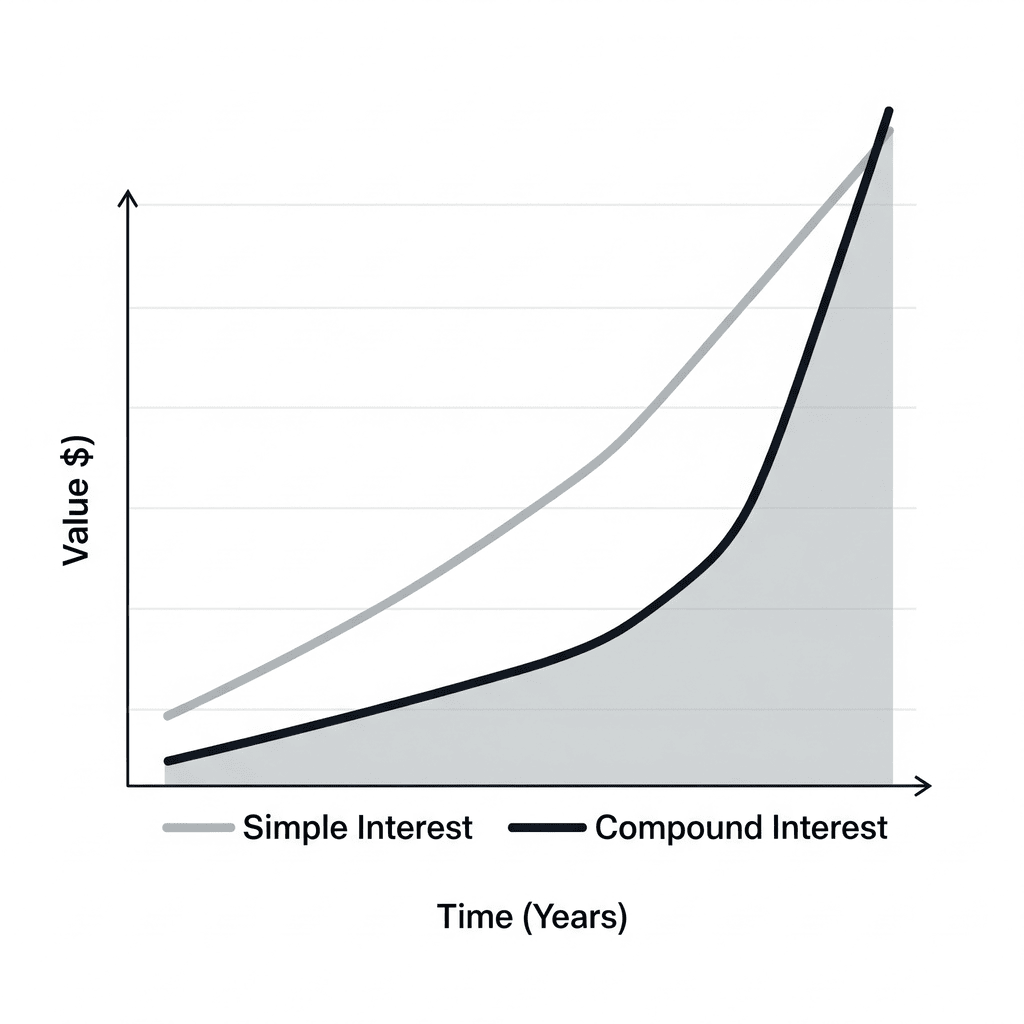
    The Babylonians were not just masters at eliminating debt; they were also creators of a “surplus machine”—extra income that was never idle. The book teaches that idle money is a wasted opportunity [1]. Every surplus doesn’t just sit in savings but is put to work to grow—through investment, business ventures, or being reinvested as capital.
    However, accumulating a surplus requires both psychological and technical processes: resisting subconscious consumption urges, identifying safe investment opportunities, and managing risk. In modern times, their strategies remain relevant—from mutual funds and stocks to small businesses—the key is the “surplus first” behavior.
    How to find surplus opportunities, avoid fraudulent investment traps, or maximize returns—all are dissected in detail in the deeper chapters of the book and at MentorBuku.

    Specific techniques for creating a sustainable surplus, as well as a safe investment checklist, are an exclusive part of MentorBuku’s recommended module…

    Read also : BRS PHYSIOLOGY by Linda S. Costanzo

    Conclusion: A New Chapter in Your Finances Begins Here

    The four financial secrets from The Richest Man In Babylon are not just history, but an actual roadmap. You now understand the power of money management, the urgency of building good habits, the effective strategy for getting out of debt, and the secret of circulating a surplus. These four are the puzzle pieces to financial freedom. However, all of this is just the entry point. “How” to translate each principle into daily routines and decisions? This is where the need for further guidance becomes essential.

    You’ve just seen the foundation. These concepts are just the tip of the iceberg of what this book offers. How to apply them step by step, avoid common pitfalls, and integrate them into your strategy? All those answers are inside.

    Sign Up and Get Free Access at MentorBuku Now!