Mengungkap Esensi Sikap Sukses dan Kebahagiaan Sejati
Setiap orang pasti menginginkan kehidupan yang sukses dan bahagia. Namun, apakah Anda pernah menyadari bahwa sikap sukses lebih dulu lahir sebelum kesuksesan itu sendiri? Buku ini mengajak kita untuk memahami hubungan erat antara sikap mental dan kebahagiaan sejati yang tidak hanya bersifat sesaat, melainkan berkelanjutan.
Sering kali kita mengira bahwa kebahagiaan datang dari kesuksesan atau pencapaian besar. Padahal, kebahagiaan yang langgeng justru berawal dari cara kita memandang dan merespon kehidupan sehari-hari. Sikap positif dan rasa cinta kasih yang tulus mampu menciptakan magnet yang menarik banyak hal baik dalam hidup kita. Sebagaimana seorang tokoh dalam buku ini yang walau memiliki keterbatasan fisik, tetap mampu menebar aura positif dan dicintai orang di sekitarnya.
Konsep ini mengajarkan kita bahwa kesuksesan bukan semata-mata soal hasil akhir, melainkan proses membangun sikap yang membawa kita ke sana. Memahami perbedaan antara kebahagiaan sejati dan kesenangan sesaat menjadi fondasi penting. Kesenangan itu seperti pesta kecil di tengah perjalanan hidup, sedangkan kebahagiaan adalah rasa damai yang menyelimuti jiwa secara berkelanjutan.
Kerangka kerja lengkap untuk menerapkan sikap sukses ini dibahas dalam 5 langkah spesifik di dalam buku yang akan membantu Anda menyiapkan mental menghadap tantangan dan membentuk kebahagiaan yang otentik.
Membangun Kekuatan Keluarga sebagai Pilar Kebahagiaan
Selain sikap individu, buku ini juga menekankan pentingnya keluarga sebagai sumber kebahagiaan dan keamanan emosional. Tak bisa dipungkiri, keluarga menghadirkan tantangan sekaligus peluang yang sangat berharga. Bila dikelola dengan cinta, tanggung jawab, dan tanpa kepentingan pribadi yang egois, keluarga mampu menjadi oase kebahagiaan dan dukungan utama dalam kehidupan.
Dalam konteks ini, pembaca diajak untuk menyadari bahwa hubungan keluarga bukan hanya soal ikatan darah, melainkan tentang bagaimana kita saling mendukung dan tumbuh bersama dalam suasana penuh penghargaan. Beragam permasalahan biasa mungkin muncul, namun dengan sikap yang benar, keluarga dapat menjadi sumber inspirasi keberhasilan dan kebahagiaan sejati.
Namun, ada tiga kesalahan umum yang sering terjadi saat membangun hubungan keluarga yang sehat, yang dibedah tuntas dalam rangkuman kami. Memahami hal tersebut akan membantu Anda terhindar dari jebakan yang kerap merusak keharmonisan.
Kebahagiaan Lewat Sikap Positif: Magnet Kesuksesan Hidup
Bagaimana sikap positif memengaruhi kehidupan sehari-hari? Buku ini menghadirkan kisah nyata yang sangat menginspirasi tentang seseorang yang terus tersenyum walaupun menghadapi keterbatasan fisik. Sikap positif dan ceria ini menjadi magnet yang menarik perhatian dan kasih sayang banyak orang.
Fakta ini menunjukkan bahwa kebahagiaan dan sukses bukan soal bebas dari masalah, tetapi bagaimana kita menghadapinya. Dengan membina sikap positif, kita membangun pondasi kuat untuk meraih apa yang kita inginkan dalam hidup. Ini juga menegaskan bahwa sikap sukses harus dikuasai bahkan sebelum kesuksesan itu datang.
Teknik lanjutan dari sikap positif ini, termasuk template dan contoh praktisnya, adalah bagian dari wawasan eksklusif yang kami siapkan di MentorBuku, yang akan membantu Anda memaksimalkan potensi pribadi dan profesional.
Kesimpulan: Menyatukan Pilar Sikap, Keluarga, dan Kebahagiaan Sejati
Dari ketiga konsep utama ini — sikap sukses, kekuatan keluarga, dan sikap positif — kita bisa melihat sebuah pola yang menunjukkan bahwa kebahagiaan dan kesuksesan hakiki membutuhkan kerja sama harmonis dari dalam diri dan lingkungan terdekat.
Anda baru saja melihat fondasinya. Konsep-konsep ini hanyalah puncak gunung es dari apa yang ditawarkan buku ini. Bagaimana cara menerapkannya langkah demi langkah, menghindari jebakan umum, dan mengintegrasikannya ke dalam strategi Anda? Semua jawaban itu ada di dalam.
Mengapa Kepemimpinan yang Gagal Seringkali Tersebab Salah Fokus
Pernahkah Anda merasa bahwa organisasi dengan sumber daya besar, produk inovatif, dan tim super tetap saja gagal menciptakan dampak yang bertahan lama? Atau mungkin, Anda pernah menemukan pemimpin yang cerdas secara teknis, namun tidak pernah benar-benar menginspirasi? Bila jawabannya ya, Anda tidak sendirian. Banyak perusahaan dan individu menderita penyakit “salah kaprah strategi”, yakni mengejar prosedur dan hasil tanpa memahami akar motivasinya. Lebih buruk lagi, mereka mengabaikan satu pertanyaan fundamental: “Mengapa kita melakukan ini?”
Pertanyaan ini bukan sekadar klise manajemen. Justru, Simon Sinek memaparkan dalam bukunya bahwa kesuksesan abadi dimulai dari paradigma Golden Circle—sebuah pola pikir pendek namun sangat radikal. Di era informasi dan persaingan sengit, menemukan dan menyebarluaskan “WHY” telah menjadi keunggulan yang tidak bisa ditawar lagi.
[Saran Gambar: Diagram lingkaran “WHY-HOW-WHAT” dengan sorotan kuat pada pusat “WHY”.]
Golden Circle—Kerangka Revolusioner yang Sering Diabaikan
Apa Itu Golden Circle?
Golden Circle adalah model tiga lapis yang menempatkan WHY (Alasan/Fundamental), HOW (Proses), dan WHAT (Hasil) sebagai struktur berpikir untuk setiap organisasi dan individu. Menurut Sinek, hampir semua organisasi tahu dengan jelas apa yang mereka lakukan (WHAT). Mereka juga biasanya paham bagaimana cara melakukannya (HOW). Namun, sangat sedikit yang benar-benar memahami, mengartikulasikan, dan hidup berdasarkan WHY mereka.
Golden Circle bukan sekadar urutan konseptual. Ini adalah katalisator perubahan cara berpikir yang mengubah arah, strategi, dan dampak organisasi. Ketika organisasi memulai segala hal dari WHY, mereka secara otomatis menciptakan purpose yang kuat.
Namun, sebagian besar organisasi memulai dari luar ke dalam: mereka menjual produk (WHAT) berdasarkan keunggulan (HOW), tetapi gagal mengomunikasikan alasan sejati mengapa mereka eksis (WHY). Inilah yang membedakan perusahaan visioner seperti Apple dengan deretan kompetitor mereka. Apple, misalnya, memimpin dengan WHY—“Kami menantang status quo dan berpikir berbeda”—baru kemudian menawarkan produknya.
Kerangka kerja lengkap untuk mengaplikasikan Golden Circle ke dalam organisasi, mulai dari identifikasi WHY, mapping HOW, hingga ke WHAT dijabarkan langkah-demi-langkah secara eksklusif di dalam buku…
Kekuatan WHY di Tengah Golden Circle
Mengapa WHY begitu penting? Penjelasan Sinek sangat gamblang: manusia cenderung mengambil keputusan berdasarkan emosi—pada tingkat terdalam, otak kita terhubung untuk merespons WHY. Saat organisasi memulai komunikasi dengan WHY, mereka membangun hubungan emosional yang lebih tulus, bukan sekadar hubungan transaksional. Akibatnya, loyalitas dan motivasi tim meningkat drastis.
Banyak organisasi gagal membangun connection ini karena terlalu fokus pada bagaimana (proses/efisiensi) dan apa (fitur/produk), bukan ‘jiwa’ di baliknya. Inilah sebabnya, pesan yang dimulai dari WHY jauh lebih menggerakkan daripada pesan yang hanya membahas keunggulan produk.
Namun, ada tiga kesalahan umum yang justru sering terjadi ketika orang mencoba menentukan WHY mereka—dan detil cara menghindarinya dibahas tuntas dalam rangkuman kami…
Loyalitas Sejati Dimulai dari WHY
Menginspirasi Alih-Alih Memanipulasi
Loyalitas pelanggan dan anggota tim tidak lahir karena diskon terbesar atau fitur canggih semata. Organisasi yang fokus pada why—purpose mendalam—cenderung memiliki retensi pelanggan yang tinggi dan tim yang lebih resilient. Mengapa demikian? Karena pelanggan terhubung pada nilai, bukan hanya barang.
Sinek menekankan bahwa ada dua cara menjual: menginspirasi atau memanipulasi. Promosi, potongan harga, dan bonus hanyalah cara manipulasi yang berdampak sementara. Sementara inspirasi—yang datang dari WHY—dapat mengikat pelanggan dan karyawan jauh melampaui kontrak atau perjanjian kerja.
Ironisnya, perusahaan yang terobsesi pada HOW (cara-cara baru/efisiensi) sering mengorbankan WHY tanpa sadar. Ini seperti membangun rumah megah di atas fondasi rapuh. Mereka mungkin menang sesaat, namun lambat laun kehilangan rasa percaya dari pelanggan dan tim internal.
Teknik lanjutan untuk menggali, mengomunikasikan, dan mengujicoba WHY sebagai peta perjalanan organisasi ada dalam insight eksklusif MentorBuku…
Studi Kasus Keberhasilan dan Kegagalan
Ambil contoh Apple dan Dell. Apple selalu memulai dari statement WHY (“think different”) dan menarik pelanggan berdasarkan nilai dan keyakinan. Sebaliknya, kompetitor seperti Dell sering terperangkap dalam komunikasi “WHAT”—fokus spesifikasi produk, bukan makna di baliknya. Hasilnya? Apple membangun komunitas setia, Dell sekadar menjadi alternatif.
Temuan lain mengungkapkan, perusahaan dengan WHY yang jelas lebih mudah bertahan di tengah krisis. Tim mereka lebih kompak. Bahkan, mereka menjadikan pelanggan sebagai bagian dari misi, bukan sekadar pembeli.
Studi kasus lengkap tentang perusahaan yang berhasil dan gagal mengeksekusi WHY menjadi value utama dapat Anda temukan secara mendalam di MentorBuku…
Kesalahan Fatal: Terjebak di HOW dan WHAT
Akibat Melupakan WHY dalam Organisasi
Dalam proses pertumbuhan, banyak organisasi justru kehilangan esensi WHY—hanya karena terjebak dalam rutinitas, ekspansi agresif, atau tekanan pasar. Akibatnya, mereka mengerjakan seribu satu hal (WHAT), memperbaiki proses (HOW), namun lupa merefleksikan alasan fundamentalnya.
Dampaknya nyata: kehilangan loyalitas, berkurangnya kreativitas, dan depresi organisasi. Karyawan bekerja sebatas tugas; pelanggan berpindah ke kompetitor tanpa alasan emosional. Organisasi yang kehilangan WHY menjadi mirip zombie—bergerak, tapi tanpa jiwa.
Pentingnya tetap menjaga WHY terasa saat terjadi turbulensi pasar. Organisasi yang mampu menegaskan WHY di setiap lini, bukan hanya selamat—namun tumbuh lebih kuat di tengah krisis.
Langkah-langkah spesifik untuk menjaga WHY tetap hidup hingga ke lini terbawah organisasi, dibahas dalam detail dalam rangkuman kami di MentorBuku…
Cukupkah sekadar mendeklarasikan WHY? Tentu tidak. WHY harus ditransformasikan menjadi keputusan nyata, budaya kerja, proses rekrutmen, hingga komunikasi sehari-hari. Ketika leadership konsisten menegakkan WHY, seluruh tim merasakannya, bahkan menularkannya keluar.
Transformasi organisasi terjadi ketika “why” menjadi katalisator setiap tindakan, bukan sekadar jargon. Sinek mengingatkan, konsistensi WHY akan memperkuat reputasi, meningkatkan produktivitas, dan menurunkan tingkat turn-over karyawan.
Ini menjadi pengingat bahwa revolusi bukan dimulai dari teknologi atau strategi baru, melainkan keberanian menegaskan WHY dan menjadikannya darah organisasi.
Berbagai contoh penerapan teknik dan tool kit transformasi budaya berbasis WHY serta perubahan mindset individu bisa Anda pelajari di eksplorasi lanjutan MentorBuku…
Golden Circle bukan sekadar kerangka berpikir; ia adalah lensa baru dalam memandang kepemimpinan, strategi, dan loyalitas—baik di level individu maupun organisasi. Jika Anda merasakan ada sesuatu yang hilang dalam tim atau dalam perjalanan profesional pribadi, besar kemungkinan akar masalahnya terletak pada WHY yang lemah, samar, atau bahkan hilang sama sekali.
Namun, mengidentifikasi WHY hanyalah permulaan. Cara mengeksekusinya, cara menumbuhkan budaya yang diwarnai WHY, dan teknik menghindari jebakan umum hanya bisa Anda pelajari melalui pengetahuan yang lebih dalam.
Anda baru saja melihat fondasinya. Konsep-konsep ini hanyalah puncak gunung es dari apa yang ditawarkan buku ini. Bagaimana cara menerapkannya langkah demi langkah, menghindari jebakan umum, dan mengintegrasikannya ke dalam strategi Anda? Semua jawaban itu ada di dalam.
Apakah Anda masih percaya bahwa rahasia karier impian adalah dengan “mengikuti passion”? Fakta mengejutkan: banyak profesional hebat justru membangun karier luar biasa bukan dari mengikuti gairah membara, melainkan lewat eksperimen kecil dan mindset strategis. Buku “So Good They Can’t Ignore You” membedah tuntas rahasia ini—dan inilah pintu gerbang menuju pemahaman baru yang akan mengubah cara Anda berkembang secara profesional.
Memecah Mitos Passion: Kenapa Keterampilan Lebih Penting
Banyak orang terobsesi dengan gagasan “passion” sebagai kompas karier. Padahal, para profesional sejati membuktikan, passion hanyalah titik berangkat, bukan jaminan sukses. Jordan Tice, seorang musisi, tahu jelas definisi “good” untuknya: selalu ada teknik baru yang harus dikuasai. Sementara itu, bagi Alex Berger, penulis naskah, tolak ukurnya adalah ketika tulisannya diterima serius oleh talent agency.
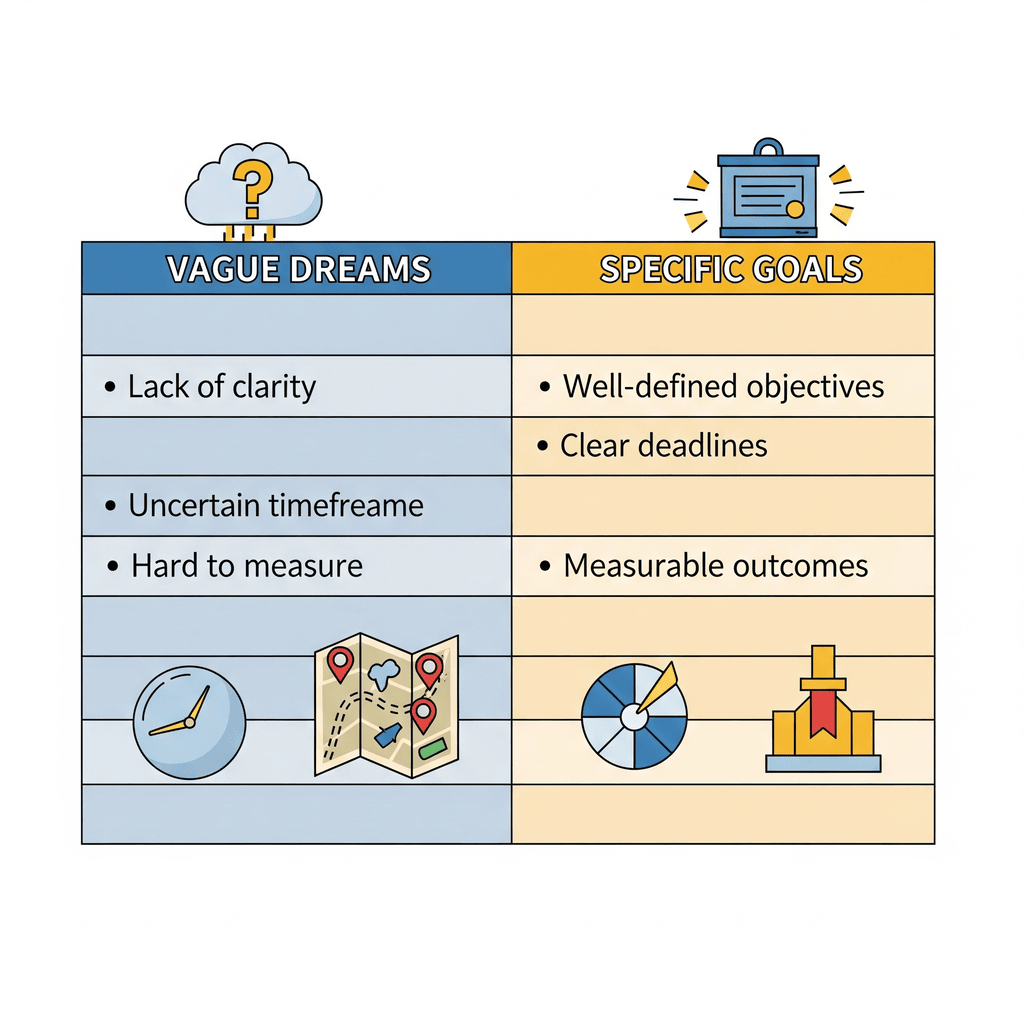
Pada titik inilah, buku “So Good They Can’t Ignore You” mengenalkan good goals atau sasaran konkret sebagai fondasi penting. Anda tidak dibiarkan tenggelam dalam ambiguitas impian besar tanpa arah. Sebaliknya, Anda diajak menciptakan target nyata yang bisa diukur—seperti mengirim naskah ke agency, bukan sekadar “ingin sukses sebagai penulis” [1].
Coba tanyakan pada diri sendiri: Apakah selama ini Anda membangun resolusi atau impian yang kabur, tanpa indikator keberhasilan jelas? Di sinilah perbedaan antara mereka yang terus berkembang dan yang jalan di tempat.
Namun, bagaimana cara menyusun “good goals” yang tepat, dan kapan Anda tahu sudah waktunya menaikkan standar? Kerangka kerja lengkap untuk mengidentifikasi dan memvalidasi good goals diuraikan secara sistematis dalam buku ini…
Eksperimen Kecil, Hasil Besar: Filosofi Little Bets
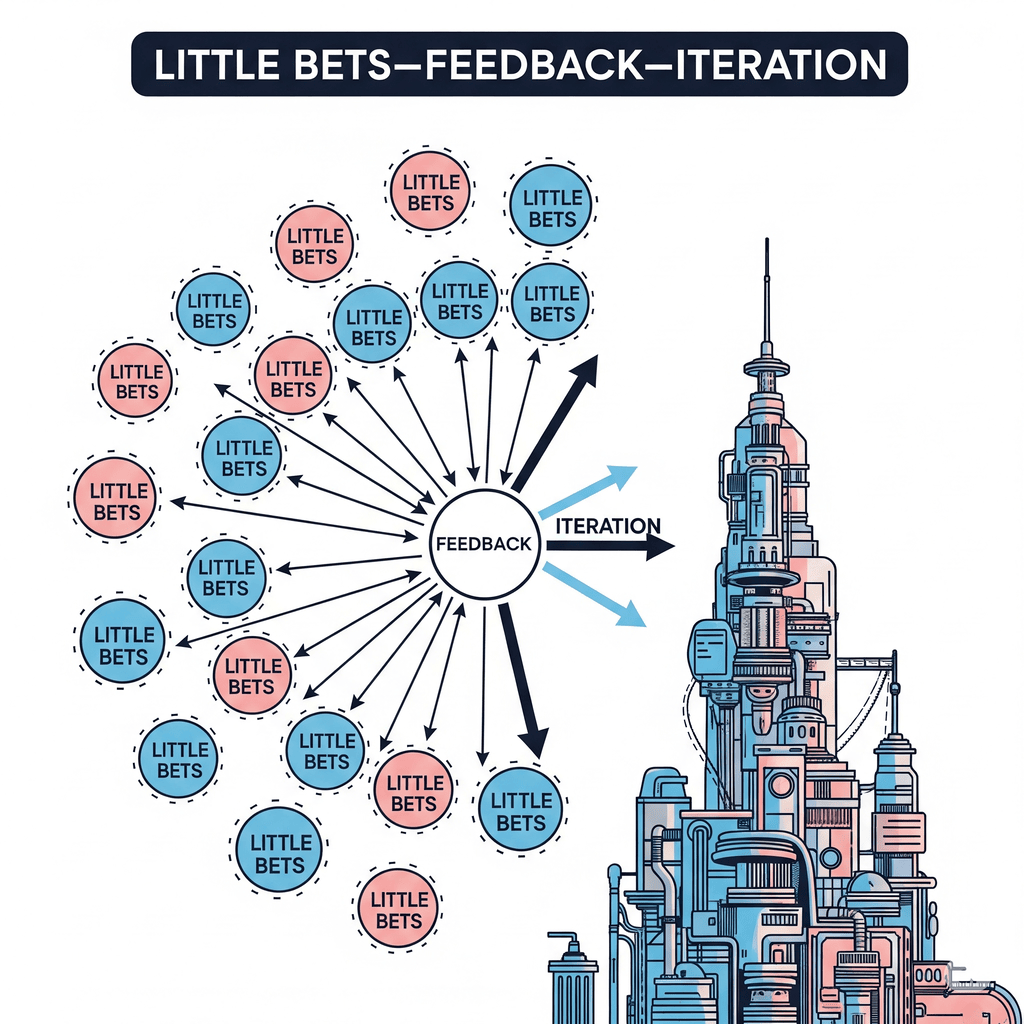
Buku ini memperkenalkan konsep revolusioner: little bets, yaitu eksperimen kecil yang berfungsi sebagai uji coba sebelum mengeksekusi proyek-proyek besar. Giles Bowkett, misalnya, menggunakan prinsip ini saat memadukan seni dan programming untuk menciptakan proyek kinclong, Archaeopteryx.
Seperti seorang ilmuwan, Giles tidak mengambil keputusan dengan gambling atau berharap-luck. Setiap langkah dijajal lewat proyek mini—risiko minim, insight maksimal. Teknik ini bukan sekadar teori; perusahaan inovatif dunia seperti Google pun memakai filosofi serupa: iterasi eksponensial lewat percobaan kecil.
Kenapa little bets menjadi katalisator utama? Karena Anda bisa gagal kecil, belajar cepat, dan memperbesar peluang mengidentifikasi gagasan yang layak diperjuangkan.
Tetapi pertanyaannya: Bagaimana Anda merancang eksperimen kecil dengan benar? Proses identifikasi masalah dan penentuan tingkat resiko seringkali memerlukan framework khusus. Framework spesifik tentang bagaimana merancang, meluncurkan, dan mengevaluasi little bets secara efisien dapat Anda temukan dalam rangkuman lengkap MentorBuku…
Mindset Marketer: Strategi Menilai dan Mempopulerkan Ide
Tidak cukup hanya kreatif—untuk maju, Anda mesti berpikir seperti seorang marketer. Giles Bowkett, contohnya, belajar langsung dari buku-buku pemasaran untuk memahami mengapa beberapa ide “meledak” sedang yang lain lenyap di telan zaman. Pendekatan marketer-oriented ini adalah game changer dalam memilih dan mengeksekusi proyek.
Sikap marketer artinya Anda sistematis: mengidentifikasi target audiens, menganalisis kebutuhan, dan melakukan pattern recognition agar ide Anda relevan dan mendapat traction. Di era digital, skill ini memisahkan antara penggiat dan pionir.
Sekarang, pikirkan: Sudahkah Anda memperlakukan karier dan ide-ide Anda seperti produk yang harus dipasarkan? Apakah Anda tahu menguji validasi ide sebelum menginvestasikan waktu besar?
Strategi menjalankan pendekatan marketer, termasuk cara menguji ide sebelum diluncurkan ke publik, dibedah tahap per tahap dalam insight eksklusif hasil review buku di MentorBuku…
Tidak semua orang sanggup menahan diri dari ambisi besar yang menggebu di awal. Buku ini menyoroti betapa fatalnya mengikuti dorongan untuk segera melakukan lompatan besar—“big, grand actions”—sebelum waktunya. Justru, para tokoh sukses seperti Pardis Sabeti mencontohkan gaya “patience”—kesabaran proaktif untuk mengasah diri secara konsisten sebelum mengejar proyek besar [1].
Mengapa sabar dan konsisten adalah fondasi yang harus dipegang? Karena dunia nyata penuh ujian. Tanpa kecakapan yang sudah teruji, satu kesalahan bisa meruntuhkan reputasi yang baru dibangun.
Namun, bagaimana Anda menetapkan tahapan sabar yang tidak membunuh motivasi, serta mengetahui kapan waktu yang tepat untuk scaling up?
Urutan praktis membangun kesabaran strategis, beserta check-list progresi karier yang sehat, tersedia secara detail dalam ulasan eksklusif MentorBuku…
Konklusi: Jangan Cuma Tahu, Mulai Selami Strateginya!
Akhirnya, kini Anda tahu: Karier hebat bukan soal menyalakan passion, melainkan mengasah keterampilan, bereksperimen kecil, berpikir pemasaran, dan menumbuhkan kesabaran. Inilah formula katalisator yang tak banyak disadari orang.
Namun, “apa” dan “mengapa” barulah permukaannya. Masih ada lapisan “bagaimana” yang mengandung aksi nyata: framework, case study, tip jebakan yang harus dihindari, dan peta jalan implementasi. Semua ini menunggu Anda untuk dieksplorasi lebih dalam.
Anda baru saja melihat fondasinya. Konsep-konsep ini hanyalah puncak gunung es dari apa yang ditawarkan buku ini. Bagaimana cara menerapkannya langkah demi langkah, menghindari jebakan umum, dan mengintegrasikannya ke dalam strategi Anda? Semua jawaban itu ada di dalam.
Mengapa Mentalitas Miliarder Dimulai dari “Menerima”
Pernahkah Anda bertanya, mengapa sebagian orang tampak mudah menarik peluang, uang, dan keberuntungan, sementara sebagian lain serasa selalu berdiri di tempat? Jawabannya sering kali tidak terletak pada strategi bisnis atau peluang investasi, melainkan pada paradigma dasar tentang “penerimaan”.
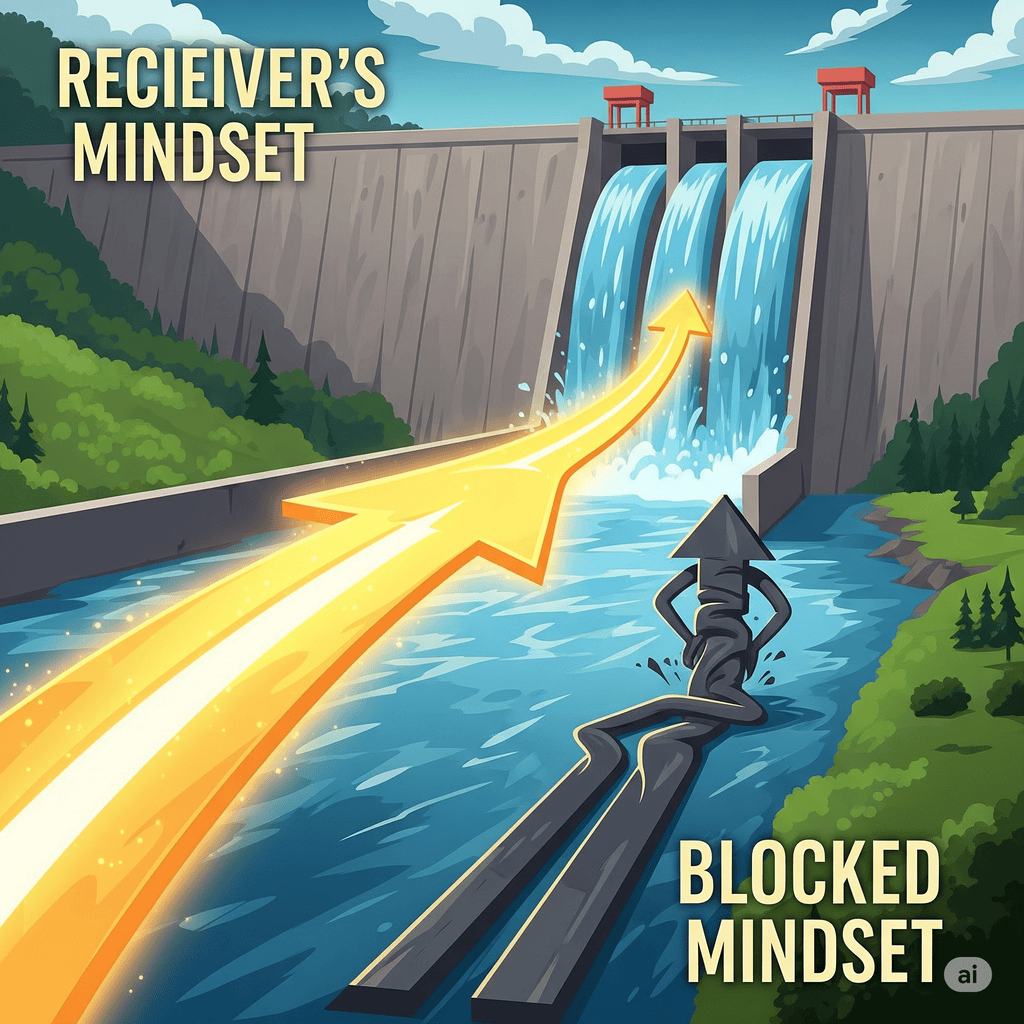
Konsep “receivership”—seni menjadi penerima yang baik—adalah fondasi mentalitas miliarder. Banyak di antara kita, tanpa sadar, memblokir aliran rezeki dengan cara meremehkan hadiah, menolak pujian, bahkan merasa sungkan saat mendapat bonus kecil. Keberuntungan bukan sekadar soal kerja keras; itu juga tentang apakah Anda siap menerima?
Ilmu modern tentang mindset—serta pengalaman para miliarder dunia—membuktikan, hanya dengan menggeser cara berpikir tentang penerimaan, seseorang dapat membuka pintu kekayaan yang selama ini tampak tertutup rapat. Artikel ini membedah tiga pilar utama dari buku “Secrets of the Millionaire Mind” yang bisa mengubah cara Anda melihat rezeki—dan mempersiapkan Anda untuk kebebasan finansial yang otentik.
Menjadi Penerima yang Hebat: Langkah Awal Menuju Kelimpahan
Sulit dipercaya, tetapi mayoritas orang dewasa lebih nyaman memberi daripada menerima. Budaya kita kerap mengajarkan bahwa menerima dengan antusias itu egois. Nyatanya, blok mental ini justru membatasi kekayaan masuk ke hidup kita.
Penulis menyoroti satu pola praktis: Jika seseorang memberi pujian, cukup katakan “terima kasih” tanpa harus membalasnya atau meremehkannya. Dengan melakukan ini, Anda memberi ruang pada diri sendiri untuk “memiliki” penghargaan tersebut, serta membiarkan pemberi menikmati kebahagiaan memberi [1].
Sikap ini ternyata lebih dari sekadar sopan santun. Ini adalah latihan mental yang menegaskan pada alam bawah sadar Anda bahwa Anda layak menerima hal baik, sekecil apa pun bentuknya. Seiring waktu, latihan ini membangun “wadah” di dalam diri—semakin besar kapasitas menerima, semakin besar pula rezeki yang sanggup Anda tampung.
“Practice being an excellent receiver. Each time someone gives you a compliment of any sort, simply say, ‘Thank you.’” [1]
Pancingan Pengetahuan: Kerangka kerja lengkap untuk melatih pola pikir penerimaan ini—termasuk teknik membongkar blok mental dan latihan sehari-hari—dijabarkan rinci dalam 5 langkah di dalam buku aslinya…
Seni Mengucapkan Terima Kasih Tanpa Syarat
Banyak orang merasa wajib membalas pujian dengan pujian sejenis, atau malah merespon dengan “Ah, nggak juga kok, cuma kebetulan saja.” Terdengar rendah hati, namun sebenarnya Anda sedang menolak menerima.
Mengatakan “terima kasih” sederhana adalah latihan mendalam membangun penerimaan tanpa syarat. Ini memperkuat rasa percaya diri serta membuka pintu berkah yang kadang berasal dari jalur tak terduga. Dengan membiasakan respons yang tulus (bukan defensif), Anda secara tidak langsung memberitahu dunia bahwa Anda siap menerima lebih banyak lagi—termasuk dalam bentuk uang dan peluang.
Pancingan Pengetahuan: Ada rahasia psikologis di balik respons “terima kasih” yang sederhana, yang terbukti meningkatkan magnetisme pribadi dan finansial. Rahasia ini—beserta studi kasus dari miliarder dunia—tersimpan eksklusif dalam rangkuman mendalam MentorBuku…
Merayakan Setiap Rezeki: Ritual Kecil yang Mengubah Mindset
Apakah Anda ingat kapan terakhir kali menerima uang, bahkan jumlah paling kecil sekalipun? Seringkali kita menganggap enteng uang kembalian, hadiah, atau rejeki nomplok. Padahal, setiap rupiah adalah simbol kepercayaan dunia kepada Anda sebagai penerima rezeki.
Di buku ini, penulis mendorong satu kebiasaan energik: Setiap kali menerima uang—baik dari jalanan, hadiah, THR, gaji, atau pembayaran apapun—ucapkan atau serukan dengan semangat, “Saya magnet uang. Terima kasih, terima kasih, terima kasih.” [1]
Kenapa harus demikian? Karena ritual kecil ini punya efek domino: Anda melatih otak untuk menghargai dan mensyukuri segala bentuk rezeki, bukannya hanya mengejar nominal besar. Semakin sering Anda bersyukur, semakin kuat medan magnet rezeki yang Anda bangun.
Selain itu, ritual ini menanamkan makna di balik setiap pemasukan. Bukan soal besar-kecilnya, namun tentang kesadaran menerima yang semakin menebalkan “mindset kelimpahan” dalam hidup Anda.
Pancingan Pengetahuan: Teknik lanjutan untuk memperbesar efek ritual syukur ini—termasuk cara menghindari sabotase potensi dari pikiran sendiri—adalah bagian dari wawasan eksklusif yang kami siapkan di MentorBuku…
Mengangkat Energi Syukur dalam Kehidupan Sehari-Hari
Beberapa orang mungkin berpikir, “Apa benar mengucap terima kasih pada uang receh bisa berpengaruh?” Justru, di situlah letak rahasianya. Syukur yang aktif dan sadar, berulang-ulang, menembus daya batin hingga membuat otak Anda memprogram ulang relasi terhadap uang.
Penelitian membuktikan, perilaku ini meningkatkan mood serta menghasilkan pola pengambilan keputusan finansial yang lebih sehat. Lebih dari itu, orang yang terbiasa melihat nilai di balik setiap karunia cenderung lebih tahan uji, kreatif, dan cepat bangkit dari kegagalan finansial.
Pancingan Pengetahuan: Namun, ada tiga kesalahan umum yang sering terjadi saat menjalankan kebiasaan syukur ini. Semua jebakan dan cara menghindarinya diulas tuntas dalam ringkasan premium MentorBuku…
Memberkahi Kesuksesan Orang Lain: Kunci Mempercepat Kemakmuran
Satu lagi pilar mentalitas miliarder: belajar memberkahi keberlimpahan dan kesuksesan yang Anda lihat pada orang lain. Seringkali, “mental blok” keuangan berasal dari rasa iri, persaingan, atau bahkan cibiran terhadap mereka yang sudah sukses lebih dulu. Pola pikir ini sebetulnya justru menyabotase potensi diri.
Sebaliknya, mengirimkan doa baik, ucapan selamat, atau bahkan rasa kagum tulus pada orang yang berhasil akan menempatkan Anda dalam gelombang energi yang sama: energi kelimpahan. Penulis menyarankan, “Whatever you see that you like, bless it, and bless the owners or the people involved.” [1]
Alih-alih terjebak pada perasaan tidak adil atau iri, ubah fokus Anda menjadi “Saya memberkati kesuksesan orang itu; semoga saya mendapat inspirasi dan bagian saya sendiri.” Latihan sederhana ini memperkecil sekat antara Anda dan impian finansial. Secara psikologis, ini membuang racun dalam hati dan mengisi ruang dengan inspirasi baru.
Pancingan Pengetahuan: Transformasi iri hati menjadi katalis penyemangat diri—beserta latihan membalik mindset persaingan menjadi kolaborasi—lengkap dengan contoh kasus dari pengusaha top, tersedia eksklusif di MentorBuku…
Definisi sukses menurut para miliarder bukan soal saldo rekening, melainkan tentang kualitas hubungan dengan rezeki dan kehidupan. Saat Anda memberkati orang lain, secara tidak sadar, Anda menyiapkan jalan bagi datangnya keberlimpahan ke hidup Anda sendiri. Tidak ada kontradiksi antara mengharapkan kebaikan untuk dirinya sendiri serta membagikannya ke orang lain—justru di situlah kekuatan terbesar mentalitas kelimpahan.
Pancingan Pengetahuan: Teknik membangun “jaringan syukur”—di mana Anda tidak sekadar berharap diri sukses, namun benar-benar menjadi saluran kebaikan bagi komunitas—dibedah secara praktis di MentorBuku…
Mengapa Semua Ini Tidak Pernah Diajarkan di Sekolah
Coba renungkan sebentar: Sepanjang masa sekolah, seberapa sering Anda diajari cara berpikir tentang uang dan kekayaan secara mental-spiritual? Hampir tidak pernah. Sistem pendidikan umum cenderung menekankan aspek mekanik mencari uang, bukan fundamental psikologis menerimanya. Akibatnya, kita sanggup bekerja keras sampai mati-matian, namun tetap kerap mengalami rasa “tidak cukup”.
Paradigma “receivership”—yaitu layak menerima, merayakan tiap berkat, serta memberkahi keberhasilan orang lain—adalah kunci yang jarang dibagikan. Akses pada rahasia mentalitas ini adalah keunggulan utama yang membedakan kelas miliarder dari orang biasa.
Jika Anda membaca sampai bagian ini, besar kemungkinan ada sebagian dari diri Anda yang mulai “klik”—bahwa kekayaan dimulai di dalam kepala, sebelum muncul di rekening. Mulailah perjalanan perubahan ini hari ini sebelum dunia berubah lebih cepat dari kemampuan beradaptasi Anda.
Anda baru saja melihat fondasinya. Konsep-konsep ini hanyalah puncak gunung es dari apa yang ditawarkan buku ini. Bagaimana cara menerapkannya langkah demi langkah, menghindari jebakan umum, dan mengintegrasikannya ke dalam strategi Anda? Semua jawaban itu ada di dalam.
Written by mentorbuku in Leadership & Management, Self Development, Business Book Summaries, Business Strategy
Why “The Right People” Are the Foundation of Everything
Imagine an orchestra: even with the best sheet music in the world, without the right musicians, harmony will never be achieved. Ray Dalio—in his magnum opus, “Principles: Life and Work”—lays out a revolutionary perspective: every achievement and organizational growth starts with the ability to “get the right people.” However, Dalio doesn’t just talk about recruitment or work culture; he unveils the deepest foundation of an effective work system that channels energy, innovation, and resilience.
This article is a “gateway” to grasping WHAT—and WHY—these principles are game changers. But if you want to master the practical methods and concrete steps, you’ll want to dive deeper. Check out and feel the sensation of this “strategic teaser” primed to propel you towards deeper insights from the book.
“Get the People Right”: The Art of Selecting and Positioning People in the Organization
Dalio emphasizes that the foundation of a world-class organization is not technology, capital, or brilliant strategy, but “the right people in the right roles.” “To get the people right…” is not just an HR buzzword, but both a survival strategy and a growth engine. In the book, Dalio lays out two crucial dimensions: selection and placement of individuals.
Why is this important? Because the biggest organizational failures aren’t in systems or SOPs, but in the quality and fit of the people. The right people are able to make critical decisions, execute with precision, and collaborate without ego-driven conflict.
But “who and where” should they be? Dalio offers principles distinguishing performers, executors, visionary leaders, and problem-solvers. There’s an art to reading talent as well as intuition in placing them within a supportive ecosystem.
The complete framework for applying the “get the people right” principle—including selection methods and internal rotation—is broken down into practical steps in the book and MentorBuku’s premium summaries…
Goals, Incentives, and the Organizational Machine—How to Build “Machine Thinking”
Dalio compares a company to a “machine.” Every machine must have a goal (main objective), incentives (motivation fuel), and a reliable feedback system. Yet, too many organizations get stuck in operational routines without a clear direction.
Why is this revolutionary? Because many organizations fail to distinguish between activity (just being busy) and significant progress. “Building an organization around goals” means that every team, every individual, and even the smallest processes are aimed at measurable outcomes. There’s an emphasis on goal clarity, understanding the path to outcome, as well as incentives so that every role feels significant.
Dalio warns of the dangers of forcing group incentives without understanding individual motivations. He explains this philosophy: “Big goals aren’t achieved by soldiers who just obey orders, but by the right players with clear motivation and paths.”
The concrete team-machine and goal-incentive alignment framework can only be found in the in-depth discussions of this book and MentorBuku’s exclusive toolset…
The Principle of Productive Failure—“Mistakes are Part of Success”
In Dalio’s world, failure is data. He turns the old paradigm upside down: “Mistakes are part of the process.” And it’s not just lip service. Dalio explains that mistakes are vital input that keep the organization’s machine growing, not stuck in fearful stagnation.
Why should we adopt this principle? Because a culture of punishing failure only breeds organizations filled with pretense and fear. In his book, Dalio highlights the importance of systems that ‘celebrate’ and dissect failures—not to find scapegoats, but as the foundation of a learning machine.
The courage to fail becomes a survival strategy amid uncertainty. Organizations and individuals who embrace failure as part of the process will be able to adapt, improve, and grow exponentially.
However, there are three common mistakes in applying this principle that often prevent organizations from turning errors into growth drivers—all of which are unpacked with case studies and action checklists in MentorBuku’s summaries…
5-Step Process—Dalio’s Formula for Making Giant Leaps
One of Dalio’s most spectacular contributions is the “5-Step Process”—a systematic path for problem solving and real-life project management, which he has repeatedly applied at Bridgewater Associates as well as in personal decision-making. This process is not just a logical flow, but the art of recognizing experience, expectations, and continuous adjustment.
Why is this five-step formula considered a key to success? Because it breaks up stagnation; instead of letting problems pile up, each step builds discipline: setting goals, identifying problems, diagnosing root causes, designing solutions, and executing without compromise.
Often, executives only have a cursory understanding of the steps—but effective application of this process is its own art. Dalio details common pitfalls and implementation tricks that determine whether a change process produces breakthroughs or just keeps one spinning in place.
Advanced techniques from the “5-Step Process”—including templates, real-life examples, and full case studies—are part of the exclusive insights we’ve distilled at MentorBuku…
Conclusion—Piecing Together the Big Picture
What’s the common thread in all of Dalio’s principles? The best systems are built by the best people, with clear goals, targeted incentives, and the courage to face failure as a key strength. But the next step, “how” to implement each principle—from managing teams, building systems, to cultivating a culture of learning from failure—is the hidden map embedded in the book and MentorBuku’s premium summaries.
Insight is an asset. To stop here is to leave your most valuable asset on the table. Invest in your personal growth—this is the highest ROI investment you can ever make. Subscribe to MentorBuku today and change the way you learn forever. Click to join: https://mentorbuku.com
Written by mentorbuku in Social Skills, Self-Development, Business Psychology, Professional Soft Skills
Uncovering the Gap Between Logic and Social Reality Analytical thinkers are known as outstanding problem-solvers, experts at unraveling tangled data, and adept at building solid, logical arguments. Ironically, however, amidst the tidal wave of information and in team-based workplaces, logical thinking alone is no longer enough to ensure personal and professional success. There’s a major “blindspot”: social skills.
Why do so many intelligent professionals find themselves caught up in conflict, friction during meetings, or feel disconnected from their teams? Is it true that logical abilities can actually backfire when navigating a social landscape full of emotional nuance and competing interests? If you’ve ever felt like an “alien” in a meeting or struggled to influence others without triggering defensiveness—you’re not alone.
This article serves as your gateway to understanding why social skills are key leverage for analytical thinkers, and beyond that, introduces three rarely-taught yet crucial pillars of social interaction skills. However, in the spirit of the “Strategic Teaser” philosophy, you’ll only find the “why” and the “what” here. For a concrete framework for implementation, there’s one critical step you’ll have to take at the end of this article.
First Pillar: Leaving the Complaint Zone—Adopting a Solution-Oriented Mindset
One of the most common traps for analytical thinkers is the tendency to focus on problems—analyze, critique, identify gaps, and then stop there. This often results in “spreading complaints” in the workplace. In fact, organizational behavior research shows that energy focused on complaints is not only unproductive but also lowers team morale and diminishes your personal influence.
However, the book “People Skills for Analytical Thinkers” offers a new perspective: Choose the harder—but more beneficial—path, which is to shift the habit of complaining into an active drive to improve situations. How is this done? It starts by activating the “rational brain”—also known as the “elephant rider,” capable of channeling emotional impulses toward constructive change. Is it easy? Of course not. But this is the hallmark of professional maturity and advanced social skills.
The full framework for transforming from complainer to problem solver is thoroughly dissected in this book, complete with case studies and reflective exercises. If you want specific guidance on how to resist the urge to complain and turn it into solution initiatives, the entire blueprint is available at MentorBuku, waiting for you to delve deeper…
Second Pillar: Managing Emotional Dynamics—“Riding the Elephant Within”
This illustration will feel familiar: you’ve crafted a logical argument, prepared solid data, but conflicts still arise in meetings. Why does this happen? Because in social interactions, emotions play the role of a large “elephant” not easily controlled by rational explanations alone. The book uses the “elephant and rider” metaphor: where the emotional brain often dominates, and the rider (the rational mind) must struggle to steer the “elephant.”
For analytical thinkers, understanding and managing this dynamic is at the core of advanced social skills. Emotions shouldn’t be seen as the enemy of logic but need to be leveraged to support your mission, goals, and long-term relationships. How do you recognize when the “elephant” is getting out of control, and what techniques calm it—both in yourself and others? The book delves into five main techniques and three common pitfalls that almost always appear when managing emotional interactions. If you want to turn conflict into collaboration and have your logic accepted rather than emotionally rejected, the key steps are available exclusively in MentorBuku’s summaries.
Advanced strategies, including internal dialogue and “reframing” techniques, are ready to be explored if you truly want to master the art of riding the “elephant” of communication…
Third Pillar: Honest Communication Without Damaging Relationships—Balancing Transparency and Diplomacy
One classic mistake analytical thinkers make is equating honesty with “brutal directness.” In reality, in dynamic environments, being too blunt can trigger defensiveness and damage trust. On the other hand, being too “subtle” can weaken your message and cause confusion.
The book “People Skills for Analytical Thinkers” emphasizes the importance of “constructively honest” communication—that is, having the courage to deliver tough messages while maintaining positive expectations and healthy professional relationships. You’ll be guided to explore a communication model that places transparency and empathy on opposite sides of the scale. Communication here is not just about delivering facts, but about effecting attitude change without causing resistance.
Precisely how do you construct honest communication that isn’t destructive? How do you differentiate between honest, confrontational, and manipulative communication? All the step-by-step illustrations, exercises, and real dialogues have been compiled into a practical guide in MentorBuku’s exclusive materials.
Three common mistakes that hinder open communication, as well as seven ready-to-use framework sentences for the workplace, are part of a secret toolkit you’ll only access once you become a member.
Fourth Pillar: Negotiating Boundaries Effectively—Preserving Your Core Energy
Often, analytical thinkers feel overwhelmed because they can’t say “no,” or get dragged into conflict for failing to set clear boundaries. This is the main source of chronic stress, overwork, and burnout in high-pressure professional environments. Assertiveness in social interaction—the ability to set boundaries clearly and gracefully—is a life skill that’s sorely needed.
How do you set boundaries without offending? What’s the “mini-negotiation” formula that earns respect for your boundaries, rather than provoking questions or pushback? The book explores several reliable strategies, from mapping personal energy zones to practicing micro-negotiations during meetings and projects.
However, the art of boundary negotiation is more than just saying “no.” There is a language pattern, timing, and response technique that you’ll only master by thoroughly studying the examples. Negotiation templates, conversation scripts, and personal reflection exercises to build your assertiveness muscle can only be mastered after exploring the full content on MentorBuku.
The most critical part of this process is included in the self-evaluation checklist and case simulations never taught in conventional training…
Conclusion: Daring to Go Beyond “Just” Smart, Toward Deep-Rooted Influence
This article may well shake up your old beliefs: that logical intelligence alone is insufficient to navigate the modern workplace. The key pillars of social skills—ceasing to complain, managing emotions, honest communication, and boundary negotiation—are absolutely vital assets for analytical thinkers. But don’t be mistaken: knowing the “what” and the “why” is only the beginning.
Consider the following analogy: You now have a treasure map, but only the overview. The real treasure—the action framework, transformative exercises, practical scripts, and case studies—is neatly stored behind a single gate of knowledge. Don’t be content to remain on the brink of discovery. It’s time to take a step further, and turn your social skills into your winning weapon.
This article is just the spark. To ignite the fire of your career or business transformation, you need the full fuel. Get unlimited access to hundreds of the world’s best book summaries you can consume in minutes. Start your journey by subscribing now at https://mentorbuku.com.
Written by mentorbuku in Books & Book Summaries, Mental Health, Self-Development, Psychology, Life Strategies
Why Do Emotions Always Linger in Our Lives?
Have you ever felt controlled by your own mood, as if there’s an invisible remote dictating your daily decisions? Every human being, without exception, is emotional first before becoming rational. This is not just a mantra echoed by popular psychologists; modern brain science has proven that emotions often act faster than logic. Yet, why do so many of us feel trapped in cycles of negative emotions and find it hard to discover a way out?
“Master Your Emotions” by Thibaut Meurisse offers a radical insight: your internal habits—your deeply ingrained emotional identity—are often the root of the problem. This book lays out simple science and modern techniques to escape destructive thought patterns and redesign your quality of life. But are you ready to embrace a philosophy that will challenge the core of your self-perception?
In this article, we’ll break down four strategic pillars from the book that can flip the dominance of negative emotions into powerful engines of growth. One important note: we won’t reveal the detailed “how-to”—the strategic execution secrets are available exclusively via MentorBuku’s subscription. Curious? Start by understanding the ‘WHAT’ and the ‘WHY’.
Pillar #1: Unpacking Emotional Identity—Why Have You Been Stuck All This Time?
Everyone carries an ‘emotional identity’ shaped from childhood—a part of your “self” you’ve believed in for years. This identity is a catalog of roles, expectations, beliefs, and layers of values you’ve accumulated throughout your life, mostly unconsciously. Ironically, that identity often forms an invisible prison: you feel you must react to external events in certain, preset ways.
Thibaut Meurisse highlights just how powerful these identity biases are in hijacking our modern emotional system. When things don’t go as expected, your old “self”—shaped by past wounds, ego, or limitations—immediately takes over, usually with automatic responses: anger, disappointment, anxiety, or withdrawal. This is the root of repetitive negative cycles that make life feel stagnant or full of drama.
Recognizing the source of your emotional identity is the first step to freeing yourself from that ‘invisible remote’. But how do you let go and unpack those deeply buried layers of identity? The complete framework—including key techniques to separate ‘who you are’ from ‘what you feel’—is explained in detail in the original book and revealed systematically only on MentorBuku…
Pillar #2: The Power of Visualization—Replacing Negative Patterns with a New Reality
Many people think visualization is just cheap motivational advice—simply fantasizing about success without action. However, modern science proves that visualization is more than daydreaming. The brain struggles to distinguish between real experiences and highly detailed mental imagery: this is why elite athletes and world-class CEOs use visualization every day.
Meurisse proposes a much deeper approach to visualization: instead of merely projecting future wishes, you can train your brain to intensely relive moments of peace, relief, and accomplishment. If undertaken technically and structurally, this process can rewire emotional circuits so the brain is more easily “anchored” to calmness rather than stress or failure.
Imagine being able to switch off the “negative” light and turn on the “positive projector” at any time. However, the step-by-step secrets to powerful visualization—including the difference between “rote visualization” and “emotional immersion”, as well as the best times to practice—are only available in MentorBuku’s advanced strategies…
Pillar #3: Managing Intrusive Thoughts—Logic Is Not Always the Answer
Often, we chase logical solutions for negative emotions: finding “reasons”, giving ourselves advice, or drowning in overthinking. Yet, according to Meurisse, many intrusive thoughts are merely ‘symptoms’ of an under-processed emotional system. Trying to “fix” emotions by thinking can actually prolong the suffering—it’s like adding fuel to a fire.
What’s rarely realized is that destructive thoughts often arise because your nervous system is already “on edge” from lingering emotional residue. So, the real solution isn’t just about calming the mind, but addressing the root—the physiological and emotional state that gives rise to those thoughts.
Managing intrusive thoughts requires a training system that combines acceptance, refocusing, and structured mind-body interventions. These revolutionary techniques, complete with “case examples” and daily application checklists, are exclusive material from MentorBuku…
Pillar #4: Breaking Free from Negative Drama—The Science of Letting Go
People often feel that “letting go” of negative feelings is a sign of weakness, or even a failure. But Meurisse actually calls letting go the highest skill in emotional maturity. Instead of suppressing, denying, or judging bad emotions, you are invited to consciously embrace and release them—until the energy of those emotions dissipates naturally.
This is science, not just philosophy. Recent studies show that proper letting go is a transformative catalyst for the immune system, mental health, and even work performance. However, there’s a trap: letting go does not mean giving up, nor is it about ignoring or just “getting used to” suffering.
Releasing negative emotions is a gradual process—consisting of several phases, from recognizing physical sensations and naming specific emotions to integrating personal meaning. At MentorBuku, we break down the stages of letting go in detailed and practical terms, along with exercises and crucial precautions you MUST understand before trying it in real life…
Epilogue: The Road to Emotional Freedom Is in Front of You—Are You Ready to Step into the ‘How’?
The four pillars above merely unveil the mystery of why most people are stuck in cycles of sluggish emotions, prolonged anxiety, and endless drama. In “Master Your Emotions”, Thibaut Meurisse not only exposes the root causes but also provides a blueprint to break free. Still, like a gateway to knowledge, the key to transformation lies in your willingness to put it into practice.
Are you ready to take this journey further? The techniques, training templates, and in-depth case studies—that set apart those who remain stagnant from those who grow extraordinarily—are available only through a MentorBuku subscription.
You’ve just seen the foundation. But how do you build the skyscraper? All the strategies, detailed steps, and case studies from this book have been thoroughly reviewed. Don’t just know ‘what’, master the ‘how’ by subscribing to https://mentorbuku.com.
Written by mentorbuku in Love & Sexuality, Human Evolution & Science, Relationship Psychology, Life Strategies
Introduction: The Magical Power of the Science of Love, Sex, and Desire
Every human being has at some point been caught in the turbulence of love, the driving force of desire, and explosive, sometimes irrational jealousy. We tend to believe that modern life makes us special, but is that really true? The book It’s Not You, It’s Biology strips away cultural myths surrounding love, sexuality, and modern relationships. Yet instead of offering easy answers, it introduces three evolutionary dramas that continue to shape our social and personal lives: the battle between free love and possessiveness, the mystery of jealousy, and the irony of sexual identity. Let’s break down these three key concepts—but beware: the deeper you understand the “what” and the “why,” the more you’ll be tempted to explore the strategies of “how,” which can only be found through further exploration.
When Free Love Sparks War: Behind the Fantasy of Non-Monogamy
Once, the idea of free love was seen as the pinnacle of progressive enlightenment. Sex without exclusivity, love without boundaries, and a dream of a society liberated from possessiveness. However, as revealed by the author—a self-proclaimed former “free-and-easy California guy”—such idealism ultimately clashes with the darker side of human instincts: the emergence of conflict, even ‘wars’ within personal relationships.
The author himself practiced open relationships: having a primary partner while being free to visit a “harem.” At first, his partner accepted this, even enjoying the intimate stories shared. But when an emotional bond began to form with another person, everything exploded. Feelings of ownership, jealousy, and expressions of anger became inevitable. Isn’t it true that what is completely free often falls before our deepest human longing to “possess,” not just to “be with”?
From an evolutionary perspective, humans’ obsession with exclusivity and betrayal is not merely a product of puritan culture; it is rooted in survival strategies of our species. The tendency to form bonds, and the surge of aggression when feeling “betrayed,” are genetic legacies from our social mammal ancestors who risked everything for the survival of their bloodline.
Interestingly, a comprehensive framework for understanding the paradox between the desire for free love and possessive tendencies is thoroughly unpacked in evolutionary episodes within the original book—with real examples from other species and human group dynamics over millennia. However, practical steps for managing the struggle between freedom and commitment, and strategies to prevent relationship collapse due to unclear boundaries, can only be found in MentorBuku’s full summary…
Jealousy: The Biological Weapon That Comes With Love
In the chapter “Bimbos and Cuckolds: What Makes Us Jealous,” the author explains that jealousy is not a moral failing, but rather an “evolutionary weapon.” Jealousy arises from genetic conditions honed over millions of years to ensure the continuation of the bloodline: men seek certainty of paternity, women seek the commitment of resources from their partner.
This phenomenon even transcends species: in many social mammals, “wars” between individuals are sparked by the competition to win and retain mates. Human jealousy—ranging from mild discomfort in a WhatsApp group to blind rage over betrayal—reflects ancient drives that influence our modern behaviors.
But why are some people swept up by jealousy, while others appear more “relaxed”? Is this merely a result of upbringing, or are there certain genetic variants that are more responsive to partner threats? Can jealousy be reconciled without destroying the fabric of love?
Scientific details about gender differences, individual variation, and three common mistakes in handling jealousy are explored in depth in the source book. If you’re curious about concrete steps to recognize, manage, and even harness jealousy in your marriage or career, a complete strategic roadmap awaits you in MentorBuku…
Sexuality, Identity, and Stereotypes: Why Reality Isn’t Black-and-White
We live in a world obsessed with labels—strong men, gentle women, straight, gay, or otherwise. Yet this book offers a surprising biological exploration: both in terms of gender and sexuality, the spectrum is far more complex than the social labels assigned to us.
In the chapters “Two Genes for Two Types of Gay Guys” and “Why Males and Females Don’t Actually Exist,” it’s revealed that distinctions around gender and orientation are much more fluid. Genetics, environment, and evolution create variations far beyond just ‘masculine’ and ‘feminine.’ Even in anatomy: every body feature, from hip shape to sexual preference, has biological roots and a complex story of adaptation.
Another fact: animal communities also practice homosexual behavior, forming “unconventional” families that still function effectively in their environments. All of this drives home the point: between black and white, there are always thousands of shades of gray.
However, the self-evaluation framework to understand “self-identity”—and practical techniques to break free from the prison of stereotypes—are available exclusively through the summaries and templates discussed at MentorBuku. How can you navigate life amid labels, judgments, and restrictive social constructions? The practical answers have been systematized exclusively by us…
Biological Humor: When Nature Jokes Through Body Shapes
Have you ever wondered why the penis is so visible, while the female “center of pleasure” is hidden? The book explains that the design of genitalia across species is extremely colorful, almost a “carnival”—there are red penises, purple scrotums, even brightly colored pubic hair in some primates.
On the other hand, the supposed “fairness” in how easily men and women enjoy sex is dissected humorously. The author satirically asks: if “function” is the reason, why not just make the female clitoris as conspicuous or a visible “battle flag” appear when ready? The answer: nature’s “engineering” often hides mysteries due to the complexity of sexual selection and behavioral adaptation.
Yet, details of the evolutionary logic behind why certain organs are designed the way they are—including practical anatomy templates that could transform couples’ intimate experiences—are part of MentorBuku’s exclusive content. Want to know secrets known only to experts, hidden from the mainstream media? We’ve summarized them for you!
Conclusion: The Process of “Embracing” Biology as a Strategy for Transformation
The book It’s Not You, It’s Biology reveals a bitter but freeing truth: many dramas in our personal lives and relationships are the continuation of evolutionary stories embedded long before modern society existed. From the explosion of free love causing inner turmoil, jealousy as a “survival tool,” to sexual identity confusion—everything is rooted in adaptive strategies hidden beneath the surface of modern humanity.
Yet understanding only the “what” and the “why” is not enough. If you truly want to manage psychological turmoil, build resilient relationships, and free yourself from the traps of stereotypes, real action requires the tested art of “how.” Strategies, frameworks, and practical templates have been summarized exclusively as a Master Summary at MentorBuku.
This article is just a spark. To ignite the fire of transformation in your career or business, you need all the fuel. Get unlimited access to hundreds of the world’s best book summaries you can digest in minutes. Begin your journey and subscribe now at https://mentorbuku.com.
Written by mentorbuku in Business & Sales, Leadership & Motivation, Self-Development, Business Soft Skills, Sales Strategy
In an increasingly competitive business world, one big question looms over every professional: What is the secret behind those who always succeed at selling, no matter the situation or conditions? The book “Sell or Be Sold: How to Get Your Way in Business and in Life” opens the door to a world long hidden behind the surface of traditional salesmanship. This article will take you through three revolutionary concepts from the book—concepts that change the way we see business, build relationships, and get what we want, both professionally and personally.
However, in line with the “Strategic Teaser” philosophy—you’ll only glimpse the main foundations here. How you build the ultimate “skyscraper” of the art of selling is a mystery still waiting behind MentorBuku’s door.
Prologue: Why is “Selling” the Most Valuable Skill in the Modern Era?
Not long ago, the image of a salesperson wasn’t glamorous: aggressive, sometimes pushy, and even manipulative. But times have changed. Today, the ability to sell is the soft skill that distinguishes those who merely survive—from those who soar far ahead. It’s not just about products, but also ideas, opportunities, and even ourselves.
The fundamental question: Are you “selling”—or “being sold”?
In this book, the world of sales is completely overhauled. You will discover that “selling” isn’t the monopoly of a select few. In fact, everyone is a salesperson—whether they realize it or not. Simply being aware of this fact shifts the way we make decisions, negotiate, and influence others.
But actually, what makes SOMEONE able to sell anything to anyone? Let’s break down three hidden gems.
1. Service is Senior to Selling: Transforming the Paradigm from Getting to Giving
One of the most striking ideas uncovered in this book is that service is more important than the sale itself. Here’s where many professionals—even experienced ones—go astray. They focus on “selling by any means,” when in fact, the key to transformation is found in selfless dedication to serving.
The author describes the philosophy of “give, give, give” as the main lever of long-term success. For example, in car sales, the most successful salespeople aren’t those who force a customer to agree to a transaction, but those who give more than what’s asked for—without waiting to be asked. You don’t just bring a drink to a guest, but also provide a glass, ice, and napkin. You give without resistance, and that’s what builds long-term trust and loyalty [1].
Why is this so important? Because today’s buyers crave experience, not just products. They want to feel valued, to be provided solutions before they even ask—and this can only come from a “giving” mindset.
But “how” do you build this kind of service consistently, so it becomes the DNA of yourself and your sales team? The practical frameworks and revolutionary tools to apply this give-first paradigm are deeply explored in the original book and in MentorBuku’s exclusive summaries…
2. Penetrating the Unspoken Mind: The Skill of Reading Customers’ “Silent Signals”
Furthermore, this book reveals one of the deepest secrets of sales masters: the ability to dive into the “unspoken zone” inside the customer’s mind. This is the area that separates amateur salespeople from those playing in the professional league.
Simply put, customers are never completely honest about their motivations, fears, or desires when making purchase decisions. Often, what they say is only half the truth—or a kind of ‘mask’. Top sellers learn to read “unsaid thoughts”—to uncover the real reasons behind a prospect’s reluctance, curiosity, or objections [1].
Analogy: A painting artist might be good at copying colors and forms, but a true “artist” can capture the meaning behind the visible lines. In sales, these artists dare to “break through the veil” and offer personal solutions before the customer even realizes they need them.
Why is this skill so crucial in the digital age, when information is abundant and customers are smarter? Because major decisions—whether buying a car, property, premium services, even choosing a business partner—happen at a subconscious level, not just through logical arguments.
Advanced techniques for uncovering silent signals and lists of powerful questions used by top closers are thoroughly dissected in MentorBuku’s insights package…
3. “You Must Be Sold Yourself”: The Power of Contagious Self-Belief
One oft-forgotten fact: There’s no effective selling without a salesperson who is utterly confident in their product—and themselves. You can’t sell anything (or anyone) if you yourself harbor doubts, internally asking, “Is this worth it?” or “Am I good enough?”
The author shares a true story: A salesperson whose performance stagnated for years, until he decided to buy the product he was selling, allowing him to truly say, “I bought this because I believe in what I recommend.” The result? His income quadrupled [1]. This isn’t just magic motivation—it’s about the energy and authority radiating from someone who truly “sells themselves.”
This kind of belief has been proven contagious. Prospects can “smell” doubt from a distance. Once you’re truly “sold,” your aura completely changes—and it unconsciously draws in interest and trust from those you face.
But how do you nurture this high level of confidence in yourself, even when facing tough products or sales situations? What are the most effective exercises, scripts, and mental strategies used by world-class closers? The answers are tucked inside page after page of MentorBuku’s deep summary…
4. The Hidden Game: Selling Isn’t About Manipulation, but Transmutation
The old paradigm considered “selling” synonymous with persuading or even deceiving. The book “Sell or Be Sold” emphasizes: True selling is an act of transmutation—that is, turning doubt into clarity, mistrust into security, an offer into a necessity.
The core of modern selling is genuine care and a fully present attitude towards others. You’re not just a conduit for products, but also a catalyst for growth and solutions in your customer’s life. In other words, the best salespeople aren’t the most aggressive, but the most “present” and ready to help.
How can we truly be present without being exposed as merely commission-seekers? This principle requires practice, ethics, and psychological sensitivity that can’t be born from instant quick-fix techniques. Best practices and case studies have been curated for you at MentorBuku—a place where serious learners grow into catalysts for change in the business world…
Epilogue: Time to Invest in the Most Valuable Skill
Every day, you’re essentially making transactions: negotiating ideas, pitching proposals, even fighting for trust. Whatever your role, the selling skill is the new currency in this hyper-competitive world. But without deep understanding at the “strategy” level, you’ll wear yourself out on the surface—or lose out to those who dig deeper.
Today, you’ve glimpsed this window of knowledge. But how do you open it? How do you uncover all the secrets behind the art of selling, straight from real-world practitioners?
You’ve just seen the foundations. But ‘how’ do you build the skyscraper? All the strategies, detailed steps, and case studies from this book have been thoroughly dissected. Don’t just know the ‘what’, master the ‘how’ by subscribing at https://mentorbuku.com.
Written by mentorbuku in Books & Literacy, Leadership, Self-Development, Psychology, Strategy
ARTICLE OUTLINE
H1: The Invisible Allure: How Power and Perception Shape the Path to Unconscious Influence H2: Introduction – Power is Like a Virus H2: Three Pillars of Unconscious Influence
H3: Pillar 1: Negative Aura and the Domino Effect of Contagion
H3: Pillar 2: Perception, Value, and the Psychology of Scarcity
H3: Pillar 3: Self-Mastery—Janus, Emotions, and Perspective H2: Conclusion – What “the Book” Hides About the Path to Power CTA
The Invisible Allure: How Power and Perception Shape the Path to Unconscious Influence
Introduction – Power is Like a Virus
In a world teeming with the push and pull between will and influence, few truly understand the mechanisms of power that operate beneath the surface. Many imagine power as something grand, conspicuous, or physical. Yet one of the most important lessons in classical literature—as thoroughly unraveled in The 48 Laws of Power—is that true power often acts like a virus. Unseen, silently infiltrating, and spreading before anyone realizes they’re being influenced [1].
This viral analogy didn’t come out of nowhere. In modern society, we are often unaware that our attitudes, decisions, or changes in our environment are the domino effect of other people’s influence. How does someone become a ‘power infector,’ and how can you recognize them before you get “infected”? And, more importantly: What if you yourself have unconsciously become a “host” to this power virus?
Three Pillars of Unconscious Influence
Unraveling the web of power requires more than mere curiosity. You need special lenses to see how these invisible pillars work, reinforce each other, and create a domino effect in both personal and professional life.
Pillar I: Negative Aura and the Domino Effect of Contagion
One of the most revolutionary concepts unpacked in The 48 Laws of Power is that of social infection. Certain people carry an “aura” that not only affects your emotions but can also transmit “bad luck” to you. Whether you realize it or not, being around them means exposing yourself to the risk of catching misfortune, failure, or even moral collapse [1].
How can you recognize these “infectors”? The book teaches that their traits are hidden in a string of failures, chaotic relationships, and a dark reputation. Their character is like a whirlpool, dragging anyone within its radius. However, before you rush to avoid every problematic person, it’s important to understand that power infection sometimes emerges from connections that are extremely subtle. A comprehensive framework for isolating and counteracting this negative aura is methodically outlined in MentorBuku’s summary…
Pillar II: Perception, Value, and the Psychology of Scarcity
Even more intriguingly, power isn’t just about strength—it’s about how perception is created. One story in the book tells of a tea merchant who, in order to end the obsession of a pottery craftsman, bought an ordinary teacup for an exorbitant price. What happened? News of this spread, transforming the cup from something ordinary to a highly coveted item in the market—even sparking bidding wars [1].
The key lesson here: You don’t just live in the real world, but in the world of perception. Value is not determined by essence but by narrative, expectations, and the psychology of scarcity. A product, an idea, or even yourself may mean nothing—unless you can create the perception of value and scarcity in others’ eyes.
But building a high-value perception is an art with its own rules. All the strategies for creating a “value stage” in real life, and ways to avoid the traps of false perceptions and “market expectations,” can only be found in MentorBuku’s in-depth discussion…
Pillar III: Self-Mastery—Janus, Emotions, and Perspective
Anyone pursuing power will, over time, be tempted to put emotion in the driver’s seat. Yet, as sharply summarized in the book, self-mastery is an absolute foundation. Instead of suppressing emotions like pent-up fire, you are invited to realize that emotions must not derail plans and strategies. Someone who can “maintain distance” from the present—just like the two-faced god, Janus—will be able to read the game in both directions: looking back on the past and forward to redeem the future [1].
However, the ability to “see in both directions at once” is far from just a motivational slogan. It demands mental practice, cognitive filters, and certain distancing techniques that are rarely taught. The mental techniques for building strategic distance from emotions, along with case studies of their failures, are thoroughly dissected in MentorBuku’s exclusive summary—see how it’s practiced there…
Conclusion – What “the Book” Hides About the Path to Power
These three pillars—social infection, perception-based value, and emotional distance—are the foundations of why a select few are able to wield extraordinary influence. But the big question remains: How do you master the techniques to apply them? How do you design concrete strategies so you’re not just part of the power flow, but the main controller of its current?
If you already feel enlightened by the ‘what’ and ‘why,’ now is the time to take the key and answer the ‘how.’ Don’t let this knowledge remain just theory or a fleeting inspiration.
You’ve just seen the foundation. But how do you build its skyscraper? All strategies, detailed steps, and case studies from this book have been dissected in full. Don’t just know the ‘what,’ master the ‘how’ by subscribing at https://mentorbuku.com.